20 Tiny Kitchen Design Tricks to Make Every Inch Work Harder
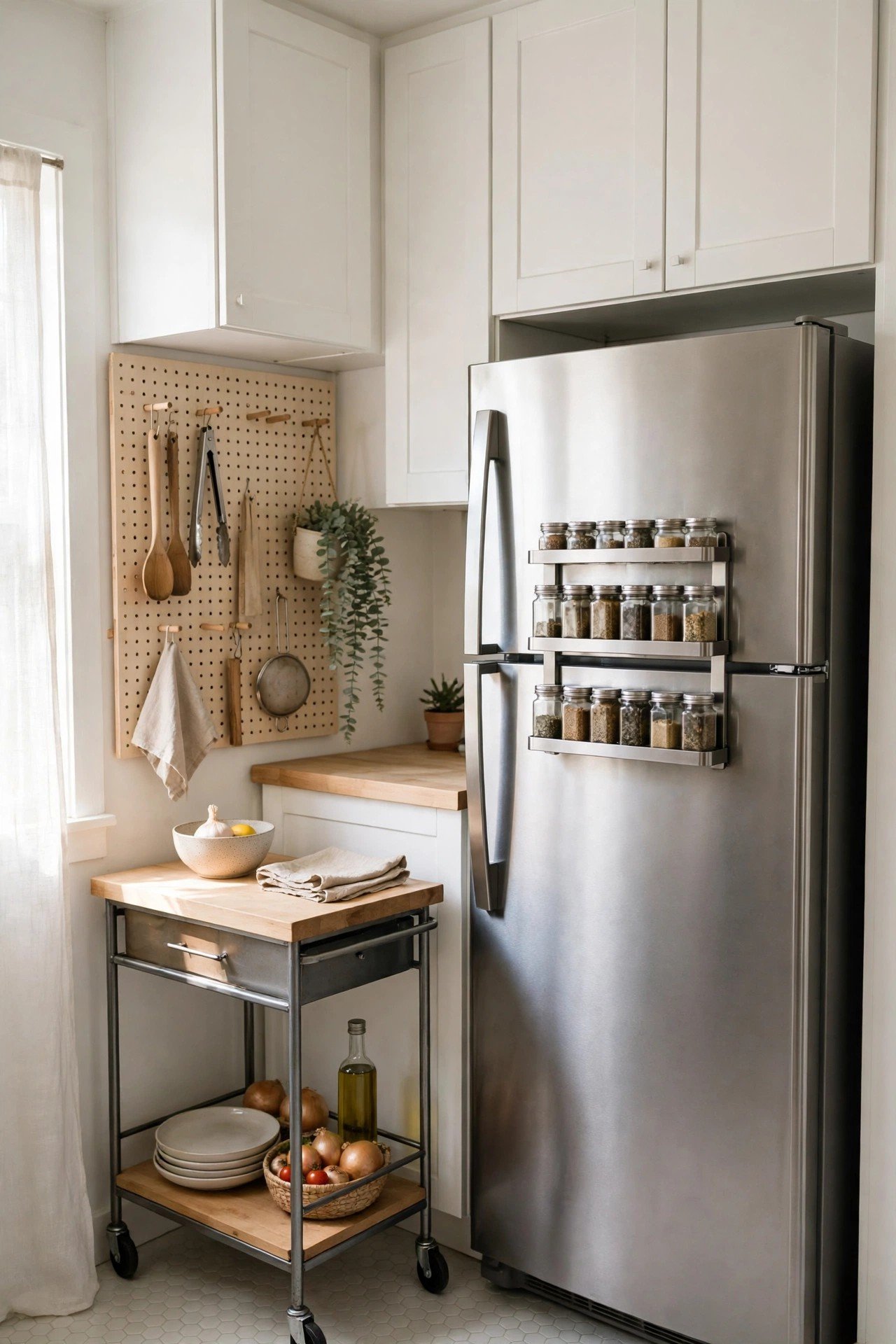
If your tiny kitchen feels cramped every time you cook, these tiny kitchen design tricks can change how the whole room works without a remodel. Small changes like a magnetic spice rack, a rolling cart, and a board over the sink can free up counter space you did not know you had. You can try one trick this weekend and add more as you learn what your kitchen needs most.
This guide shares 20 tiny kitchen design tricks, from pegboards and pull-out pantries to a fold-down table and one beautiful appliance on the counter. Each trick shows you what to change, how to do it, and why it works in a tight kitchen. Pick the tricks that fit your space best, and enjoy a kitchen that feels bigger, calmer, and made for real cooking.
1. Stick a Magnetic Spice Rack on the Fridge
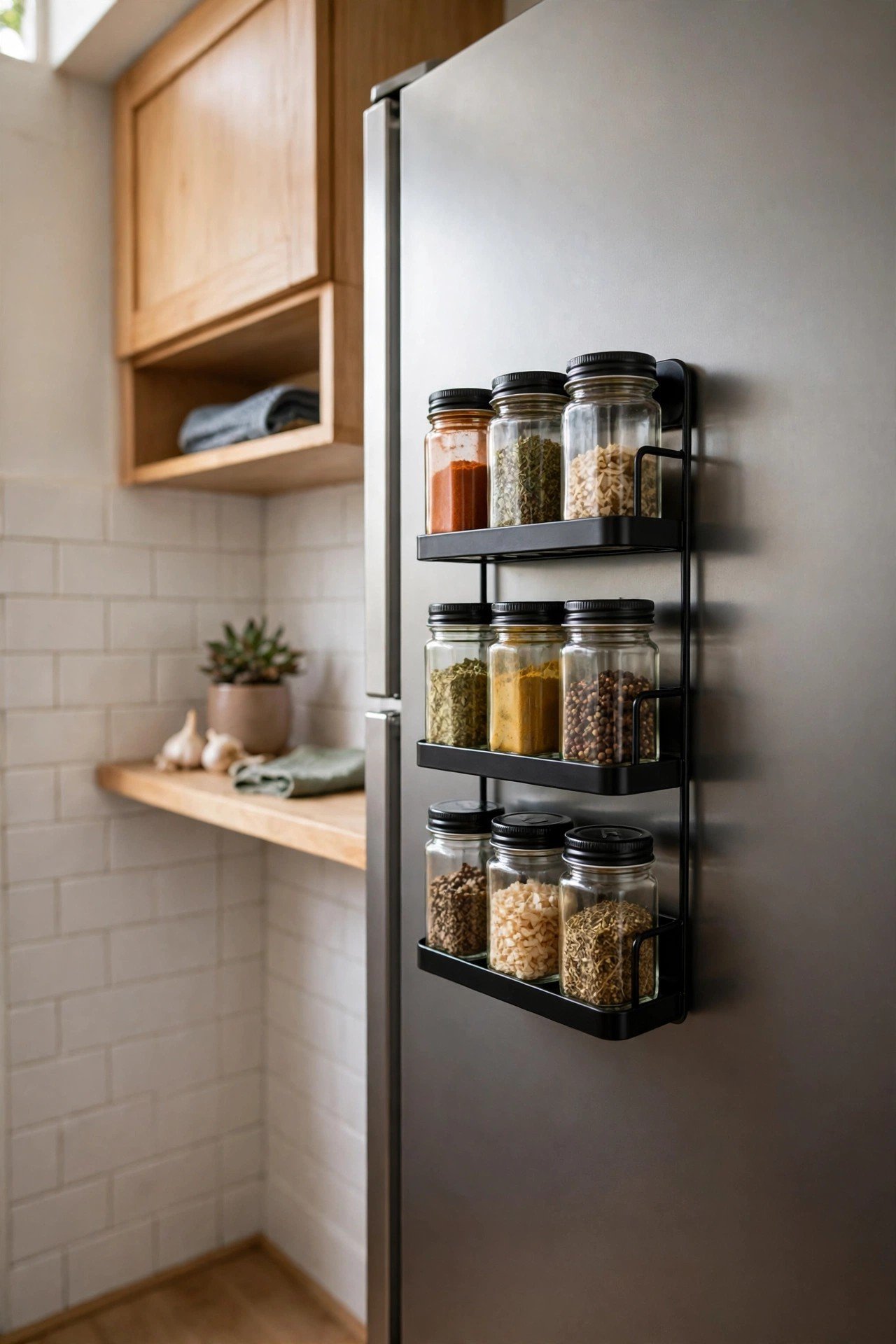
The side of your fridge is empty wall space in most kitchens, and a magnetic spice rack turns it into storage in one minute. Stick the rack on the fridge door or side, fill the small jars with the spices you reach for daily, and you can see every label at a glance. The spice shelf inside your cabinet is free at once, so you gain room for taller bottles and boxes.
Our small kitchen remodel ideas show how small moves like this can transform a tight kitchen without tearing out a single cabinet. Choose a rack with strong magnets, since weak ones slide down when the fridge door slams. Keep the most-used spices at eye level, and put the rare ones up high where they stay out of the way.
2. Hang a Tension Rod Under the Sink for Spray Bottles
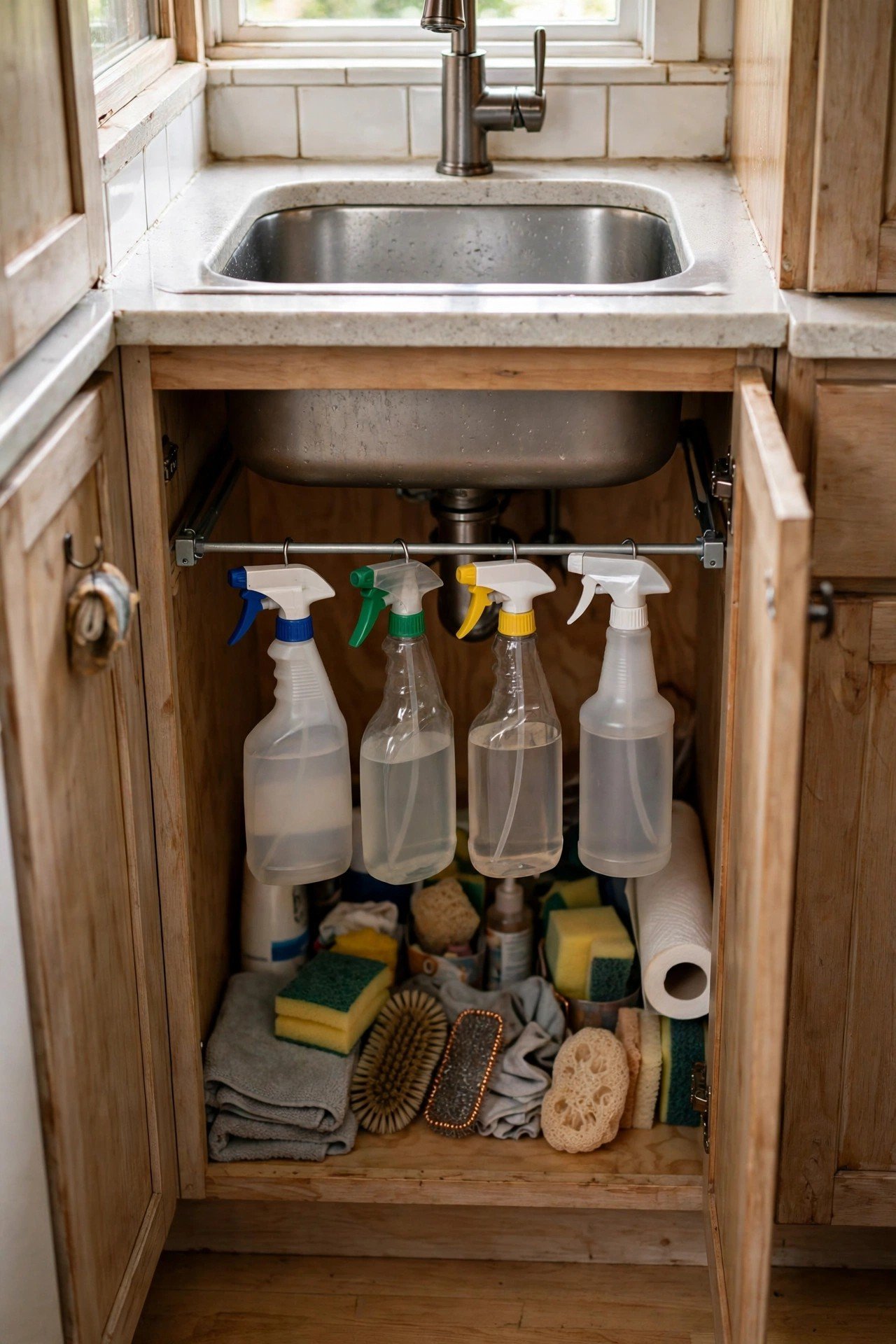
The cabinet under the sink is a dark cave of bottles, and a tension rod turns its empty air into a hanging row. Twist the rod to fit snugly across the cabinet, hang your spray bottles by their triggers, and the floor of the cabinet stays clear for bigger items. The bottles stop falling over every time you reach for one, which saves both patience and cleaning spray.
Measure the width before you buy, since a rod even one inch too short will not hold its grip. Pick a rod with rubber ends, so it stays put on smooth cabinet walls and does not scratch the finish. Hang only light bottles from the rod, and keep heavy jugs on the cabinet floor where they belong.
3. Put a Pegboard on the Kitchen Wall
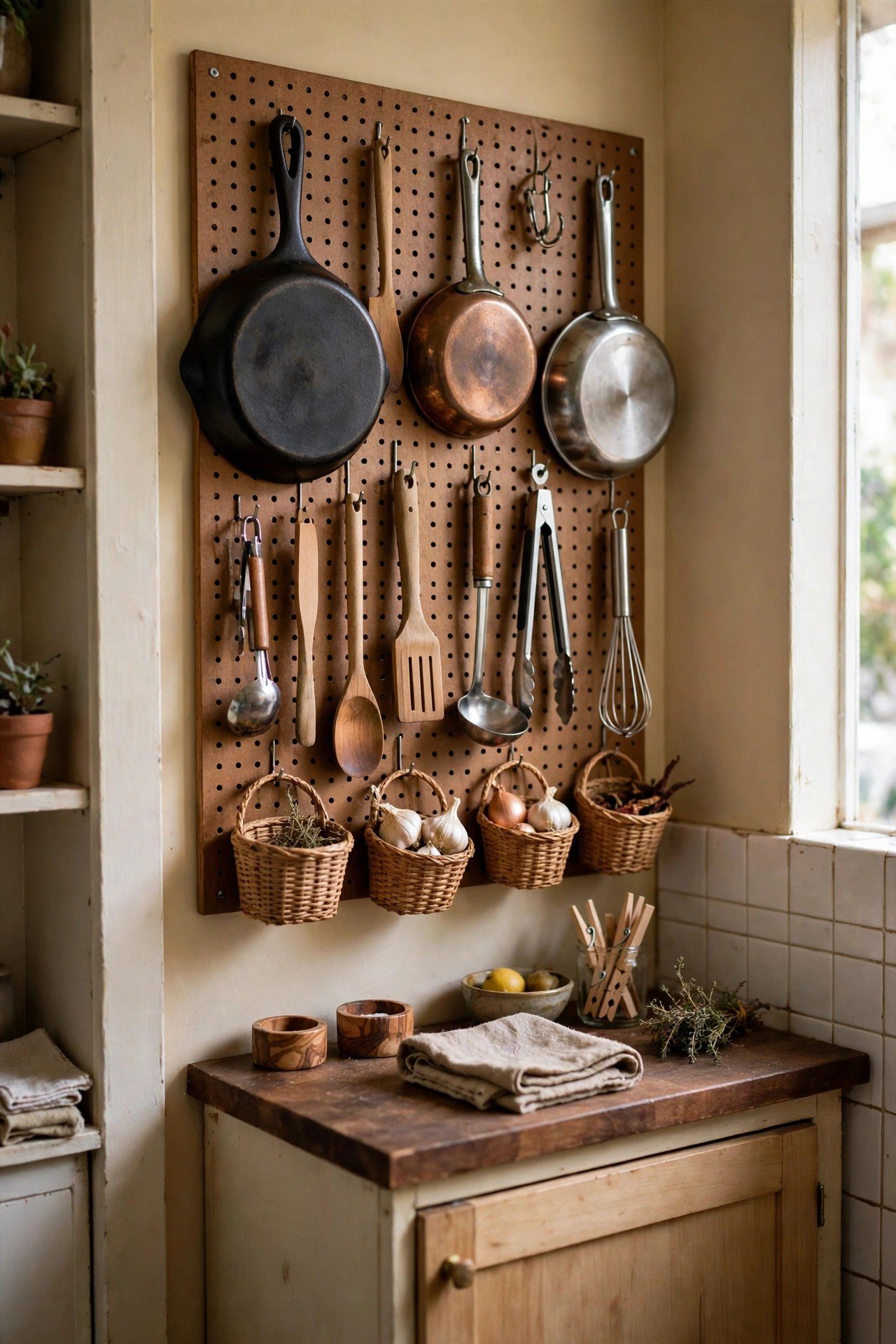
Tiny kitchen design tricks often start with the walls, and a pegboard turns one blank wall into storage that changes with you. Mount the board on a free stretch of wall, add hooks for pans, tools, and small baskets, and everything you need hangs within reach. Move the hooks whenever your cooking changes, because the board never locks you into one layout.
The 52 small kitchen ideas from The Kitchn show how wall storage like this can make a small kitchen feel open and easy to work in. Paint the pegboard the same color as the wall, so it blends in instead of looking like a workshop panel. Keep heavy pots low on the board, since high hooks make them hard to lift down safely.
4. Stack Canisters to Tame the Pantry
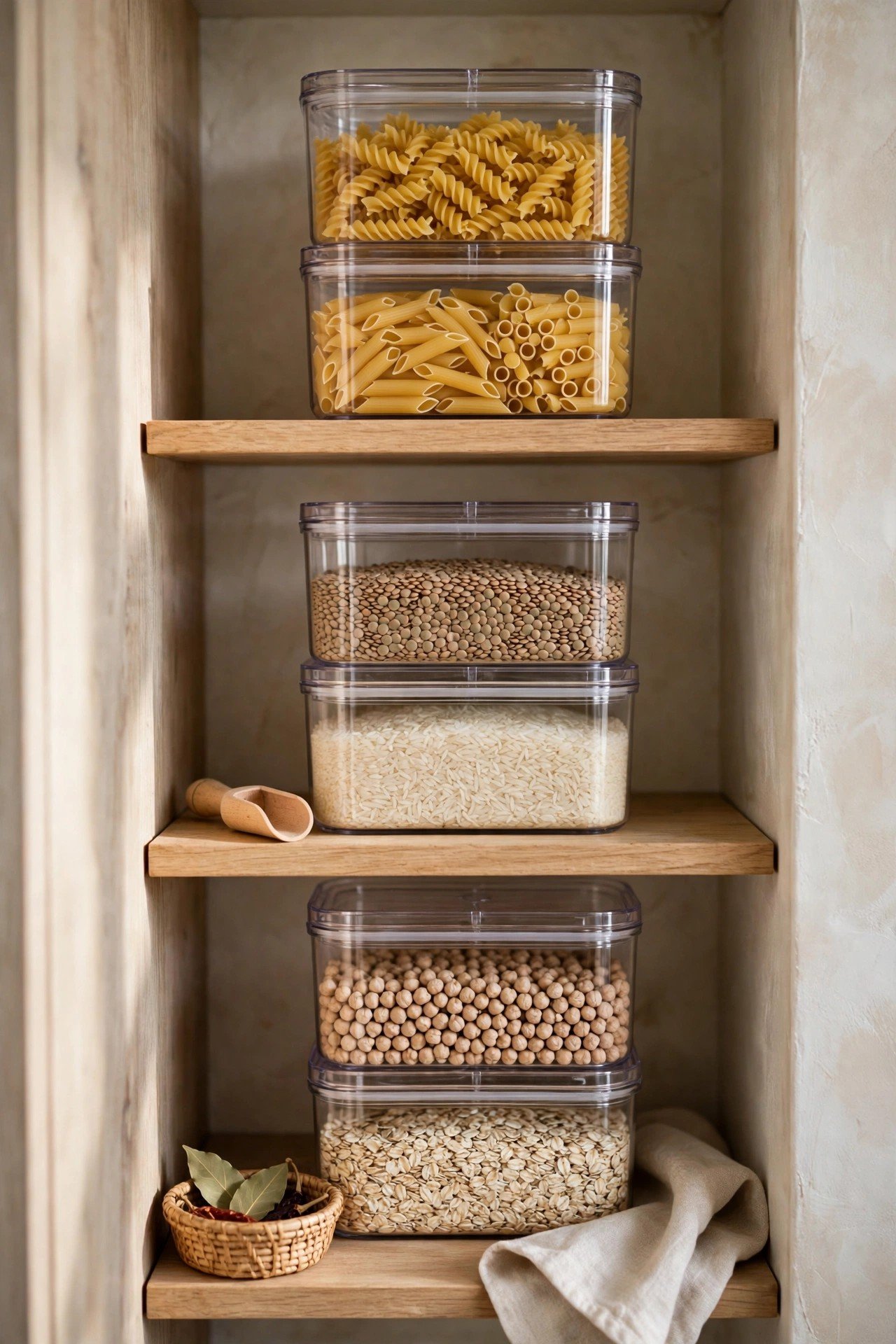
Dry goods hide in bags and boxes, and stackable canisters make every shelf hold twice as much in plain sight. Pour pasta, rice, flour, and beans into clear canisters, stack them two high, and you can see at a glance what needs restocking. The flat lids let each canister sit steady on the next, so the stack never wobbles when you pull one out.
Choose canisters with airtight lids, since dry goods stay fresh far longer when the seal is tight. Label each canister on the front, so no one has to open three jars to find the sugar. Leave a little space at the top of each shelf, because a stack that touches the shelf above is hard to lift out.
5. Slide a Rolling Cart Into That Awkward Gap
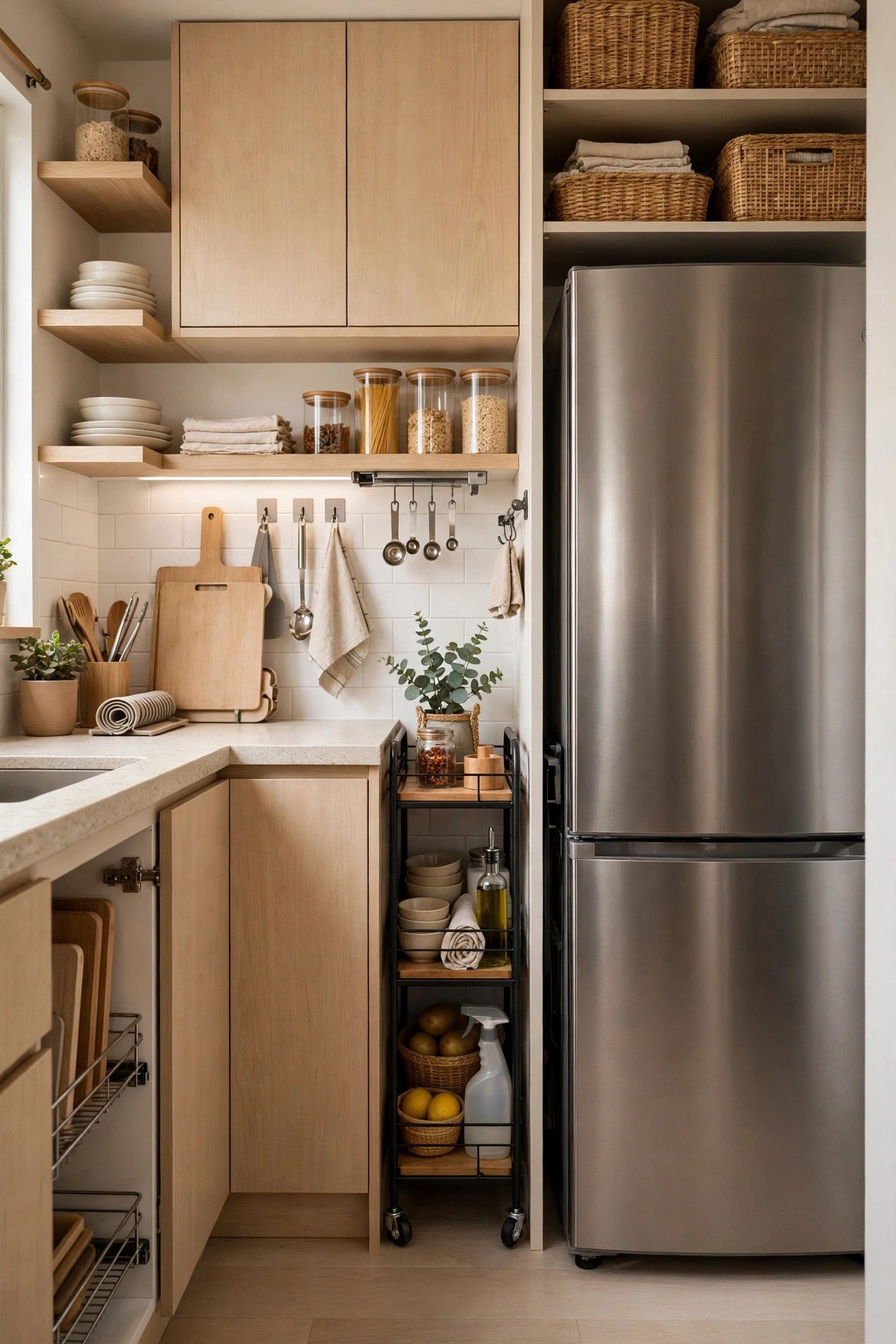
Tiny kitchen design tricks love a rolling cart, because it slides into the odd gap that nothing else in the kitchen fits. Measure the gap beside your fridge or stove, pick a cart a little narrower than the space, and roll it in with spices, oils, or towels on board. Pull the cart out when you cook, and push it back when you need the floor, so the gap works for you instead of collecting dust.
Our kitchen island storage ideas show how small rolling pieces can add prep space and storage to the tightest kitchens. Choose a cart with locking wheels, so it stays put while you chop and rolls away when you clean. Keep the top shelf for the things you grab daily, and use the lower shelves for backstock that can wait.
6. Hang Stemware Holders Under the Cabinets
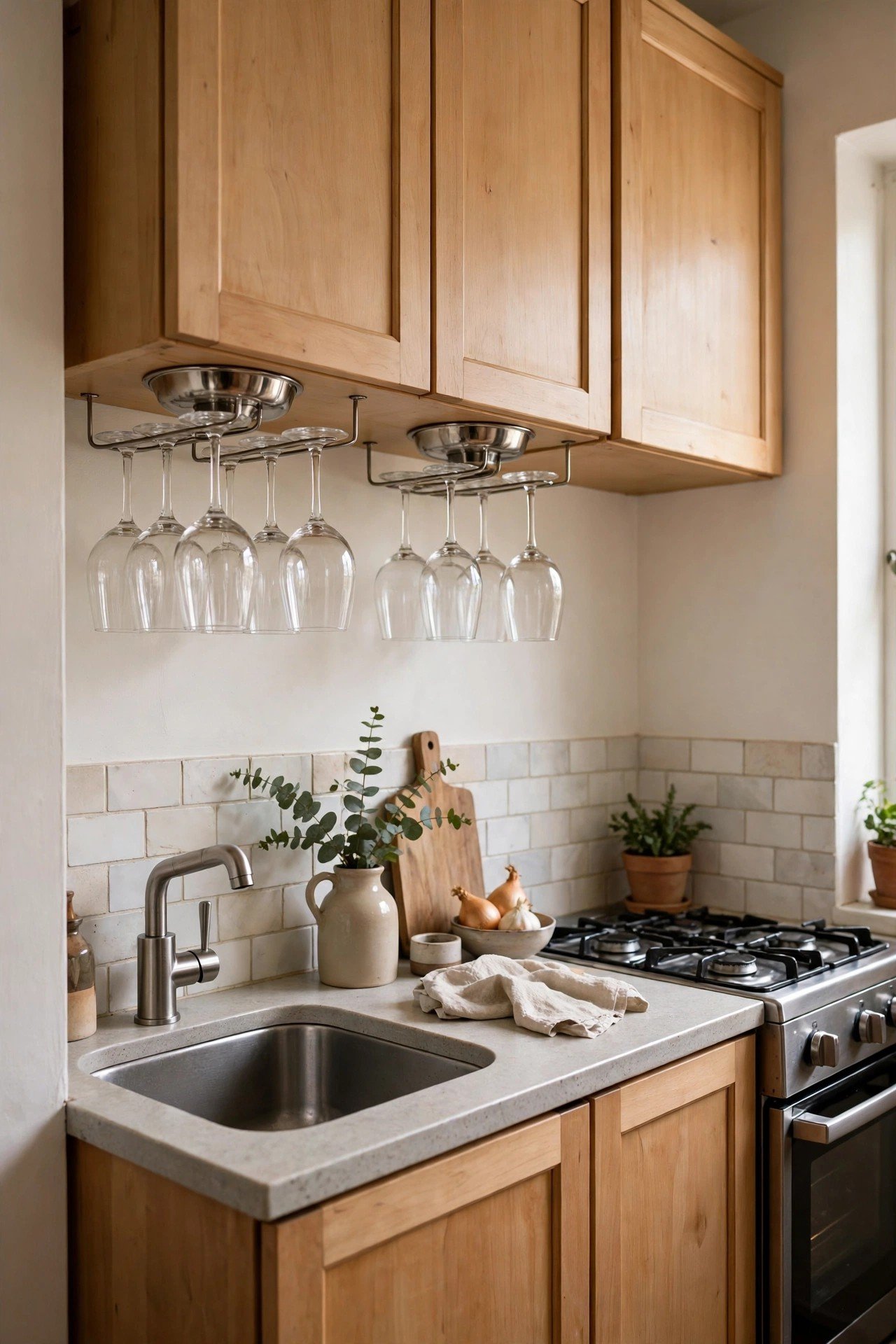
Wine glasses take up a whole shelf and still chip, but stemware holders under the cabinet keep them safe and out of the way. Screw the slim rails under an upper cabinet, slide the glasses in by their stems, and they hang upside down where nothing can knock them over. The shelf they used to fill is free at once, so you gain room for plates, bowls, or everyday cups.
Measure your tallest glasses before you buy, since long stems need more clearance under the cabinet. Mount the rails near the spot where you serve drinks, so the glasses are close when friends arrive. Wipe the glasses before you hang them, because dust shows fast on glass that hangs in the open.
7. Swap a Fixed Counter for a Fold-Down Table
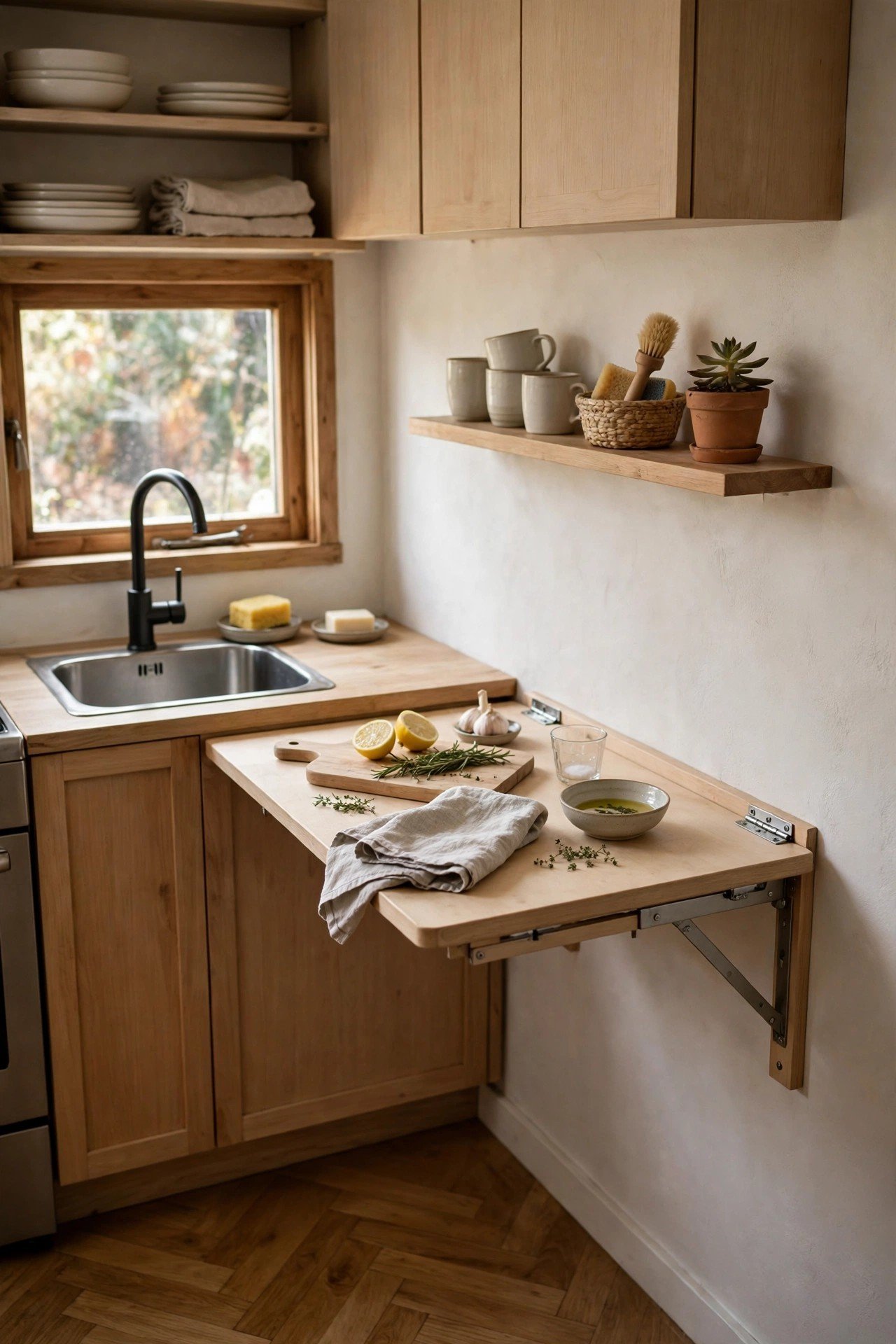
A fixed counter eats floor space all day, but a fold-down table gives you the same surface only when you need it. Mount the table on a free wall at counter height, fold it down for meals or extra prep space, and fold it flat when the room needs to breathe. The wall stays clear the rest of the day, so a tiny kitchen feels bigger the moment the table goes up.
Pick a sturdy bracket that locks flat, since a wobbly table is no good for hot pans or full plates. Add two folding stools that hang on the wall beside it, and the whole setup disappears when dinner is done. Keep the wall around the table clear of shelves, so the table can fold up without hitting anything.
8. Sort Utensils With Drawer Dividers
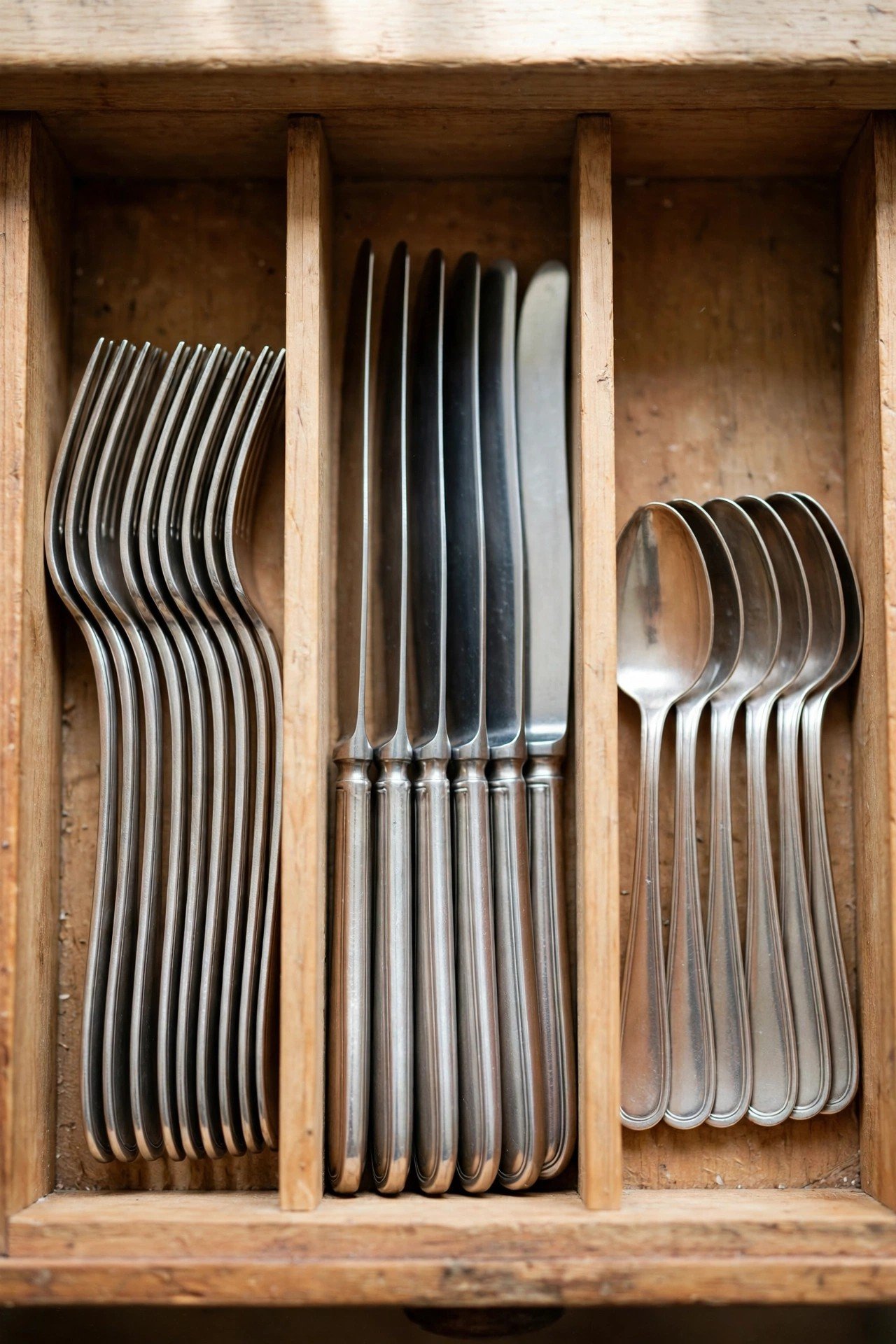
A junk drawer full of tangled utensils wastes time every meal, and drawer dividers give each tool its own lane. Measure the drawer, fit dividers for forks, knives, spoons, and gadgets, and every piece lands in the same spot after washing. The drawer stops being a pile you dig through, so cooking starts faster and cleanup ends sooner.
The small kitchen organization ideas from This Old House show how drawer dividers and other small accessories can tame the messiest drawers and cabinets. Choose dividers you can move, since your utensil collection will change with the seasons and new tools. Keep one small open section for the odd items, so they have a home instead of sliding under the dividers.
9. Spin a Lazy Susan in the Dead Corner Cabinet
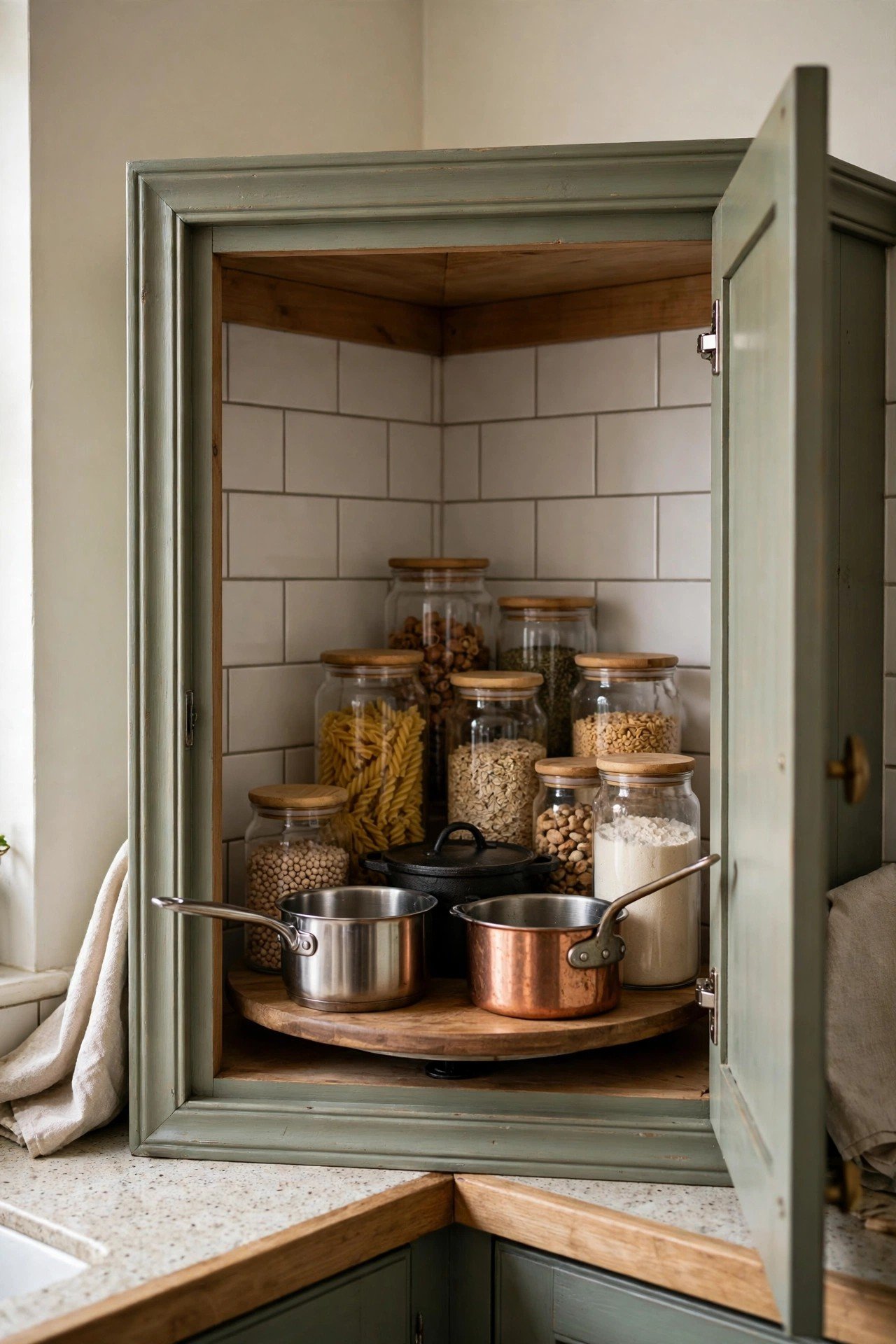
The back corner of a corner cabinet is where jars go to be forgotten, and a lazy Susan spins them back to the front. Set a turntable on the cabinet shelf, load it with oils, sauces, and cans, and one spin brings the back row to your hand. Nothing hides in the dark corner anymore, so you stop buying a second bottle of something you already own.
Our modern kitchen ideas show how smart storage like a turntable can make even a small kitchen feel planned and easy to use. Pick a turntable with a low rim, since a high edge makes tall bottles hard to lift off. Wipe the turntable once a month, because spills under the jars get sticky fast in a closed cabinet.
10. Mount a Magnetic Knife Strip on the Wall
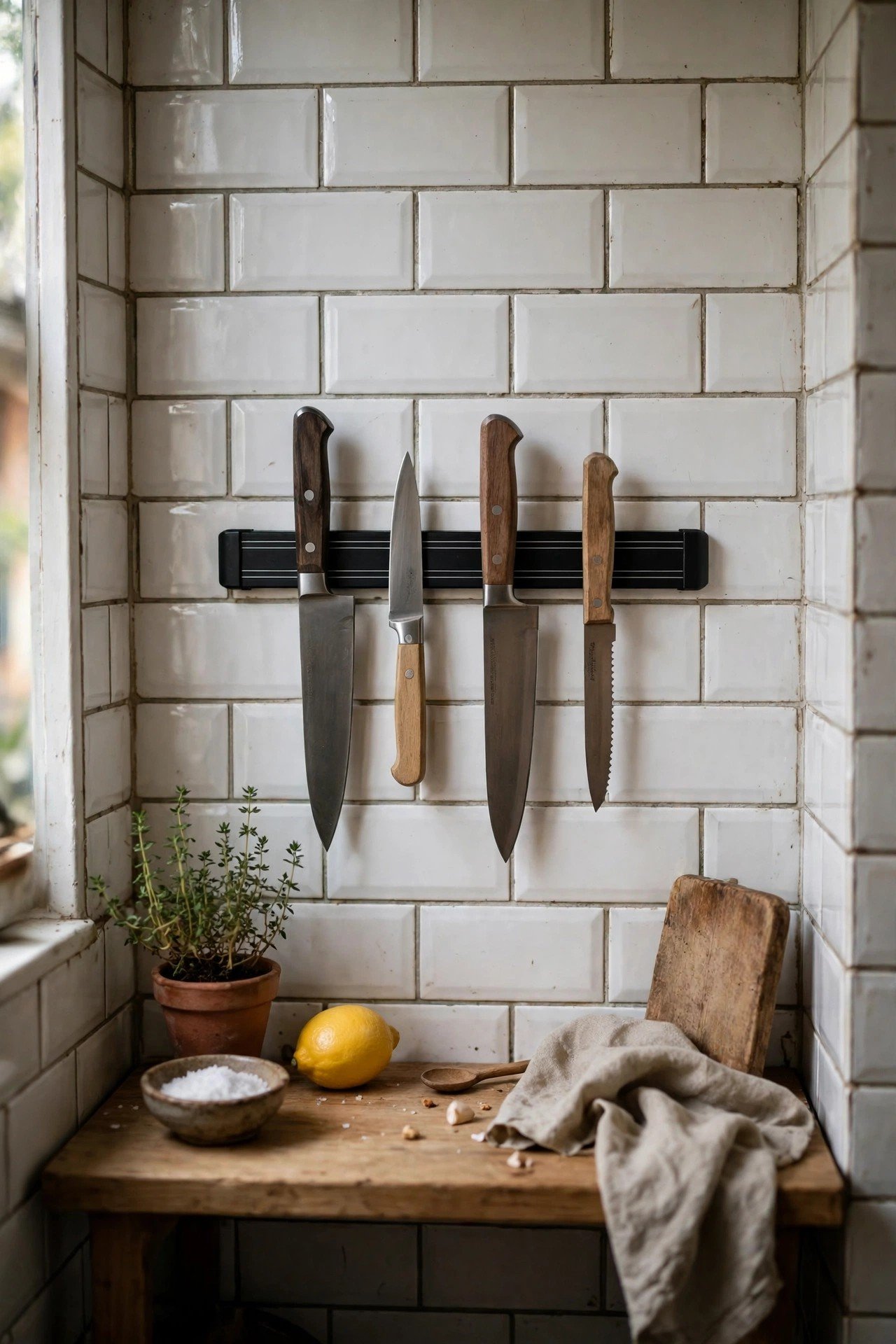
A knife block eats a whole corner of the counter, but a magnetic strip moves the knives to the wall where they belong. Mount the strip at eye level near your prep spot, press the blades against it, and every knife is visible, sharp, and ready in one reach. The counter stays clear for chopping, and the knives stay safer than they ever were loose in a drawer.
Choose a strip with strong magnets, since weak ones let heavy knives slide down over time. Mount it away from the stove, so heat and steam do not dull the blades or loosen the grip. Keep the strip out of reach of small children, because the knives hang in the open where little hands can find them.
11. Chop on a Cutting Board That Sits Over the Sink
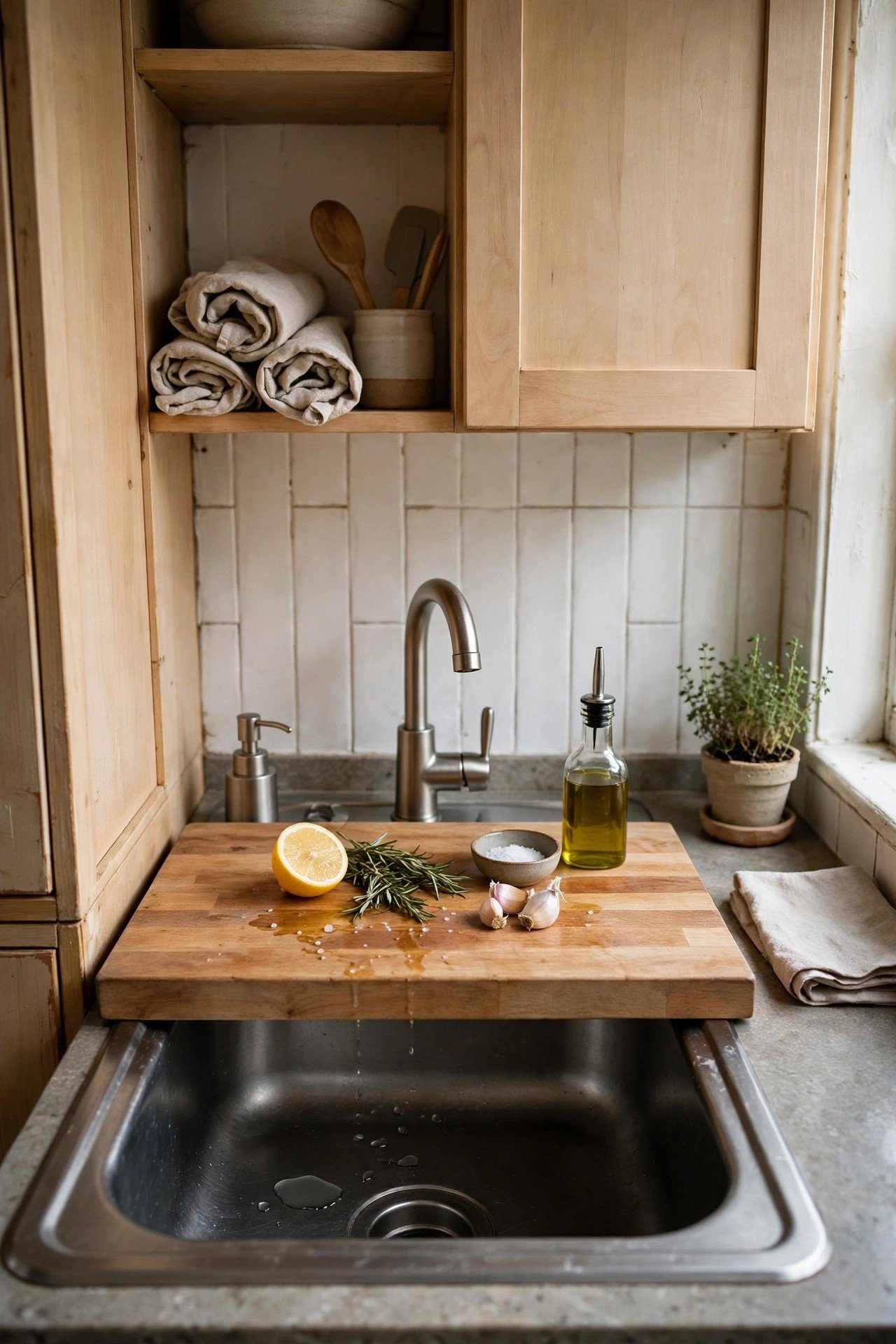
When the counter runs out, the sink is the next surface, and a board that spans it adds a whole prep area. Pick a board that rests on the sink edges, chop vegetables over it, and the scraps slide straight into the sink when you are done. The board turns dead space into a workstation, so a tiny kitchen gains a cutting spot without losing a single inch.
Measure the sink before you buy, since a board even one inch too short will slip into the basin. Choose a board with a juice groove, so liquids from tomatoes and fruit stay on the board and off your sleeves. Dry the board standing up after washing, because a flat board left on the sink stays damp underneath.
12. Raise Tension-Pole Shelves in Tall, Narrow Spaces
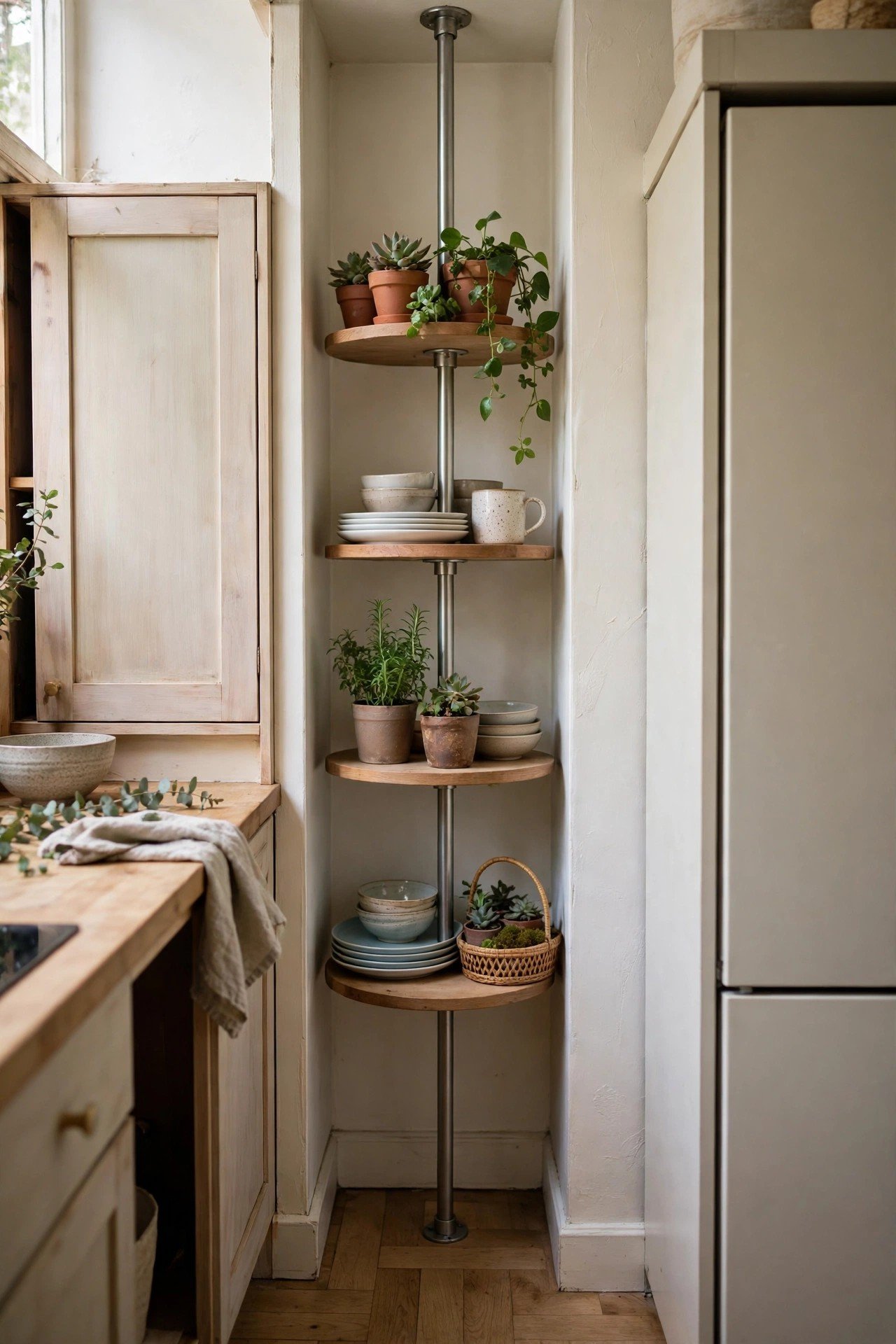
Tall narrow gaps between cabinets are wasted space in most kitchens, and tension-pole shelves fill them from floor to ceiling. Wedge the poles between floor and ceiling, clip on shelves at the heights you need, and the skinny gap holds dishes, plants, and pantry jars. The poles need no drilling at all, so renters can build a whole shelf wall and take it down on moving day.
Check that the ceiling is solid where the poles press, since a soft ceiling will not hold the tension. Keep heavy items low on the poles, so the shelves stay steady and nothing falls from above. Leave the top shelf for light things you rarely use, because reaching above your head with a full jar is no fun.
13. Keep a Sink Caddy by the Faucet
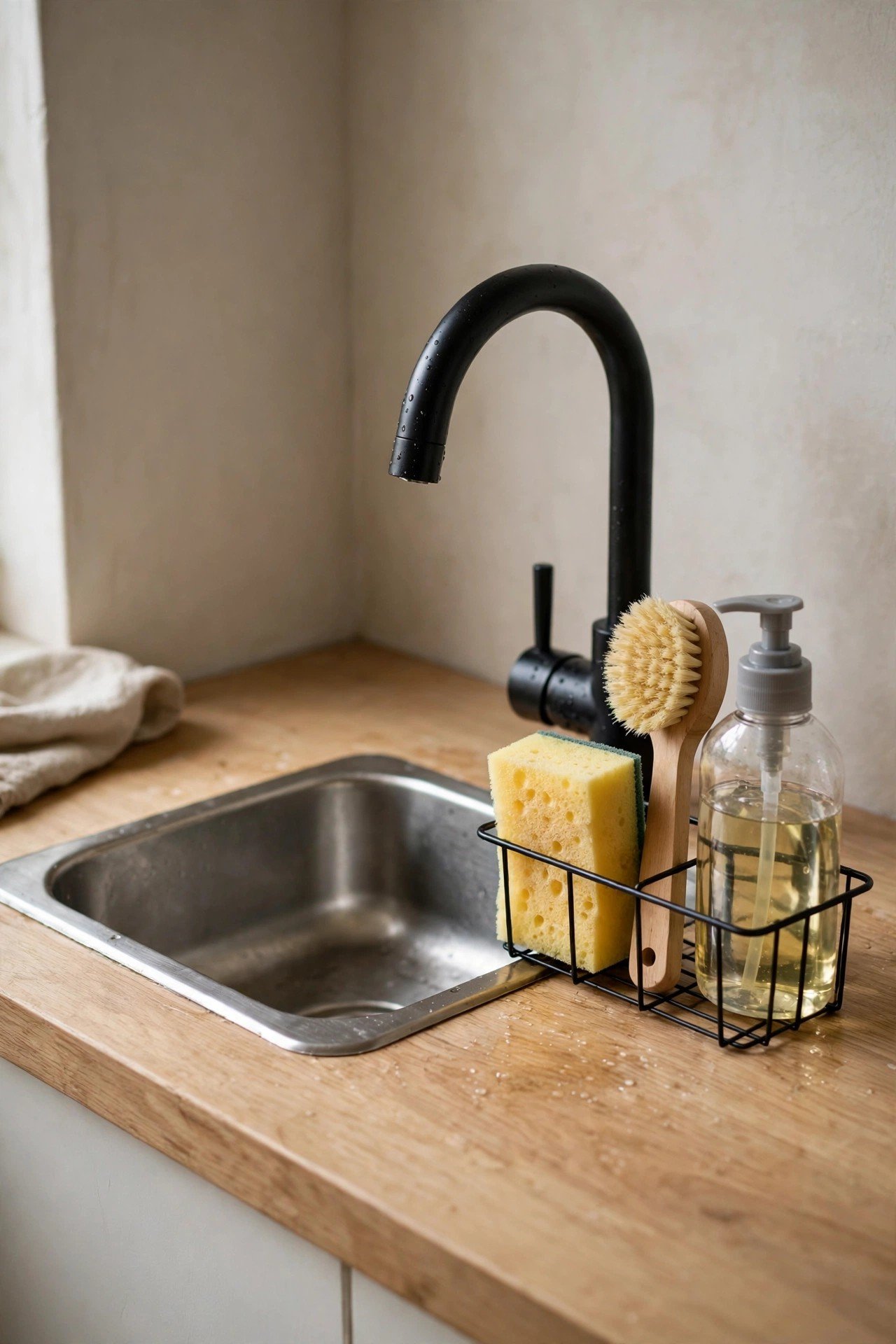
A sponge on the sink edge never dries, and a small caddy gives it a home that drains and stays tidy. Set the caddy by the faucet, park the sponge, brush, and dish soap inside it, and the sink edge stays clear and dry. Water drips back into the sink instead of pooling on the counter, so the area around the faucet stays clean.
Pick a caddy with holes or a sloped base, since a solid bottom traps water and grows smells fast. Rinse the caddy once a week, because soap film builds up even when the caddy looks clean. Keep only the daily tools in the caddy, and store the rest under the sink where they stay out of sight.
14. Hang a Fruit Basket to Free the Counter
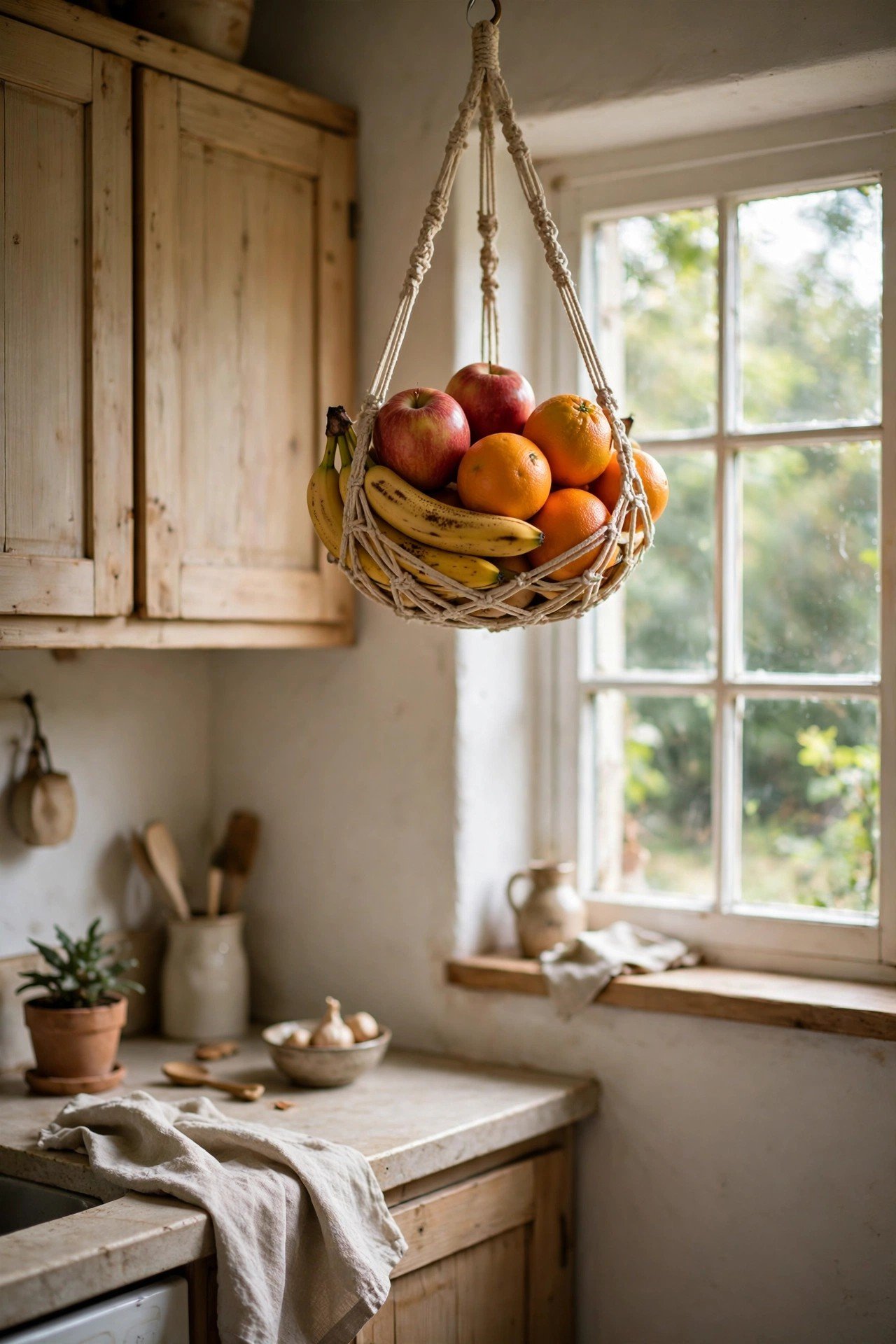
Fruit on the counter takes space and hides behind other things, but a hanging basket lifts it into the air where you can see it. Hang a tiered basket near a window or from the ceiling, fill it with apples, bananas, and oranges, and the fruit stays in sight so it gets eaten. The counter gains a whole free corner, and the basket doubles as a bright spot of color in the room.
Our cottagecore kitchen decor ideas show how simple touches like a hanging basket can make a small kitchen feel warm and lived in. Hang the basket where no one walks into it, since a low basket over a walkway is a bump waiting to happen. Check the fruit often and pull out any soft piece, because one bad apple spoils the basket fast.
15. Add Organizers to the Inside of Cabinet Doors
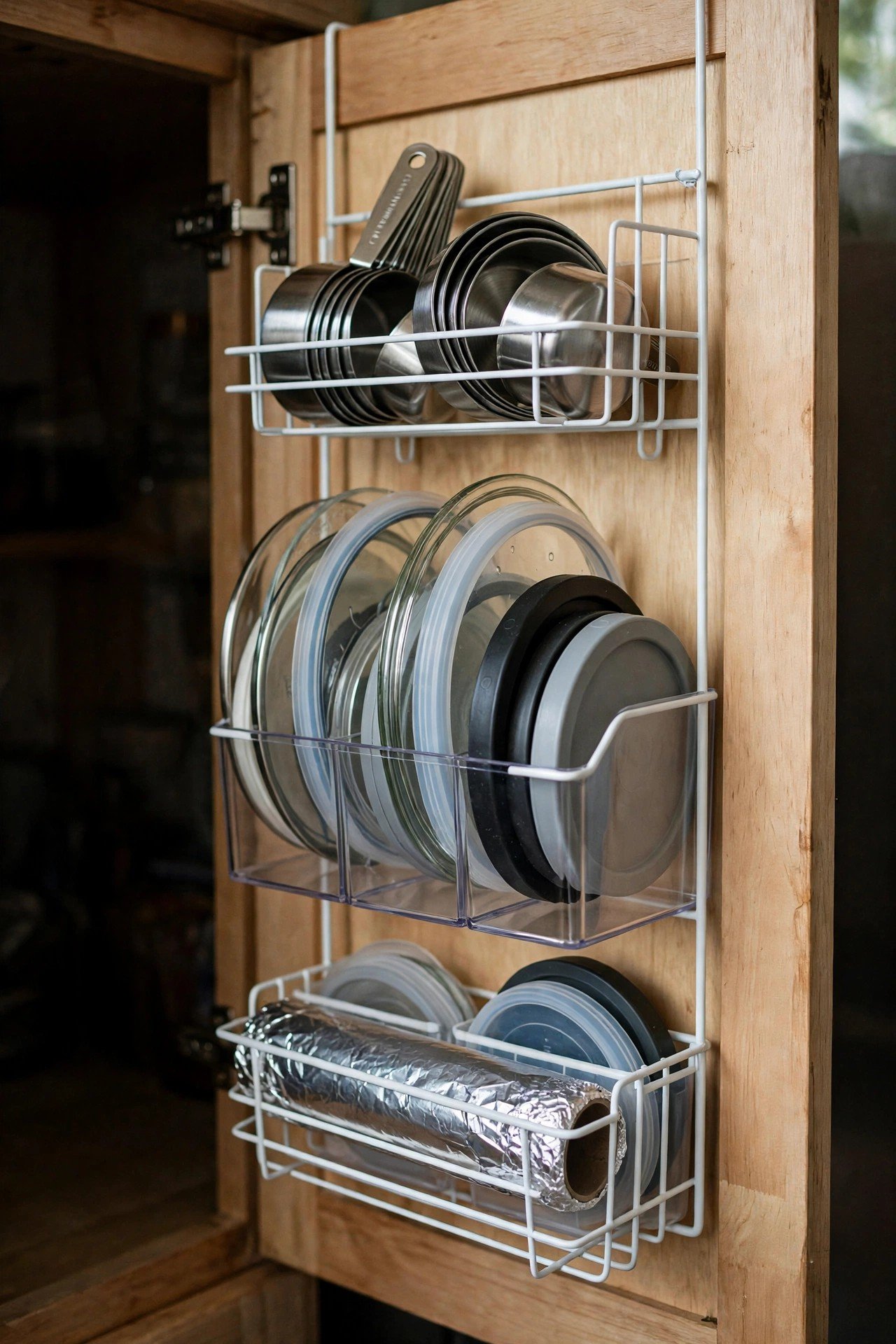
The inside of a cabinet door does nothing in most kitchens, and slim organizers turn it into a whole extra shelf. Stick or screw racks on the inside of the door, load them with measuring cups, lids, foil, and wraps, and the main shelves breathe again. The door closes just the same, so the storage stays hidden until the moment you need it.
Measure the gap between the door and the shelf before you buy, since deep racks can block the door from closing. Start with one door near the stove, so the tools you reach for while cooking are always at hand. Keep the racks light, because a door loaded with heavy jars can sag on its hinges over time.
16. Set a Slim Utensil Crock Beside the Stove
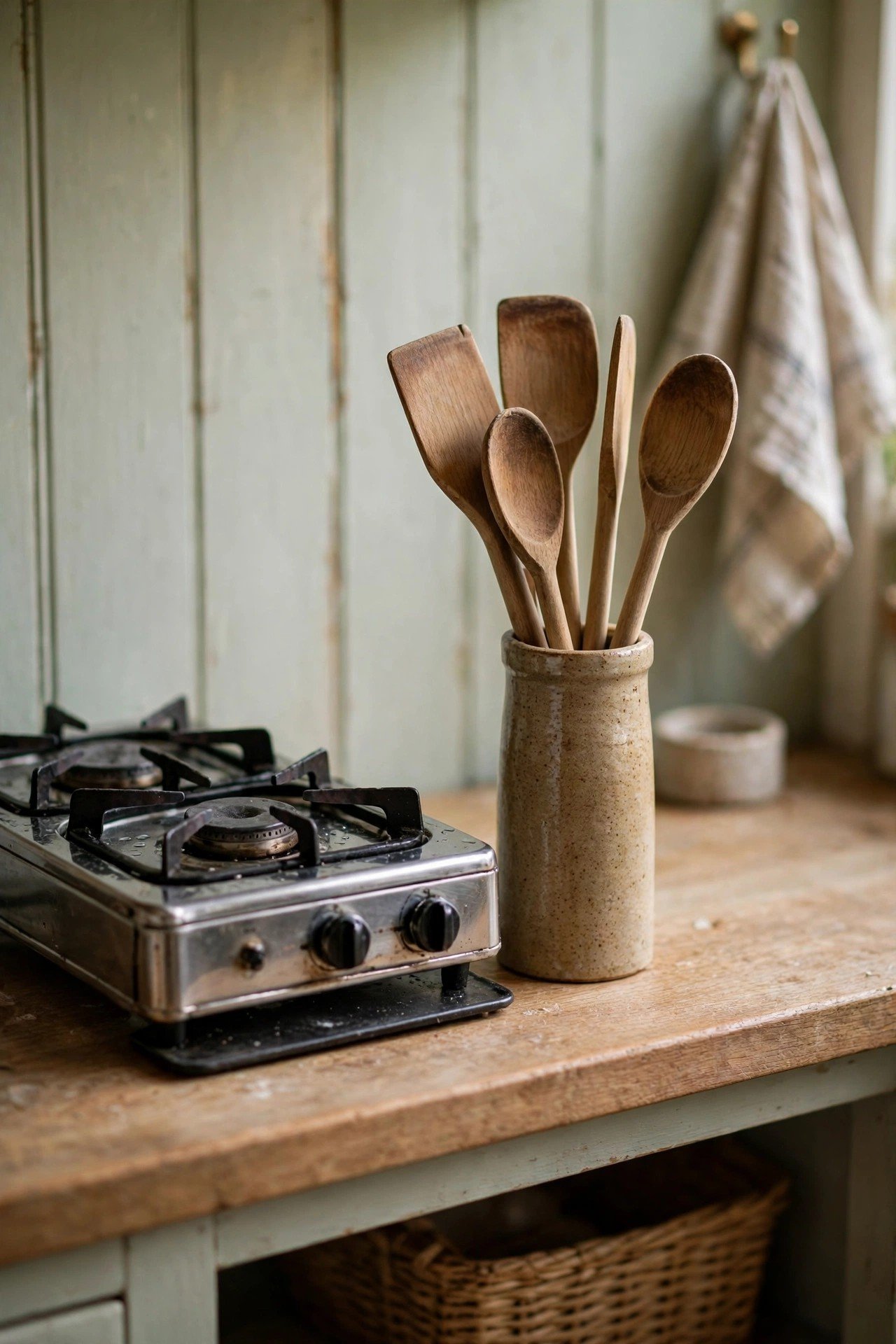
The spoons and spatulas you use every day hide in a drawer, but a slim crock beside the stove keeps them one grab away. Set the crock next to the stove, stand the wooden spoons, spatulas, and tongs upright, and you can reach the right tool without opening a drawer. The drawer gains space for the tools you rarely use, so the whole kitchen works a little faster.
Pick a crock narrow enough to fit the gap, since a wide crock crowds the stove and blocks the burners. Choose a heavy base, so the crock stays put when you pull a spoon out in a hurry. Wash the crock once a week, because drips from cooking tools collect at the bottom fast.
17. Nest Your Mixing Bowls to Save a Whole Shelf
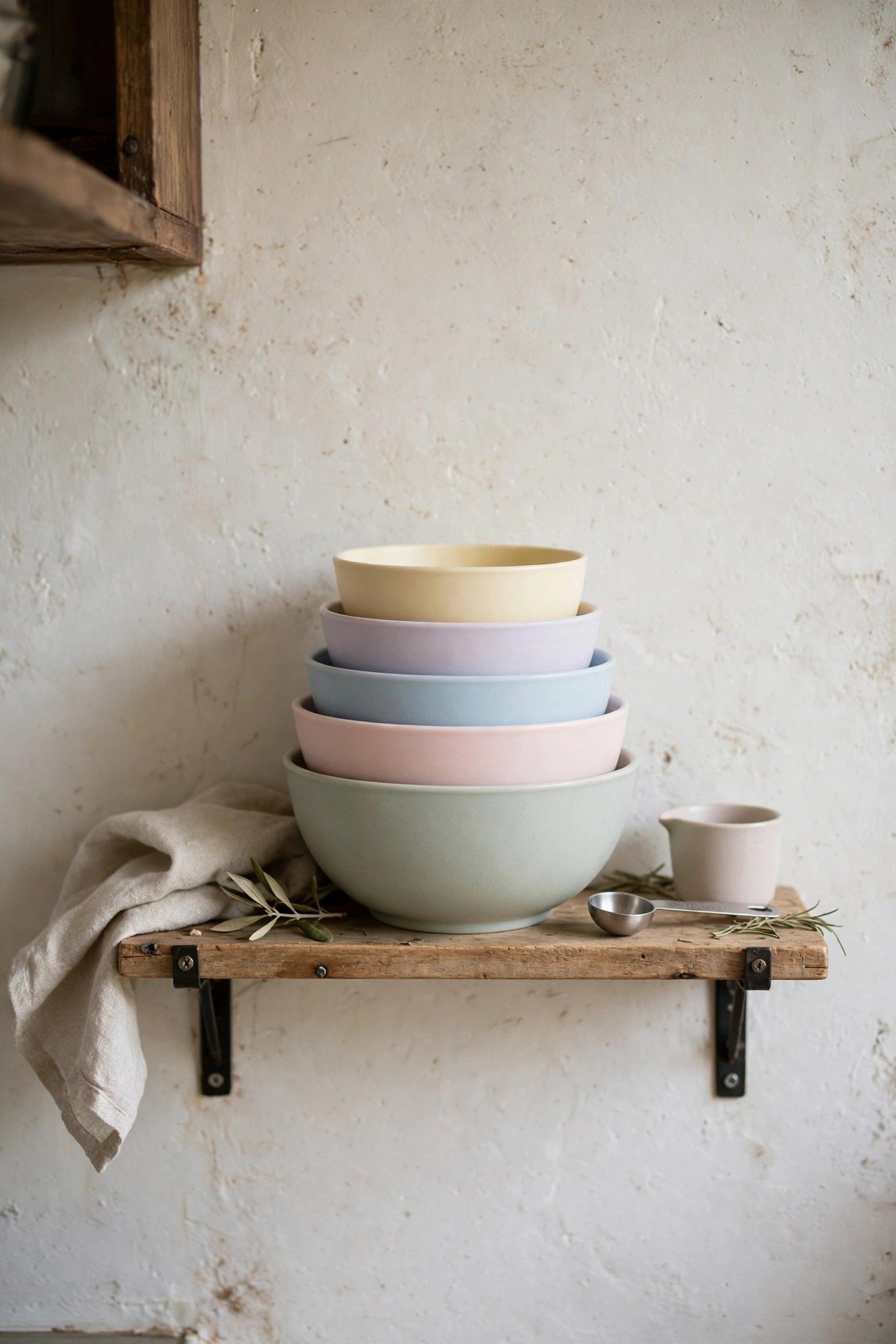
A set of mixing bowls takes a whole shelf, but nesting bowls stack inside each other and take the space of one. Buy a set that nests tightly, stack the small bowls inside the big one, and the whole set slides onto one shelf with room to spare. You still have every size when you need it, yet the cabinet looks calm instead of crowded with bowls.
Pick bowls with a pour spout and a grippy base, since those two details make mixing and pouring far easier. Store the lids with the bowls if the set has them, so nothing gets lost on a different shelf. Keep the largest bowl on top of the stack for daily use, and the rest stays nested underneath until baking day.
18. Fit a Slim Pull-Out Pantry in a Six-Inch Gap
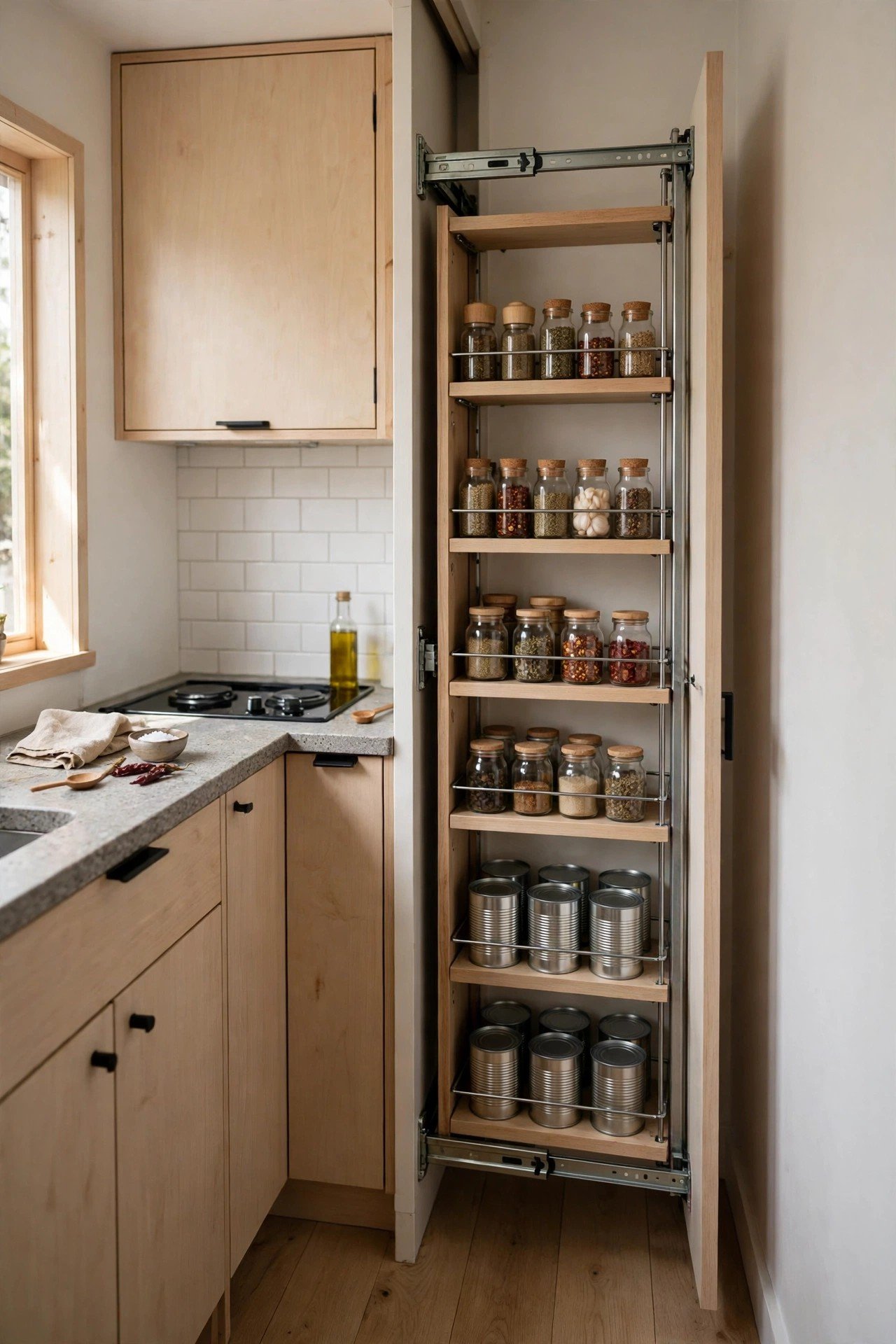
The six-inch gap between the fridge and the wall is dead space in most kitchens, and a slim pull-out turns it into a pantry. Slide the tall narrow unit into the gap, fill it with spices, oils, and cans, and one pull brings the whole row out to your hand. The gap that collected dust now holds a week of cooking supplies, so the main cabinets stay free for bigger things.
Measure the gap twice before you order, since a unit even half an inch too wide will not slide in. Load heavy cans at the bottom, so the tall unit stays steady when you pull it out full. Wipe the sides of the unit often, because dust gathers fast in a narrow gap you rarely see.
19. Dry Dishes on a Rack Over the Sink
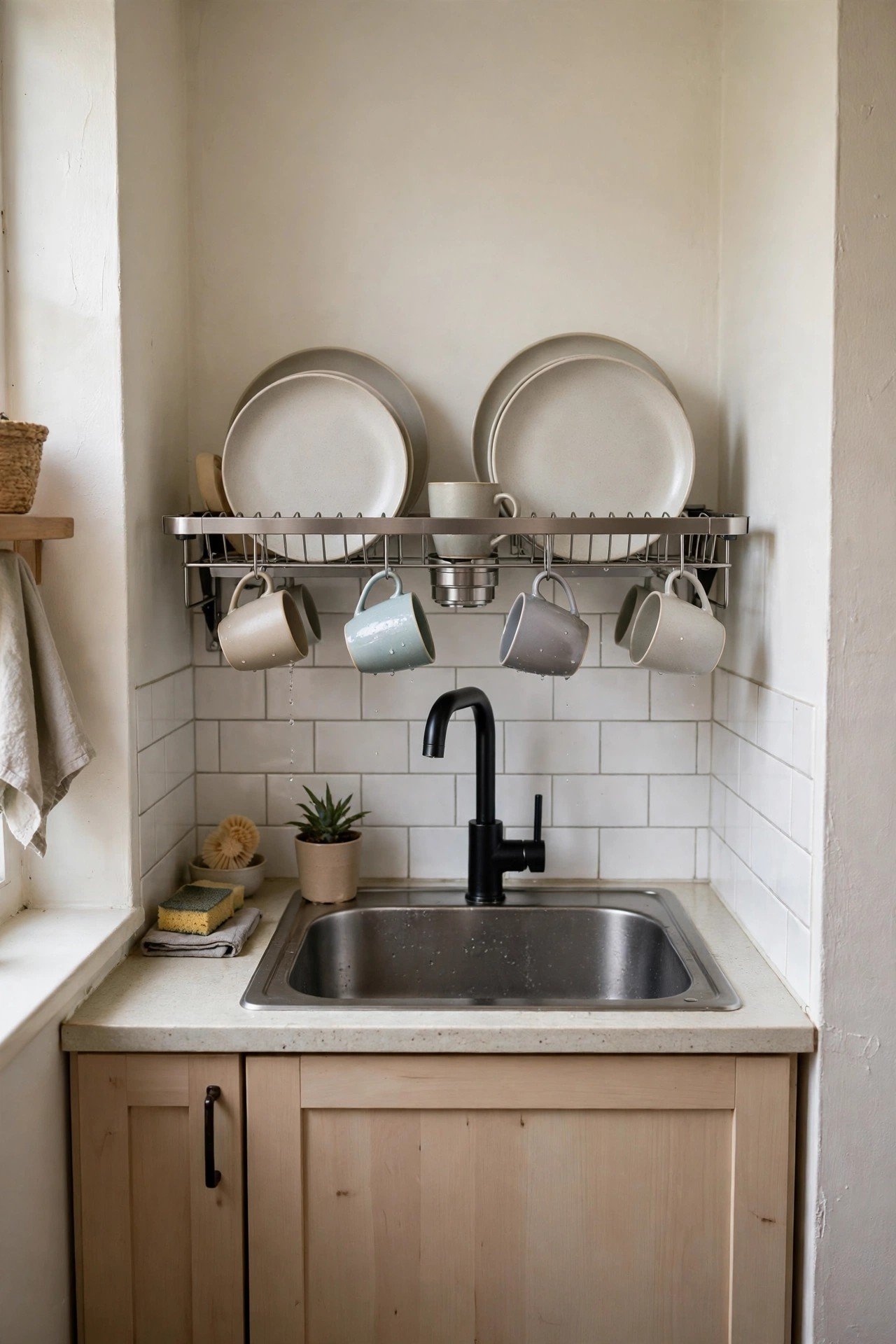
A drying mat on the counter eats the only free space, but a rack over the sink lets dishes drip straight down. Set the rack across the sink, stand plates and cups in the slots, and the water falls where it belongs instead of pooling on the counter. The counter stays dry and clear for cooking, so the kitchen feels bigger the moment the dishes are done.
Pick a rack that fits your sink width, since a rack too wide will not sit level on the edges. Choose stainless steel, because it resists rust far better than a coated rack in a wet spot. Rinse the rack after each use, since soap film and food bits collect in the slots fast.
20. Keep One Beautiful Appliance Out and Hide the Rest
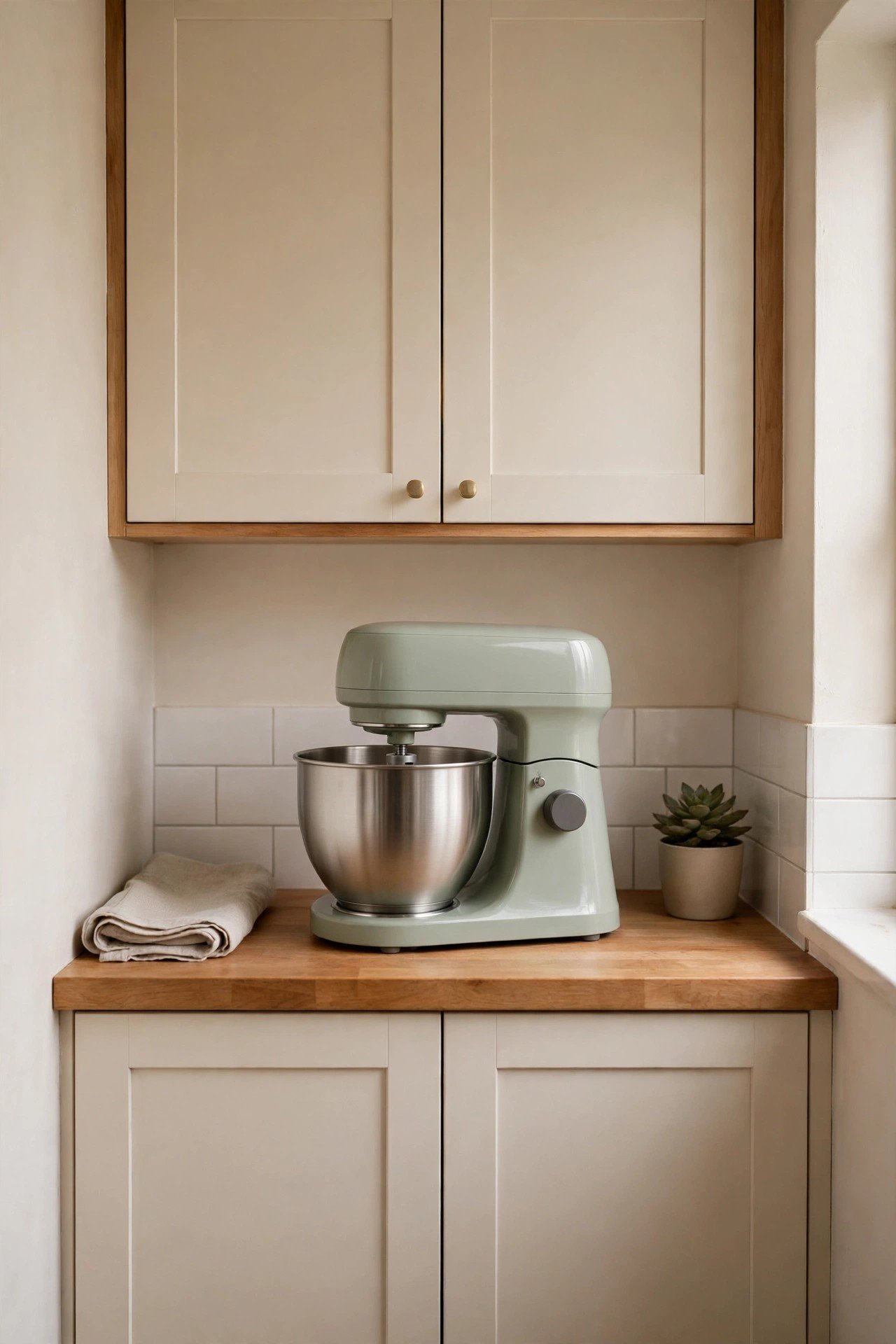
Every appliance on the counter makes a tiny kitchen feel like a shop, but one beautiful piece earns its place. Pick the appliance you love to look at, keep it on the counter, and store the rest in a cabinet or on a high shelf. The counter shows one calm focal point instead of a crowd, so the whole kitchen looks tidy at a glance.
Choose the appliance you truly use daily, since a pretty machine you never touch is just decoration. Give the hidden appliances one shelf each, so they are easy to grab and easy to put away. Wipe the counter clear each night, because one beautiful appliance only shines when the rest of the surface is empty.
Frequently Asked Questions
What is the best way to organize a tiny kitchen?
Start by grouping things where you use them, so spices live by the stove and cleaning supplies live under the sink. Add one trick at a time, like a pegboard or a rolling cart, and test it for a week before you buy the next thing. Keep the counters for cooking only, and move everything else to a wall, a door, or a hidden shelf.
How can I add storage to a tiny kitchen without remodeling?
Use the walls, the doors, and the gaps, since those spots already exist and cost nothing to claim. A tension rod, a magnetic strip, and a rolling cart can add a whole shelf of storage without a single hole in the wall. Start with the cheapest tricks first, and only spend on built-ins once you know exactly what you need.
What are the easiest tiny kitchen design tricks for renters?
The easiest tiny kitchen design tricks for renters need no drilling and no damage, so start with a magnetic spice rack, a tension rod, and a rolling cart. Add a sink caddy and a hanging fruit basket, since both lift clutter off the counter without touching the walls. Use tension-pole shelves for tall gaps, and take everything with you when you move out.
How do I keep my tiny kitchen counters clear?
Give every tool a home off the counter, whether that is a pegboard, a drawer divider, or a cabinet door rack. Follow the one-appliance rule and hide the rest, so only the machine you use daily earns counter space. Clear the counter after each meal, since a five-minute reset keeps clutter from piling up overnight.
What should I hide in a tiny kitchen and what should stay out?
Hide small appliances, extra gadgets, and backstock, since they crowd the eye and steal prep space. Keep out one beautiful appliance, your daily utensils, and the fruit basket, because those earn their place by being used. Store anything you use less than once a week, and the kitchen will feel calm every single day.
Final Thoughts
These 20 tiny kitchen design tricks prove that a tiny kitchen can work hard and look calm with a few smart changes. Start with the trick that excites you most, whether it is a pegboard, a rolling cart, or a pull-out pantry in a six-inch gap. Pick one change today, enjoy the extra space tonight, and keep adding tricks until the kitchen feels like home.