16 Small Living Room Decor Tips that Make a Big Impact for Maximizing Space and Style

If your small living room feels cramped and hard to love, these small living room decor tips can change how the whole room feels without a big remodel. Small swaps like higher curtains, a lighter coffee table, and one big mirror can make the same room feel taller, brighter, and far more open. You can try one tip this weekend and add more as you find pieces you love.
This guide shares 16 small living room decor tips, from floating your sofa and mounting the TV to picking a rug that lets the floor show. Each tip shows you what to change, how to do it, and why it works in a tight space. Pick the tips that fit your room best, and enjoy a living room that feels bigger, calmer, and made for real life.
1. Hang Your Curtains at Ceiling Height to Stretch the Walls
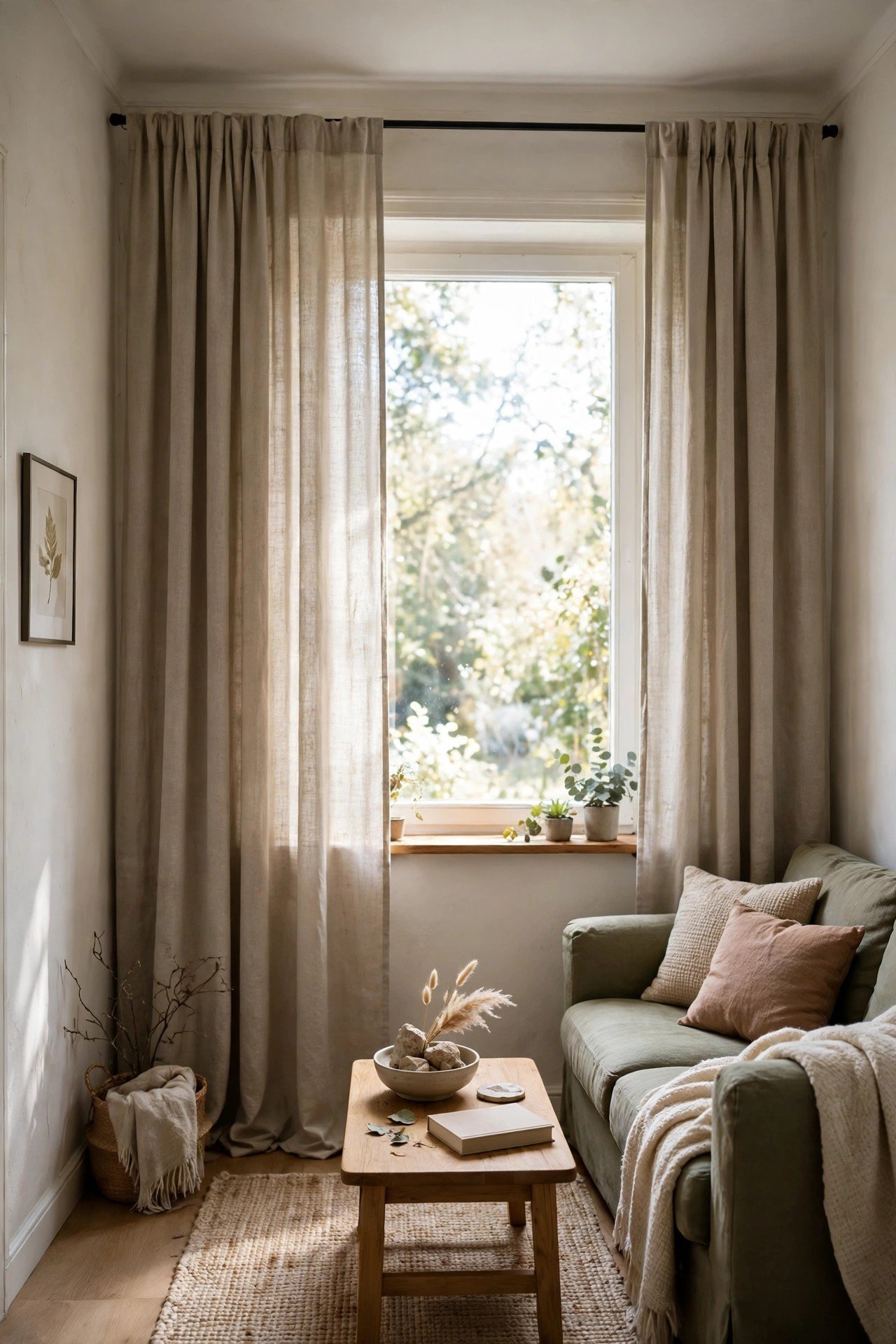
Curtains hung at ceiling height make your walls look taller at once, because the eye follows the long line from the floor all the way up. Mount the rod just below the ceiling and let the panels fall to the floor, even if the window itself is much shorter. The extra length draws the eye upward, so the whole room feels grander than its real size.
Our small living room decor ideas show how tall curtains can make a small room feel airy without changing a single wall. Choose light, simple fabric in a color close to your walls, so the curtains blend in instead of chopping the wall in half. Skip short curtains that stop at the sill, since they cut the wall short and make the window look smaller than it is.
2. Trade Your Coffee Table for a Round Ottoman
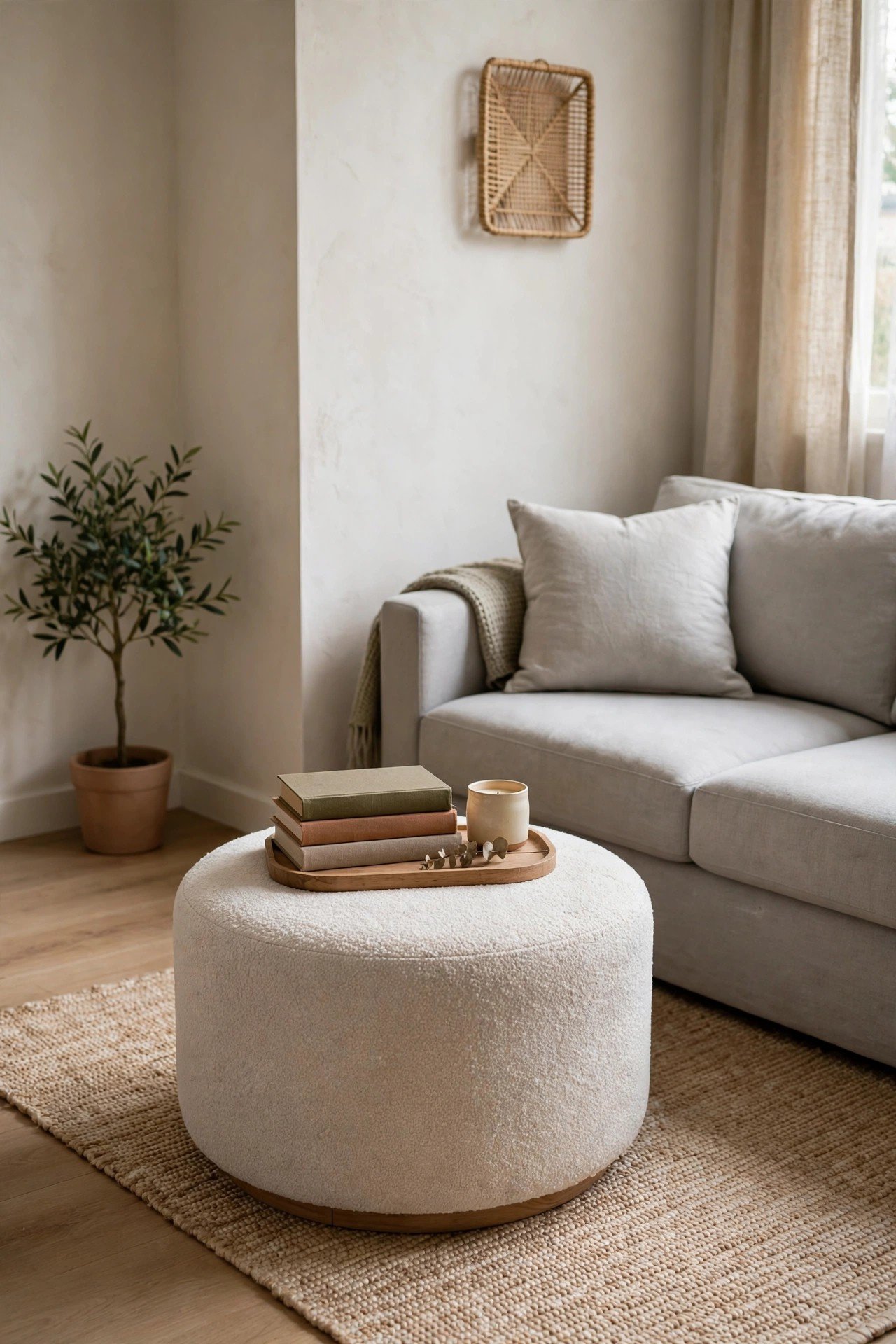
A round ottoman softens a tight seating area, because it has no sharp corners to bump into on a busy evening. It works as a footrest, an extra seat, and a coffee table with a tray on top, so one piece does three jobs at once. Choose a firm, flat-topped ottoman in a sturdy fabric, and it will hold drinks and books just like a table.
Pick a size that leaves a clear path around the sofa, since an ottoman that is too big crowds the room it should open up. A storage ottoman hides blankets and remotes inside, which keeps the top clear and the room tidy. Try a light color or a soft pattern, so the ottoman feels like a friendly accent instead of a heavy block.
3. Fake a Window With One Giant Mirror

Small living room decor tips often start with light, and one giant mirror can fake a whole extra window in a dark room. Hang a tall mirror on the wall across from your real window, so it catches the daylight and throws it back across the room. The reflection doubles the light and the view, which makes the room feel twice as wide at a glance.
Choose a mirror nearly as tall as the wall, and keep the frame slim or skip the frame altogether for the cleanest look. Lean a large floor mirror against the wall if you rent, since it needs no holes and moves with you. Keep the glass clean and the wall in front of it simple, because the mirror will double whatever it faces.
4. Pull Your Sofa Away From the Wall

A sofa pushed flat against the wall can make a small room feel like a waiting room, so pull it out by a few inches. That small gap lets light and air move behind the sofa, which makes the whole seating area feel less boxed in. Even six inches of space changes the look, because the wall and the sofa stop blending into one heavy mass.
Our how to arrange furniture in a small living room shows how floating the sofa can open up a tight floor plan without moving a single wall. Add a slim console table behind the sofa if the gap feels empty, and use it for books or a small lamp. Keep the walkway behind the sofa clear, so the room flows instead of feeling blocked.
5. Paint the Walls and Trim the Same Color
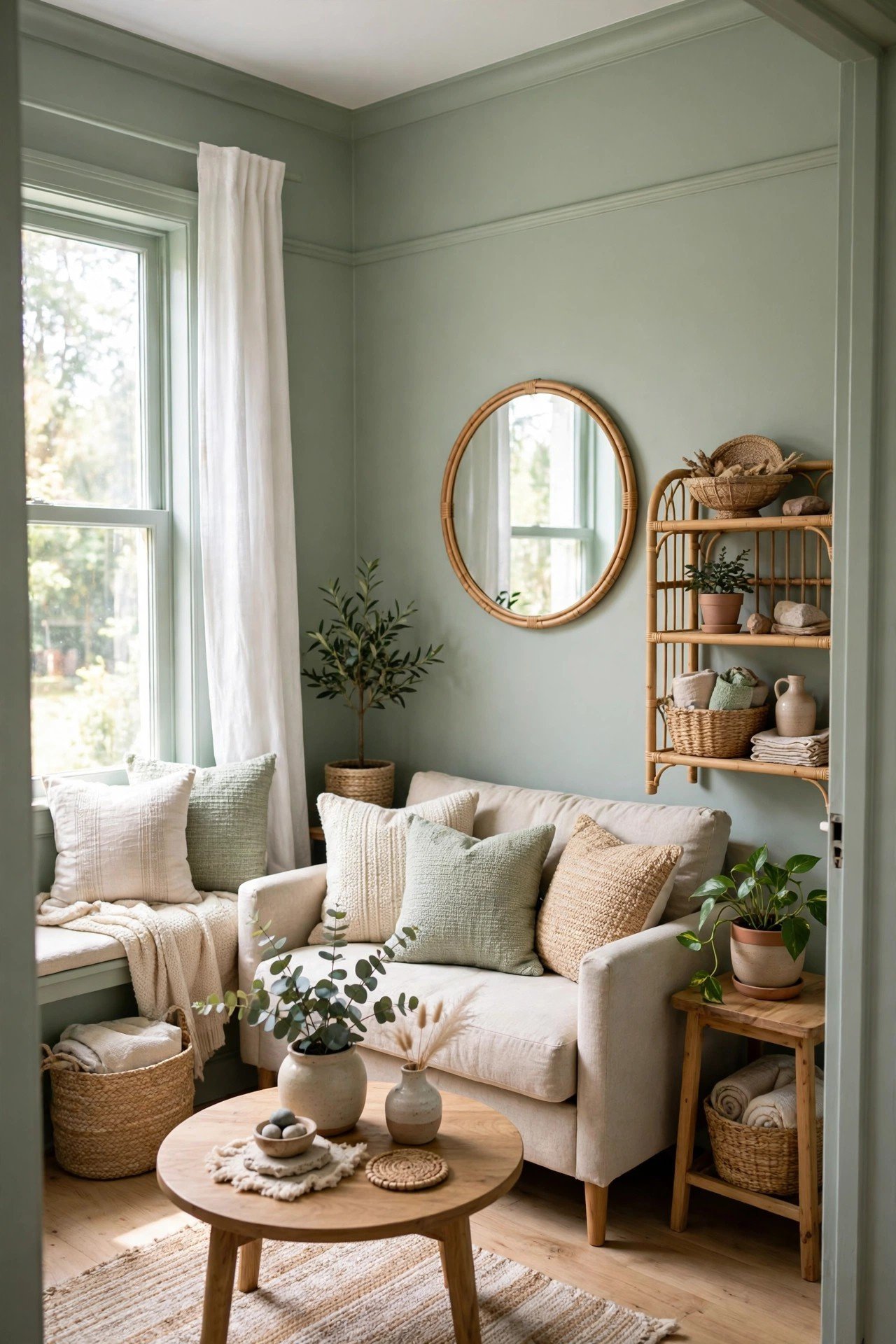
Small living room decor tips work best when the room has no hard edges, and painting the walls and trim the same color erases them. One soft color on the walls, baseboards, and door frames lets the eye glide across the room without stopping at every line. The room feels taller and wider at once, because nothing breaks the smooth flow of color.
The Architectural Digest small living room ideas show how one calm color can make a small room feel open and pulled together. Pick a light warm white, soft grey, or pale sage, and use the same shade in a satin finish on the trim. Test the color on a large board first, since one shade can look darker once it covers the whole room.
6. Fill Dead Corners With Tall, Slim Shelving
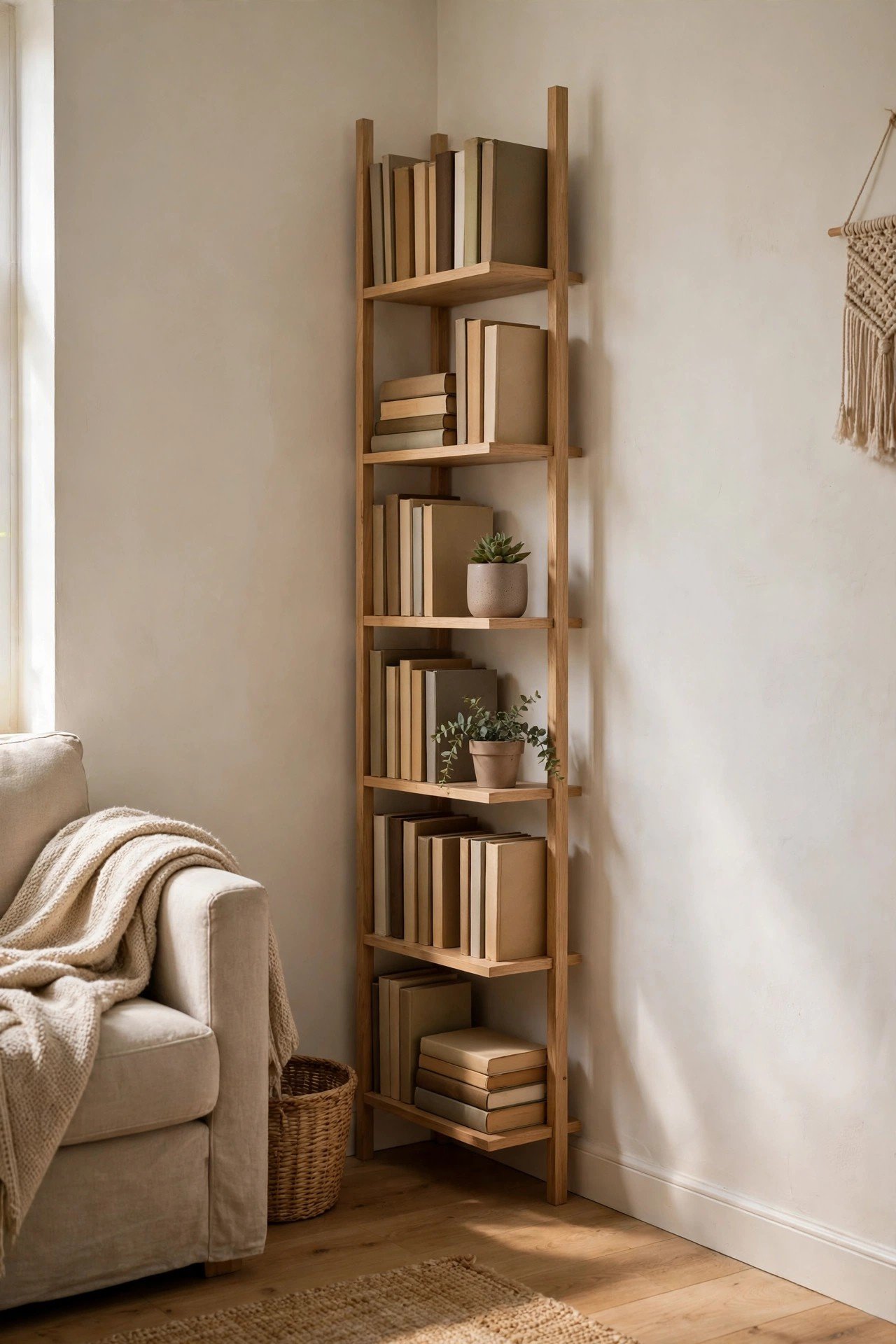
Every small living room has a dead corner that collects clutter, and tall slim shelving turns it into useful storage. A narrow shelf unit fits where a wide bookcase never could, so it uses the height of the room instead of the floor. Style it with books, one plant, and a few favorite objects, and the corner becomes a feature instead of a flaw.
Measure the corner before you buy, since a unit even one inch too wide will stick out and block the walkway. Keep the shelves light and open, so the corner feels airy instead of packed with stuff. Anchor the unit to the wall for safety, because tall slim shelves can tip if a child or pet leans on them.
7. Pick a Glass Coffee Table That Almost Disappears
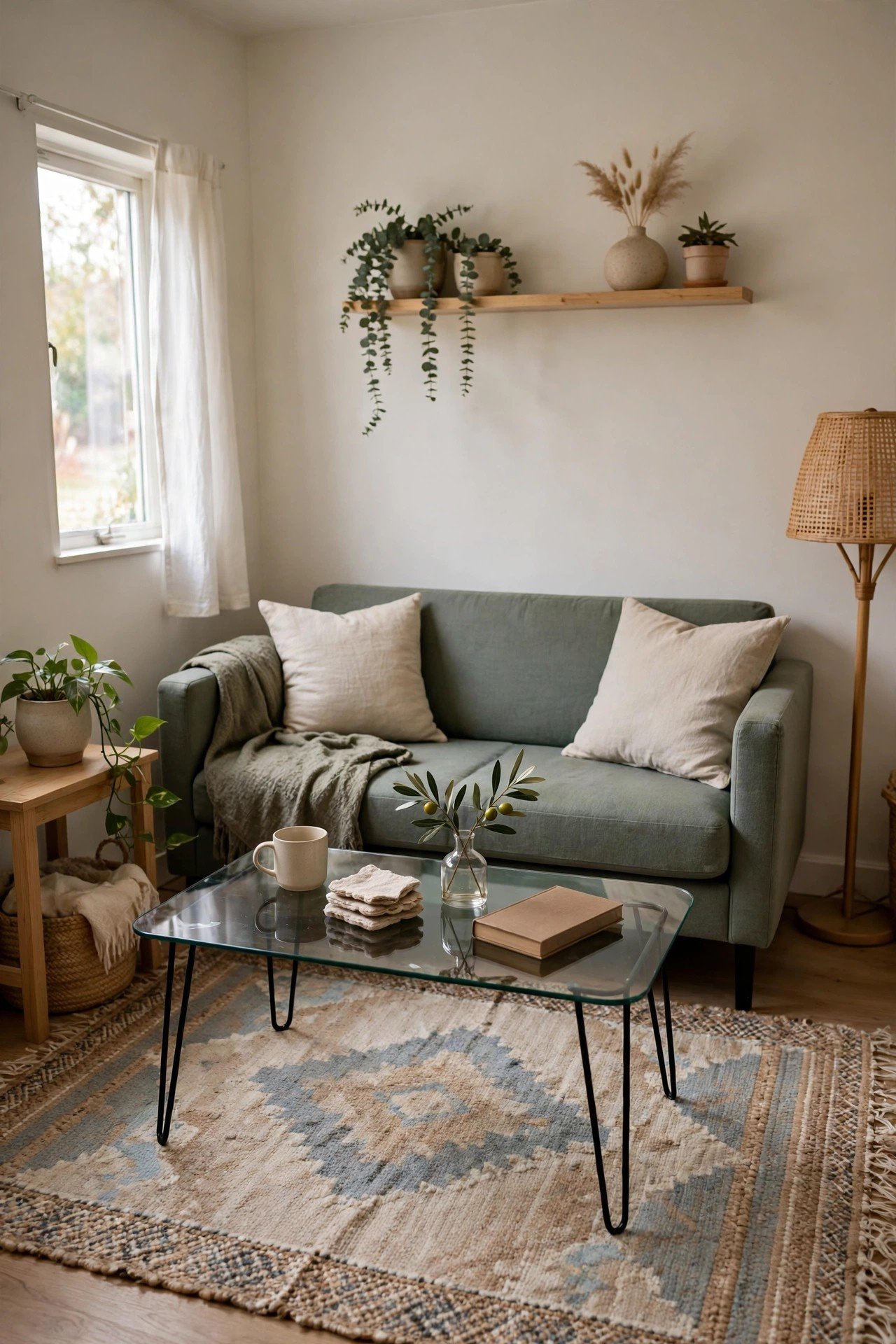
A glass coffee table almost disappears in a small room, because you can see the floor and the rug right through it. That clear view keeps the seating area feeling open, while a solid wood table would chop the space in half. Choose a simple glass top with slim metal legs, and the table will feel light even in the middle of the room.
Our how to decorate a small living room step by step explains how a clear coffee table keeps the flow open in a tight layout. Wipe the glass often with a soft cloth, since fingerprints and dust show fast on a clear surface. Add a small tray on top for drinks and remotes, so the table stays useful without looking cluttered.
8. Try a Bench Where a Loveseat Would Crowd the Room
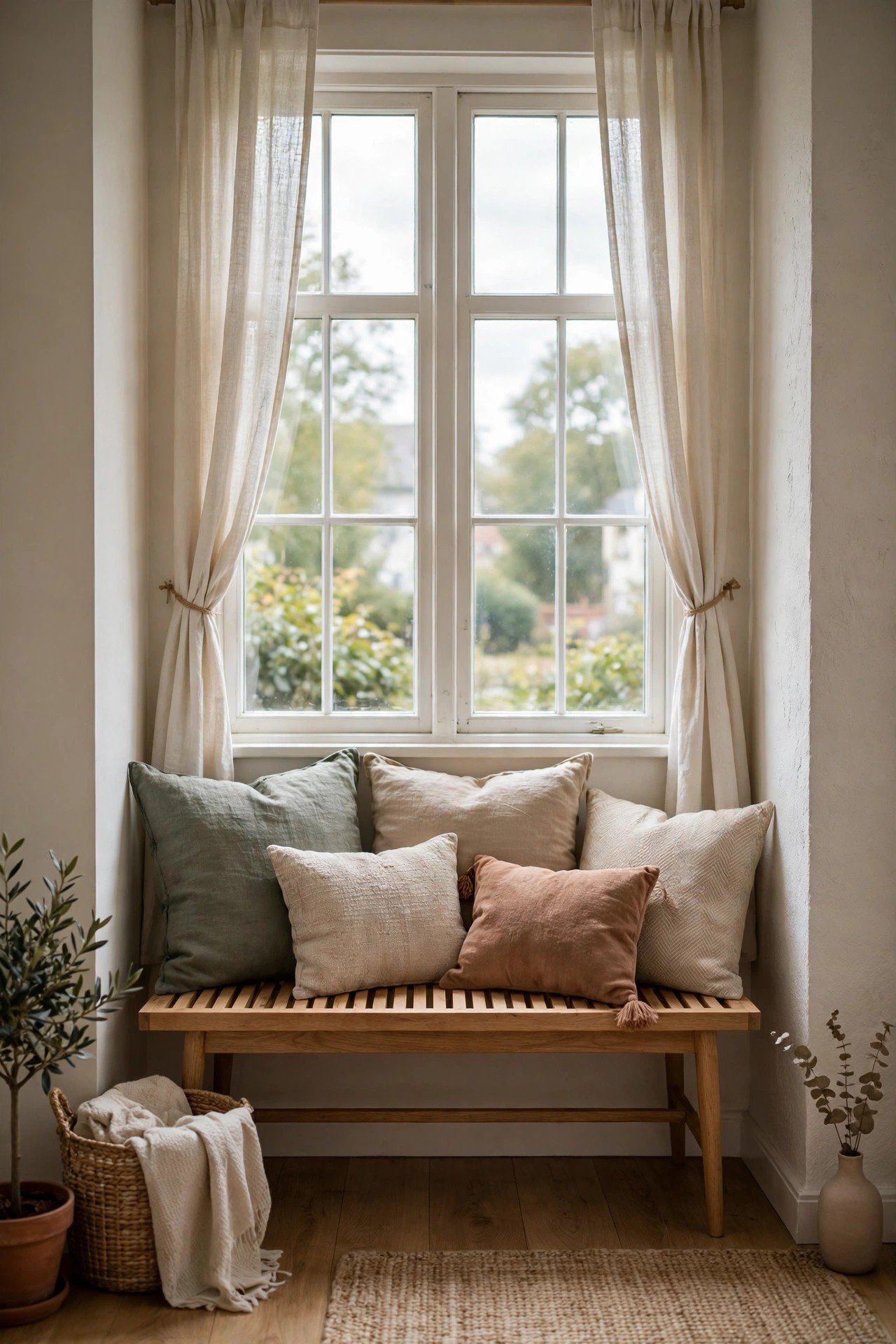
A loveseat can swallow a small living room, but a slim bench gives you the same seat without the bulk. A bench has no arms and no high back, so it leaves the sightlines open and the room feels wider. Tuck it against a wall or under a window, and it becomes extra seating that never gets in the way.
Our best sofas for small living rooms can help you compare compact seating, from loveseats to benches that fit tight rooms. Add a long cushion and two small pillows, so the bench feels as cozy as a real sofa. Choose a bench with storage under the seat, and you gain a hidden spot for blankets and board games.
9. Choose a Tree Floor Lamp Over a Bulky Arc Lamp

A tree floor lamp lights a small room from several heights at once, because its branches hold two or three small shades. It stands slim in a corner and spreads a soft glow, while a bulky arc lamp curves over the sofa and eats up the air above it. The slim pole takes almost no floor space, so the corner stays open and the light feels gentle.
Pick warm white bulbs for every shade, since cool light can make a small room feel grey and cold. Place the lamp behind an armchair or beside the sofa, so the light falls where you read and relax. Skip the heavy marble base of an arc lamp, because a slim tree lamp base slides neatly behind furniture.
10. Store Your Blankets on a Ladder, Not in a Basket
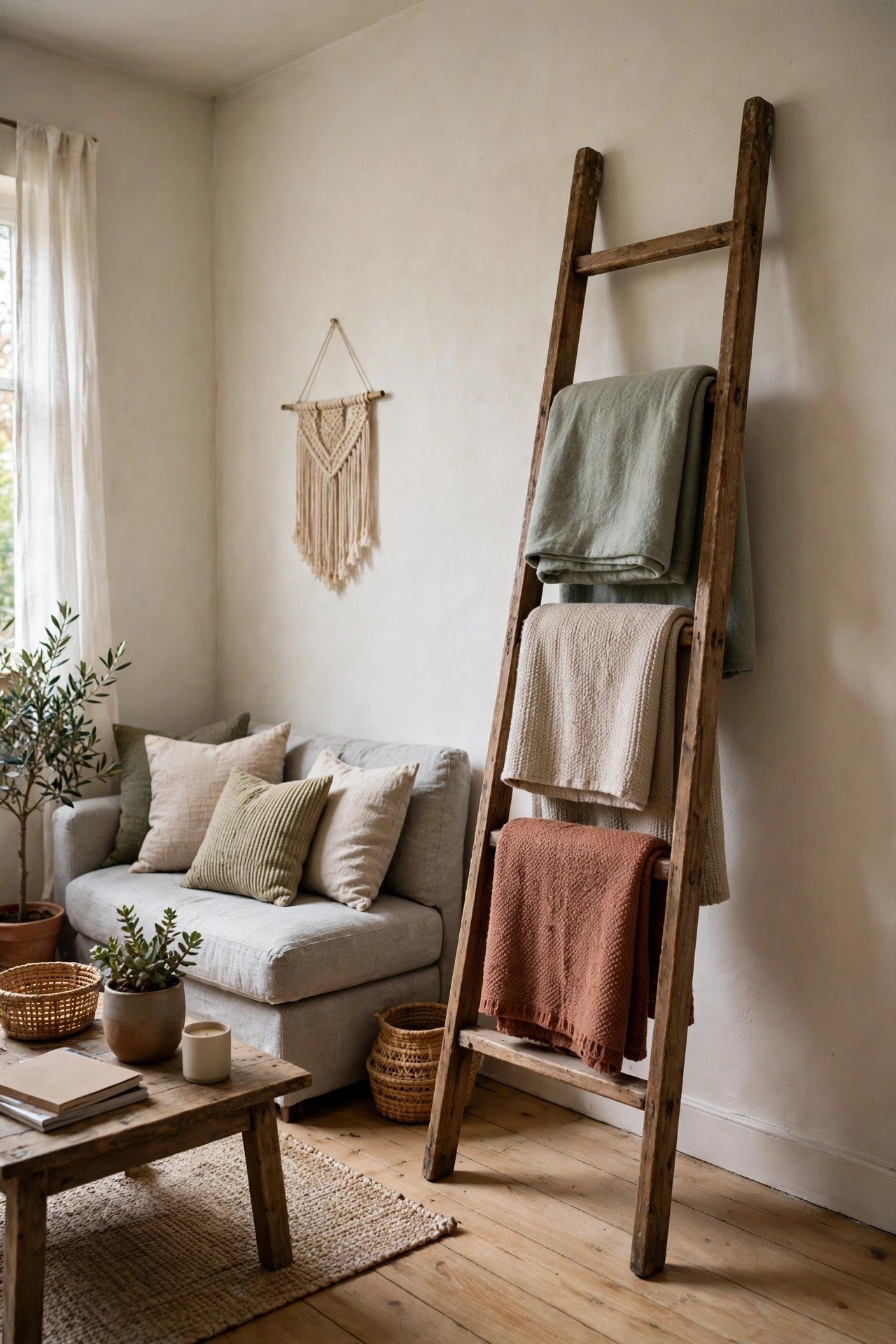
A wooden ladder leaning against the wall holds your blankets where you can see them, and it uses vertical space instead of floor space. Fold two or three throws over the rungs, and the ladder becomes a warm, rustic feature that also keeps blankets close. A basket hides the blankets and takes up floor space, while a ladder shows them off and leaves the floor clear.
Lean the ladder at a safe angle and make sure it cannot slip, since a wobbly ladder is no good near kids or pets. Choose a slim ladder in light wood, so it blends with the room instead of standing out like a tool. Rotate the blankets with the seasons, and the ladder always looks fresh and ready for a cozy evening.
11. Mount the TV and Lose the Media Console

A wall-mounted TV frees the whole floor under it, because the bulky media console no longer has to live there. The screen floats at eye level and the room feels lighter, since the biggest black box in the room is now flat on the wall. Hide the cables in a slim channel or behind the wall, so nothing dangles and breaks the clean look.
Mount the TV at seated eye level, not high above the sofa, since a screen that is too high strains your neck. Add one low floating shelf below the screen for a soundbar or a small plant, and keep the rest of the wall clear. Check the wall for studs before you drill, because a TV needs strong fixings to stay safe.
12. Keep Your Rug Small Enough to Let the Floor Show

A rug that runs wall to wall swallows a small room, so keep it small enough to show a border of floor around the edges. That ring of bare floor frames the rug and makes the room look bigger, because the eye can see where the room really ends. Choose a rug that sits under the front legs of the sofa and chairs, and leave the rest of the floor free.
Measure the seating area before you shop, since a rug that is too big crowds the room and one that is too small looks lost. Pick a light color or a simple pattern, so the rug lifts the room instead of weighing it down. Leave at least a foot of floor showing on each side, and the room will feel open and balanced.
13. Swap Table Lamps for Wall Sconces
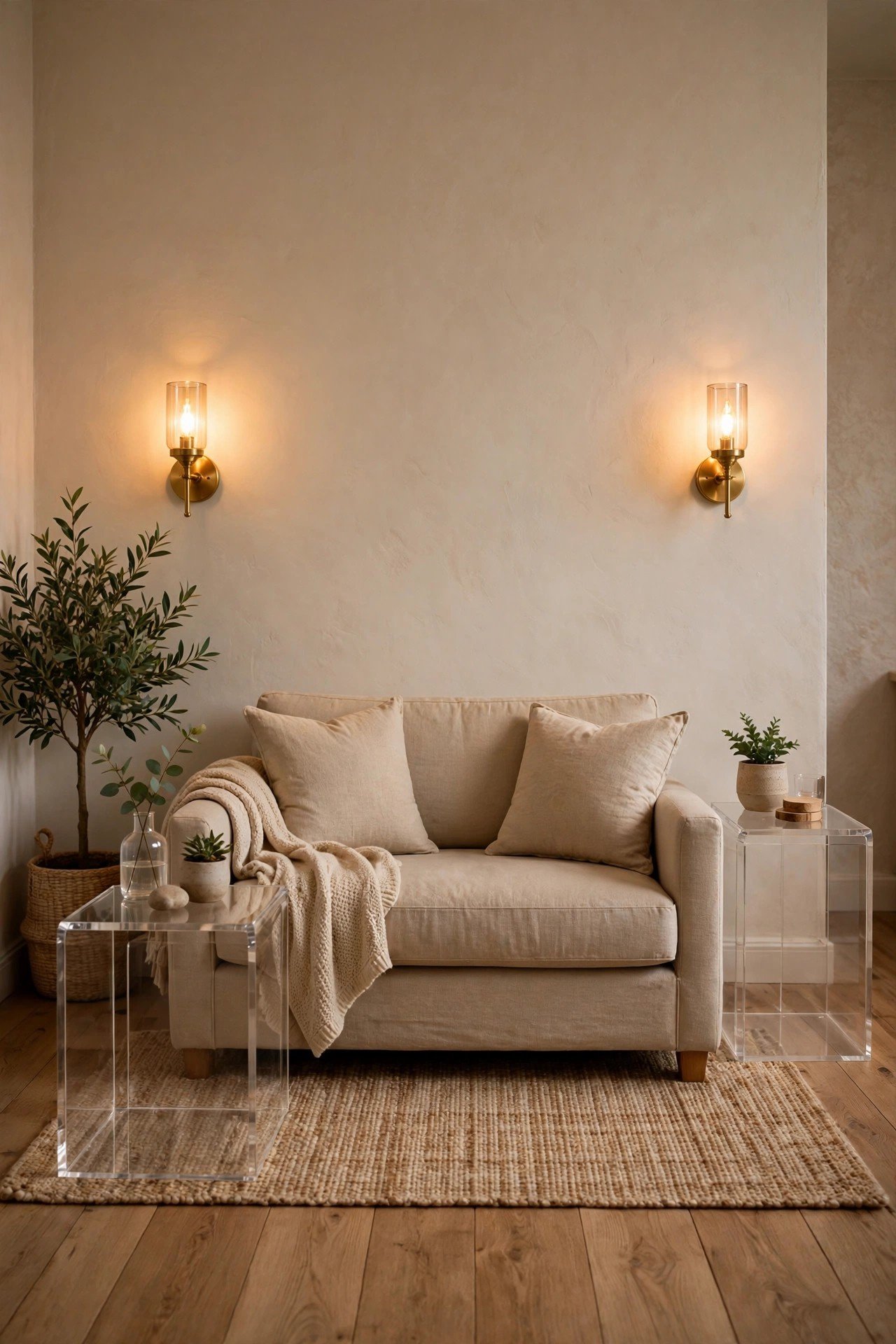
Table lamps eat up the only free surface in a small room, so swap them for wall sconces and win the tables back. Sconces mount on the wall at eye level, where they give warm reading light without taking a single inch of table space. The side tables stay clear for books and drinks, and the room looks tidy the moment you walk in.
The House Beautiful living and family room ideas show wall lights styled in small rooms where every surface counts. Choose plug-in sconces if you rent, since they need no wiring and hang from a hook. Place one sconce on each side of the sofa, so the light feels balanced instead of leaning to one side.
14. Keep Your Color Palette Monochromatic for a Calm Look
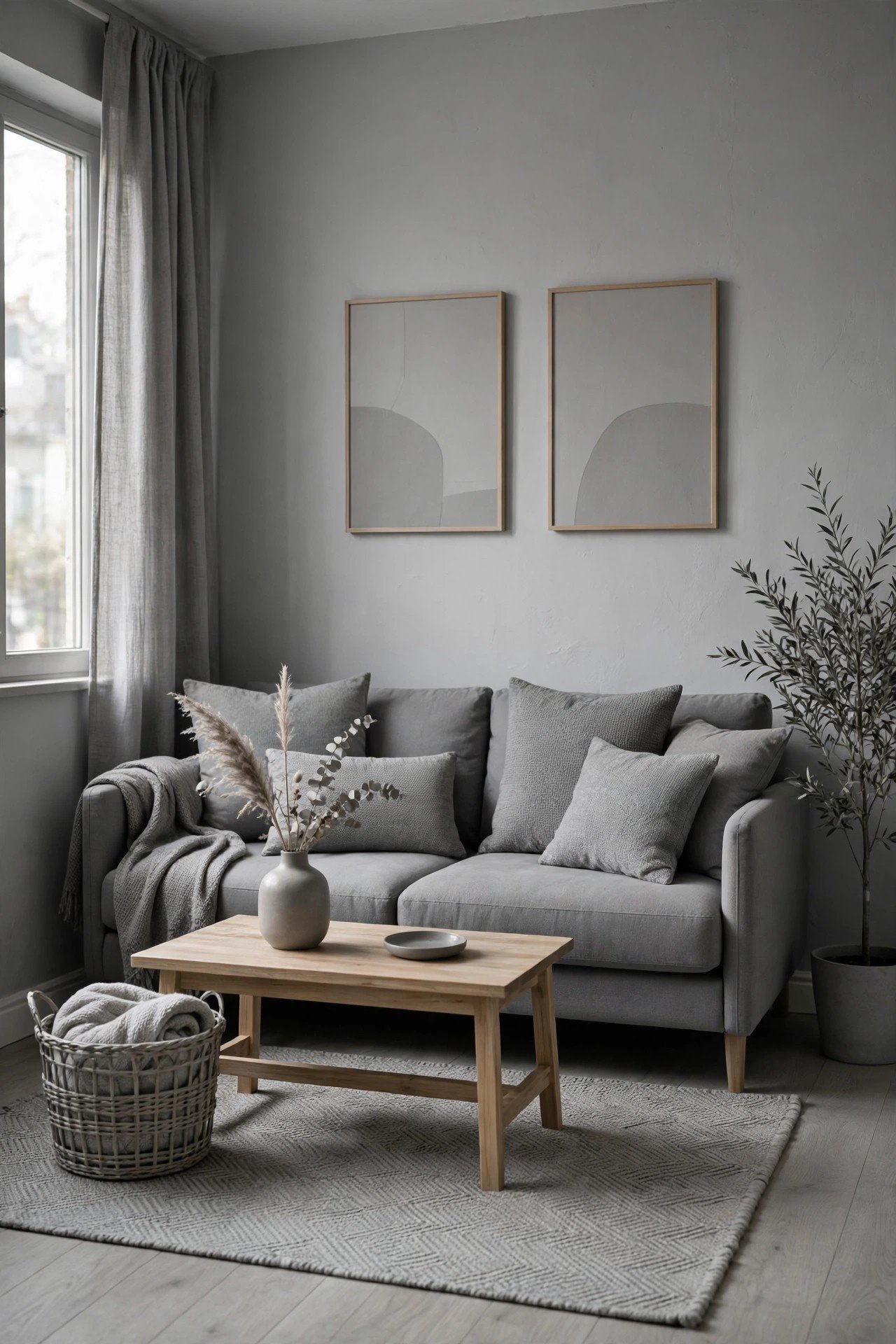
One color in many shades makes a small room feel calm and seamless, because the eye finds no sharp change to stop at. Pick a soft base like warm grey or dusty blue, then layer it from pale to deep across the walls, sofa, and cushions. The single color family ties the whole room together, so even a small space feels planned and peaceful.
Vary the texture instead of the color, so matte walls, soft velvet, and woven baskets keep the room interesting. Add one tiny accent in a warm metal, like brass or copper, to stop the room from feeling flat. Step back and look at the room as a whole, and pull out any item that fights the single color story.
15. Add a Shelf Above the Door Frame

The wall above a door frame is empty space in almost every home, and one slim shelf turns it into a display spot. A shelf up high holds books, plants, or favorite objects without taking any floor or table space at all. It draws the eye upward too, which makes the ceiling feel higher and the room feel taller.
Keep the shelf shallow and the objects light, since heavy items above a door can feel unsafe. Style it with three or four pieces in one color family, so the high shelf looks calm instead of cluttered. Dust it once a month with a long duster, because high shelves collect dust that you rarely notice.
16. Choose a Sofa With Legs and Skip the Skirt
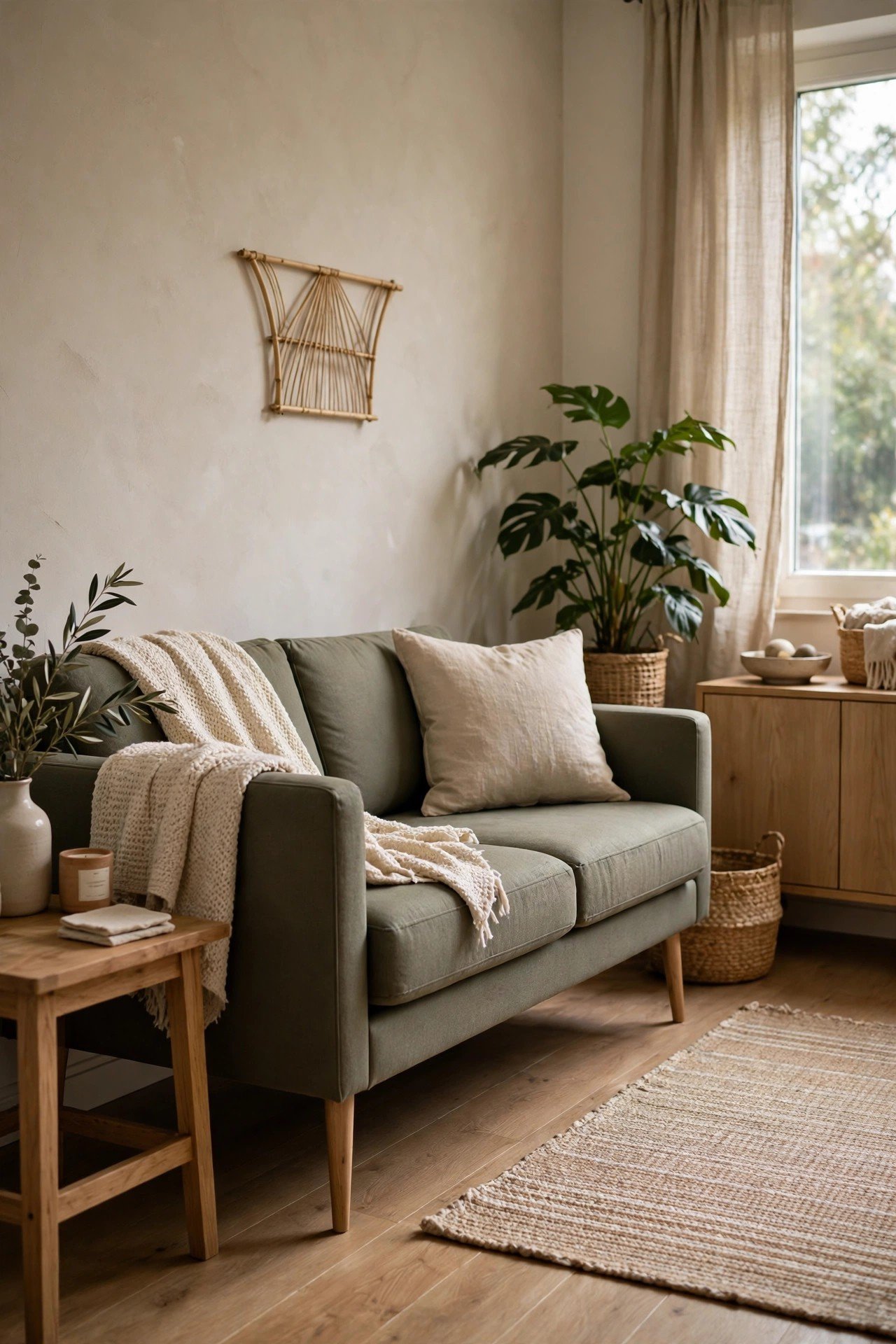
A sofa with legs shows a strip of floor underneath, and that small gap makes the whole piece feel light and airy. A skirted sofa sits flat on the floor and looks like a heavy block, which can shrink a small room at a glance. Slim tapered legs lift the sofa just enough to let light flow under it, so the room breathes around the furniture.
Look for legs at least a few inches tall, since very short legs barely show the floor beneath. Match the leg finish to your other wood tones, so the sofa feels tied into the room. Vacuum under the sofa weekly, because dust and lost remotes gather fast in that open gap.
Frequently Asked Questions
What is the best color for a small living room?
Soft light colors work best, like warm white, pale grey, soft sage, and dusty blue. These quiet shades bounce light around the room and make the walls feel farther away. Add one deeper shade for cushions or a throw, so the room feels layered instead of flat.
How can I make my small living room look bigger?
Hang curtains at ceiling height, add one giant mirror, and float your sofa a few inches off the wall. Keep the rug small enough to show a border of floor, and choose furniture with legs so light flows underneath. Paint the walls and trim the same color, since one smooth color makes the room feel wider.
What are the easiest small living room decor tips for renters?
The easiest small living room decor tips for renters need no drilling and no paint, so start with a leaning mirror, a ladder for blankets, and plug-in sconces. Swap the coffee table for a round ottoman, and add a shelf that hangs from adhesive hooks above the door. Use a small rug and light curtains on a tension rod, and the room will feel bigger without a single hole in the wall.
Should I use a coffee table or an ottoman in a small living room?
A round ottoman usually works better, because it has no sharp corners and can serve as a seat, a footrest, and a table. A glass coffee table is the best choice if you need a hard surface for drinks and laptops every day. Pick the piece that fits your daily habits, and leave a clear path around it either way.
How do I keep a small living room from feeling cluttered?
Give everything a home, and use hidden storage like a storage ottoman or a bench with a lift-up seat. Keep surfaces clear by swapping table lamps for sconces and storing blankets on a ladder. Edit the room once a season, and pull out anything you have not used or loved in months.
Final Thoughts
These 16 small living room decor tips prove that a small room can feel big, bright, and beautiful with a few smart swaps. Start with the tip that excites you most, whether it is ceiling-high curtains, a giant mirror, or a sofa with legs. Pick one change today, enjoy the extra space tonight, and keep adding tips until the room feels like home.