20 Traditional Decor Ideas for a Warm, Timeless Home
These traditional decor ideas will help you build a home that feels warm, collected, and timeless. Think rich wood furniture, classic rugs, framed artwork, soft patterns, and lamps that glow in the evening. These twenty ideas show how to add traditional character one simple layer at a time.
Traditional style does not mean formal, expensive, or too perfect to live in. The best traditional rooms mix old and new pieces, and they show signs of real life on every shelf. Warm colors, natural textures, and personal collections do most of the work for you.
You do not need a full renovation or a large budget to start. Many of these ideas cost little and work well in rentals and small homes alike. Pick the rooms you love most, and add one idea at a time until your home feels settled and warm.
1. Begin With Warm Wood Furniture
Warm wood is the easiest starting point for a traditional room. Walnut, oak, cherry, and mahogany tones bring instant depth to pale walls and plain floors. A solid wood table or console can make a whole room feel more grounded and more expensive.
Mix two or three related wood finishes instead of buying one matching set. A dark wood dining table can sit happily beside a lighter oak sideboard when the shapes are classic. For a similar warm and relaxed feel, see these farmhouse living room decor ideas that pair wood with soft seating and natural light.

2. Pick a Classic Traditional Area Rug
A classic rug can change a room faster than almost any other single piece. Persian-style patterns, floral borders, medallions, and muted geometric designs all suit traditional rooms. Choose colors that are rich but soft, so the rug works with curtains, pillows, and art.
Size the rug so the front legs of the sofa and chairs rest on it. A rug that is too small can make even beautiful furniture look lost in the middle of the floor. Our traditional living room design ideas show how a well-sized rug anchors seating and ties a room together.

3. Dress Windows With Patterned Curtains
These traditional decor ideas start at the windows, because bare windows can make a classic room feel unfinished. Stripes, small florals, checks, damask, and textured solids all work well in traditional rooms. Pick one pattern for the curtains and let the rug or sofa carry the rest of the color.
Hang the curtain rod several inches above the window frame to make the ceiling look taller. Floor-length curtains that just touch the floor look more finished than short curtains in a living room or bedroom. If the rug is already busy, choose a quieter curtain so the patterns do not fight each other.

4. Balance Rooms With Symmetry
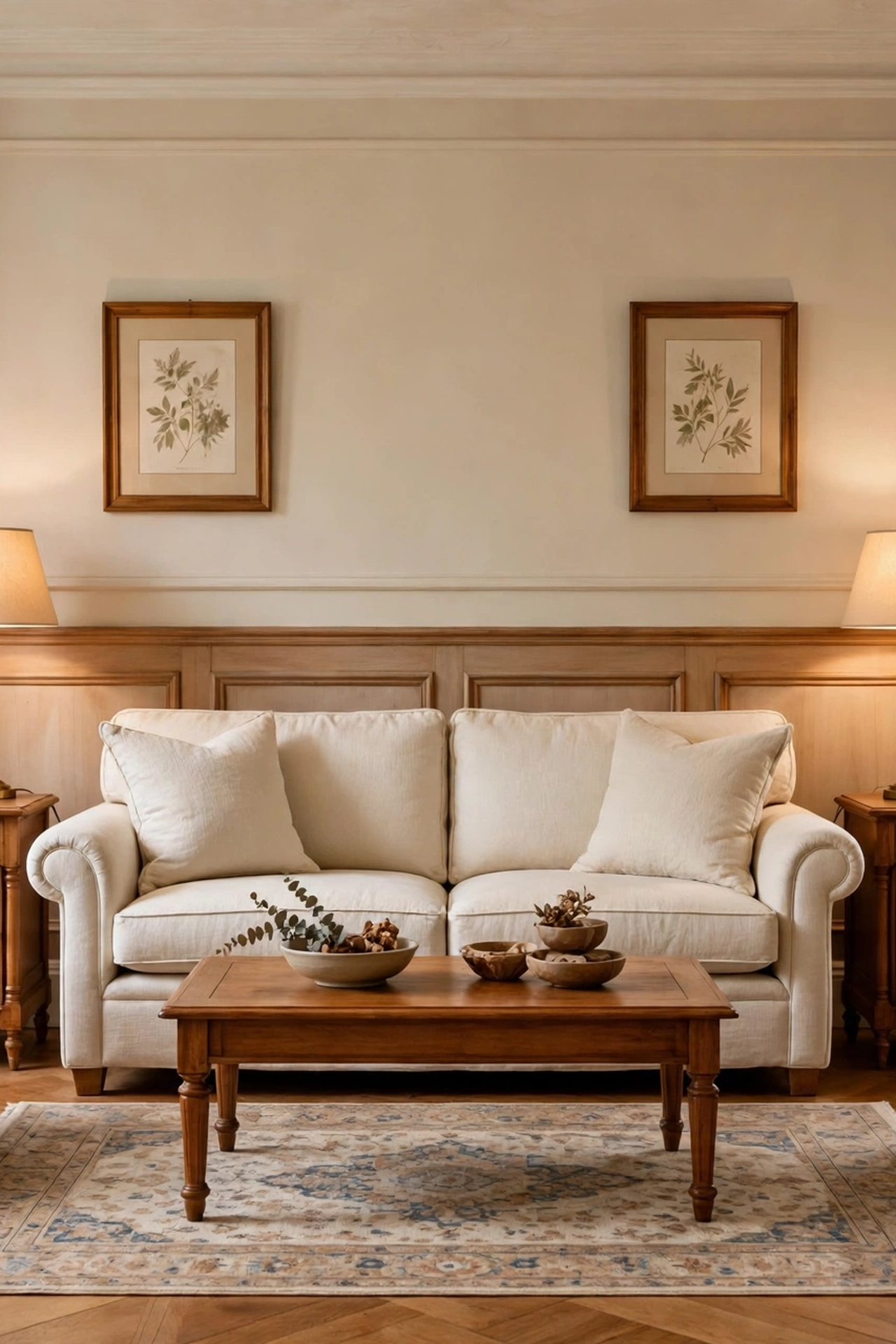
Symmetry is the simplest trick for a calm, traditional room. Place matching lamps on both sides of a sofa, or matching chairs facing each other across a rug. The repeated shapes make a room feel settled, even when the furniture is simple.
You do not need to mirror every single object in the room. Keep the large pieces balanced, then add different books, flowers, and art on each side for personality. For more small-space tricks, see these small living room decor ideas that make balanced layouts feel intentional in tiny rooms.
5. Fill Walls With Framed Artwork
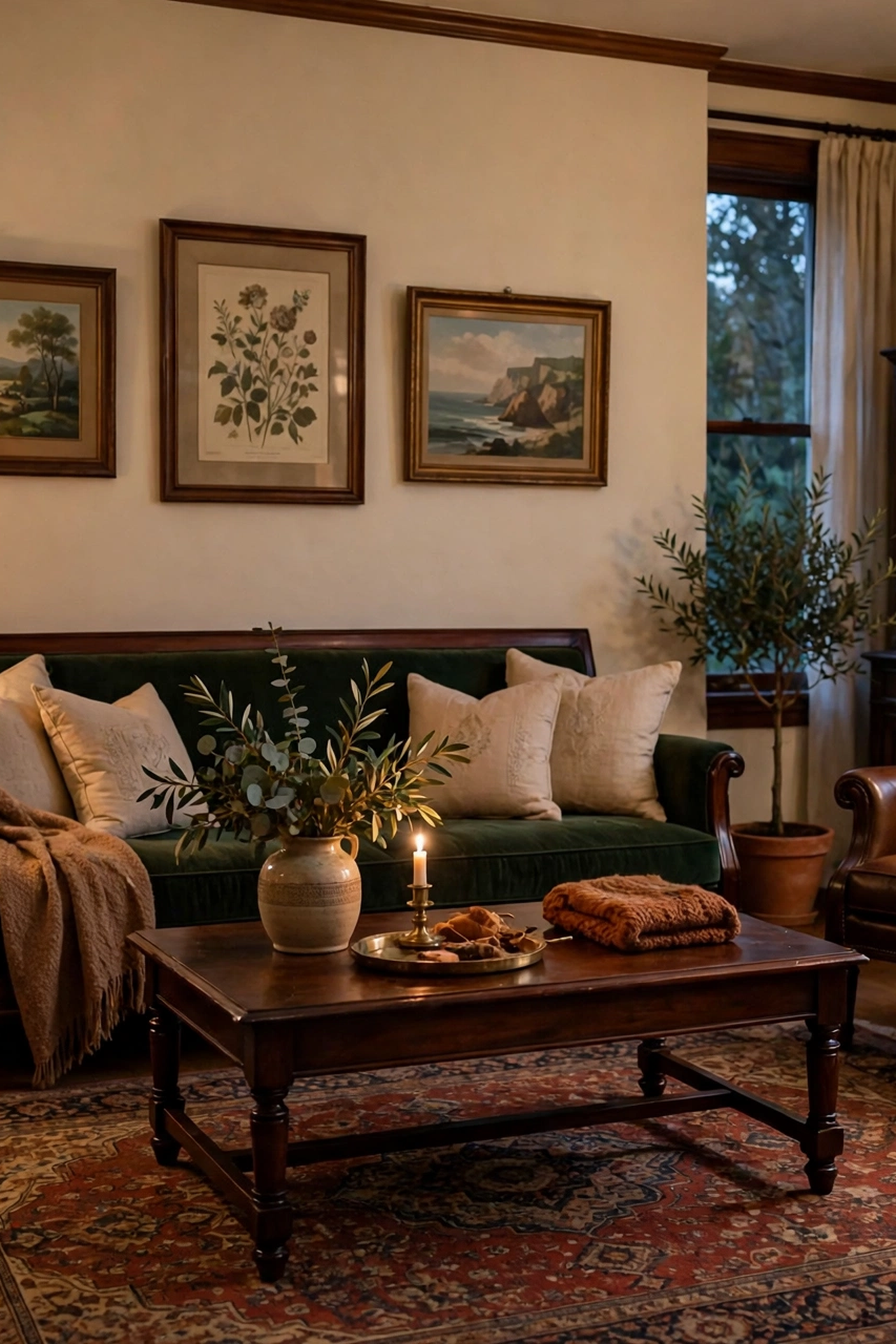
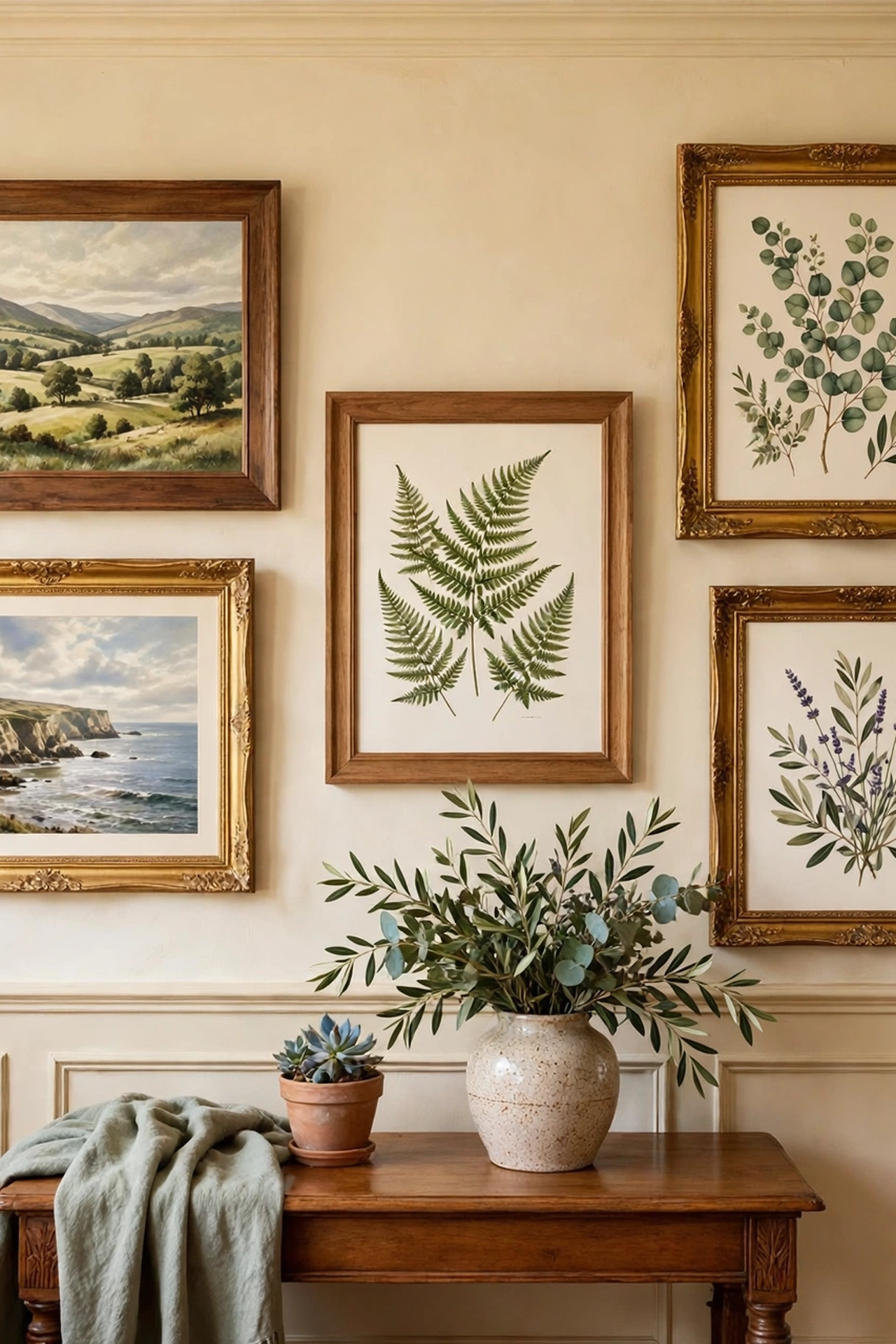
These traditional decor ideas treat artwork as a collection, not as a matching set. Landscape paintings, botanical prints, portraits, still lifes, and vintage maps all belong in a traditional home. Mix wood, brass, black, and aged gold frames, and keep the sizes varied for a collected look.
Frame pages from old books or inexpensive public-domain prints when the budget is tight. A ten-dollar print in a solid frame can look far more costly than a fifty-dollar print in thin plastic. Arrange the frames on the floor first, because a layout that looks good on paper can feel unbalanced on the wall.
6. Add an Antique-Style Mirror
A large mirror brings light and old-world character into a traditional room at the same time. Look for carved wood frames, aged gold finishes, dark bronze, or simple rectangular shapes. Hang one above a fireplace, a console table, or a dresser for the strongest effect.
In a small room, a mirror can bounce daylight deeper into the space without using any floor area. An ornate mirror can also become the focal point when the furniture around it is fairly plain. Match the mirror to the furniture below it, because a mirror that is too wide can overpower a narrow console.

7. Build a Traditional Gallery Wall
A gallery wall lets you show a whole collection instead of one lonely picture. Combine landscapes, botanical prints, family photos, sketches, and small decorative pieces in one arrangement. Keep the spacing even so the mix still feels planned rather than random.
Start with one large central piece and add smaller frames around it. Repeat one frame color through the whole wall, even when the other frames are different. Lay the frames on the floor first, because a layout that looks good on paper can feel unbalanced once it is on the wall.

8. Light Rooms With Traditional Lamps and Warm Bulbs
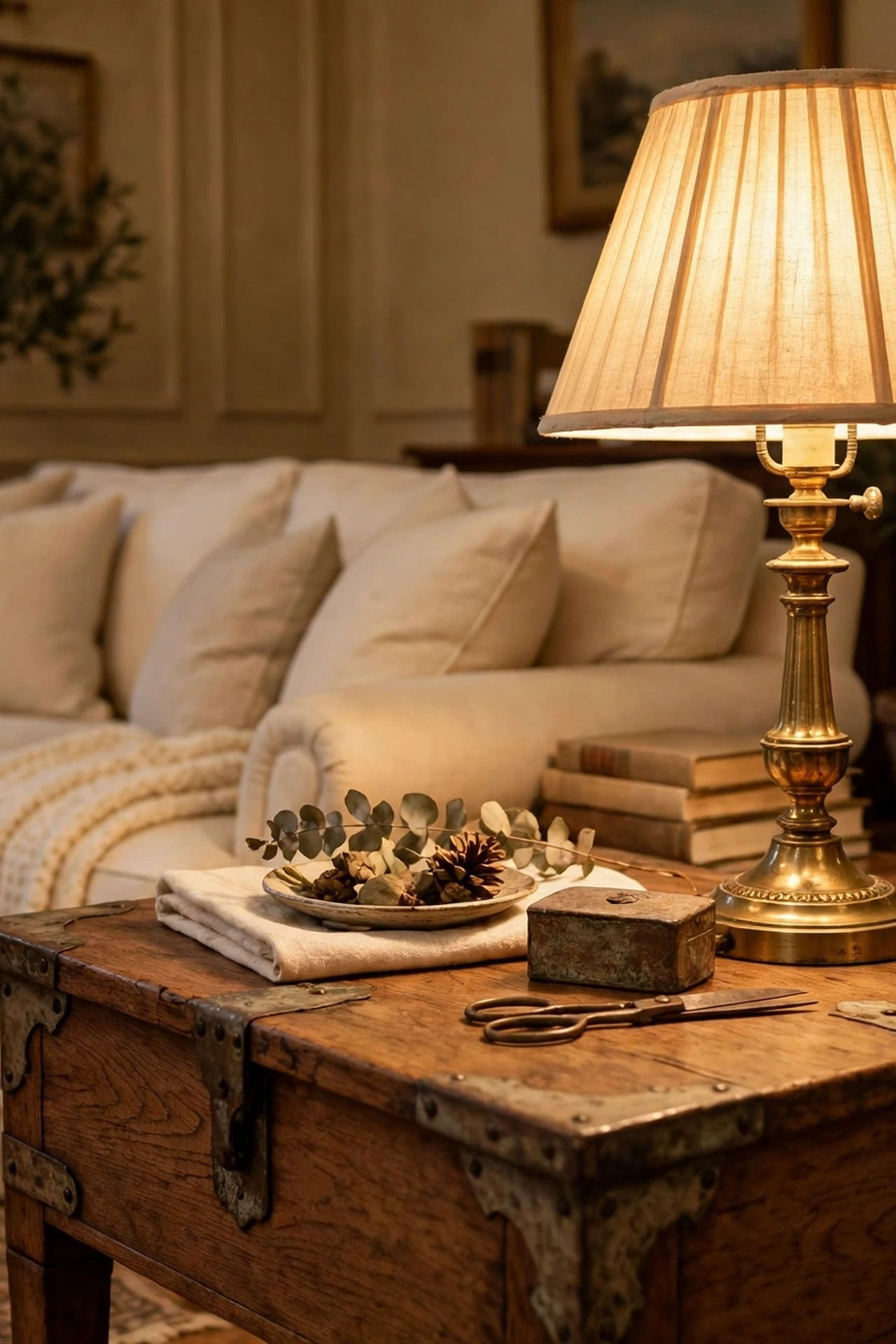
Lighting can make or break a traditional room, no matter how lovely the furniture is. Bright white bulbs can make wood and cream fabrics look cold and flat. Warm bulbs and several small light sources create a glow that one ceiling fixture never can.
Use table lamps with ceramic, brass, or glass bases and classic fabric shades. Add a chandelier over the dining table and a floor lamp beside a reading chair. Choose warm white bulbs everywhere, so every lamp in the room feels like part of the same evening.

9. Add Crown Molding and Decorative Trim
Architectural trim is what separates a truly traditional room from a room with traditional furniture. Crown molding, baseboards, picture-frame molding, and wainscoting all add depth to plain walls. If your home already has these details, keep them visible instead of hiding them behind tall furniture.
Picture-frame molding works especially well in dining rooms, hallways, and bedrooms. Painted trim can give much of the same effect as costly millwork for far less money. Keep the trim size right for your ceiling height, because very thick molding can look awkward in a low room.

10. Style a Console Table With Intention
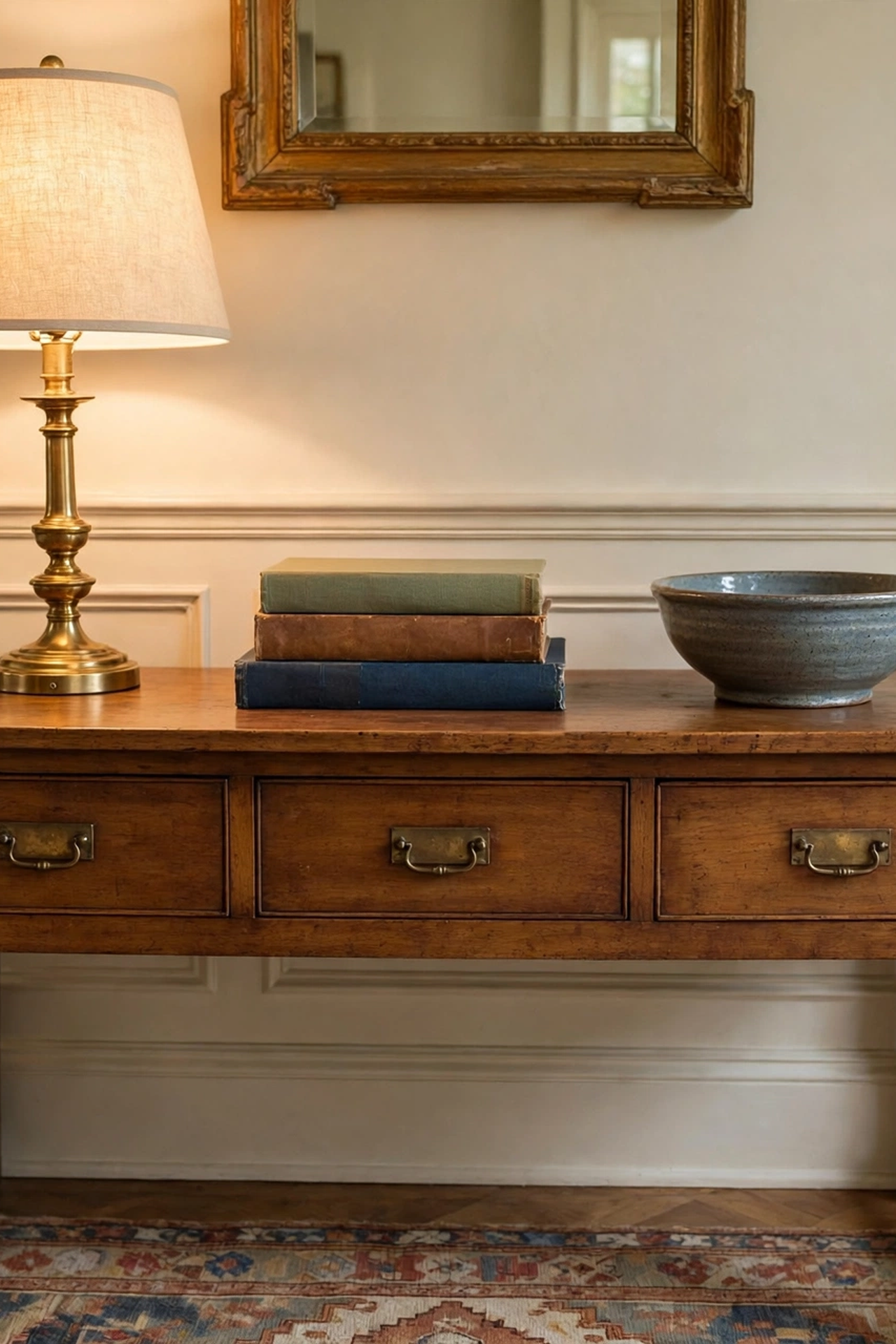
A console table is a small stage where you can practice traditional styling. Start with one larger piece above the table, such as a mirror or a framed artwork. Then add a lamp, a stack of books, a small bowl, and one decorative object.
The goal is not to cover every inch of the surface with tiny things. A few substantial objects with space around them look more refined than twenty small decorations. Use objects at different heights, because a flat row of same-sized pieces can look dull and lifeless.
11. Pair Floral Patterns With Solid Fabrics
Floral patterns are the quickest way to add traditional character to a plain room. A floral accent chair, a pair of pillows, a curtain, or an upholstered bench can be enough. You do not need floral wallpaper on every wall to get the traditional feeling.
Start with one patterned piece and surround it with solid fabrics in matching colors. A floral chair beside a solid linen sofa with a plain pillow is a classic combination. Repeat one or two colors from the floral pattern elsewhere, so the room feels connected rather than random.

12. Make a Bookshelf Look Collected and Classic
A bookshelf suits traditional decor because the style loves things that look collected over time. Mix real books with framed photos, small artwork, pottery, brass objects, and baskets. Vary the height and direction of the objects, so no two shelves look exactly the same.
Let a large book collection be the main decoration instead of hiding it behind accessories. A bookshelf should look like someone actually reads the books and uses the objects. Leave some empty space on every shelf, because a packed shelf makes even beautiful objects disappear.

13. Warm Rooms With Brass and Aged Metal
Metal accents add a small glow that wood and fabric alone cannot give. Brass hardware, aged bronze frames, metal lamps, candleholders, and trays all bring warmth. Aged or brushed finishes feel more relaxed than highly polished metal in a traditional room.
Repeat one metal finish several times around the room without making everything match exactly. Brass can appear on a lamp, on cabinet hardware, and on a picture frame in the same space. If you cannot replace silver hardware, mix the metals on purpose and repeat each finish enough that it looks planned.
14. Set Up a Traditional Dining Room
The dining room is where traditional decor feels most at home. Start with a substantial wood table, then add comfortable chairs, a classic rug, framed art, and warm light. A sideboard gives you storage for serving pieces and another surface for lamps and flowers.
You do not need a formal dining room to use these ideas in your home. A small dining corner can feel traditional with a wood table, one framed print, and a classic pendant light. Choose a rug large enough that chairs still sit on it when they are pulled out from the table.

15. Choose a Traditional Headboard for the Bedroom
The bed is the biggest piece in most bedrooms, so the headboard sets the whole mood. Upholstered headboards with curved shapes, tufting, or nailhead trim feel classic and soft. Wood headboards give the same room a warmer and more understated traditional look.
Keep the bedding simple when the headboard is elaborate, so the two do not compete. White, cream, beige, muted blue, and dusty green all layer easily on a traditional bed. For more bedroom inspiration, see these traditional bedroom ideas from Homes and Gardens that show how a camelback headboard creates a timeless focal point.

16. Style a Classic Fireplace Mantel
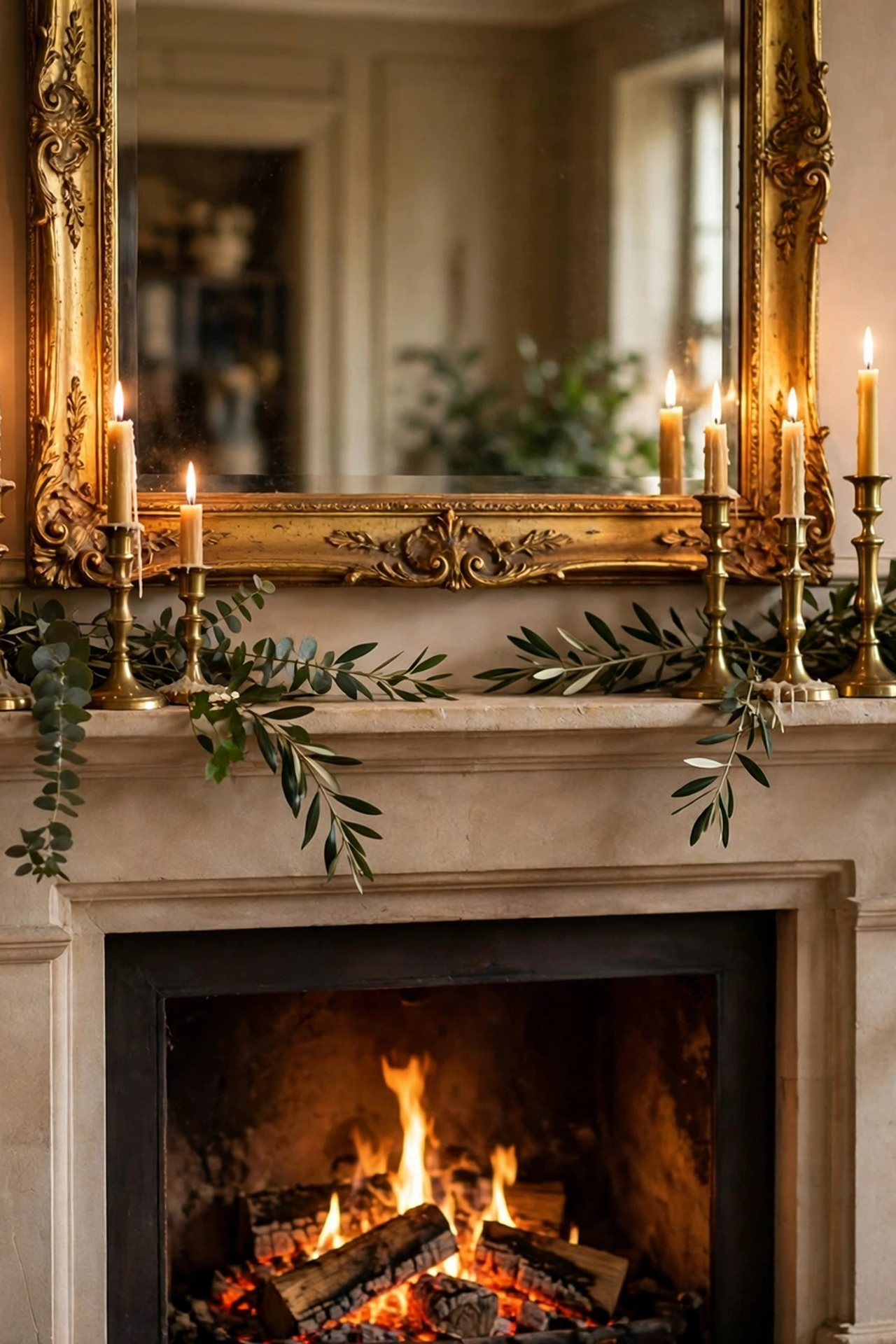
A fireplace is the natural focal point of a traditional room, so the mantel deserves care. Start with one large anchor, such as a mirror or a framed artwork, in the center. Then add two smaller objects at different heights, like brass candlesticks or ceramic vessels.
Greenery, books, and a small framed print can finish the arrangement without crowding it. The most common mistake is lining up many same-sized objects in one straight row. Let one item dominate the mantel, so the eye knows where to look first.
17. Try Wallpaper in a Small Dose
Wallpaper is a classic traditional element, but it does not need to cover your whole home. One powder room, one accent wall, a hallway, or a dining room can be enough. Botanical prints, damask, toile, small florals, stripes, and classic geometrics all suit the style.
If you rent, removable wallpaper gives you the same look without a permanent change. Test a small area first, because removal depends on the paint and the wall condition. Use the pattern above a chair rail or on one wall, and keep the furniture around it quiet.

18. Display Books and Collected Objects
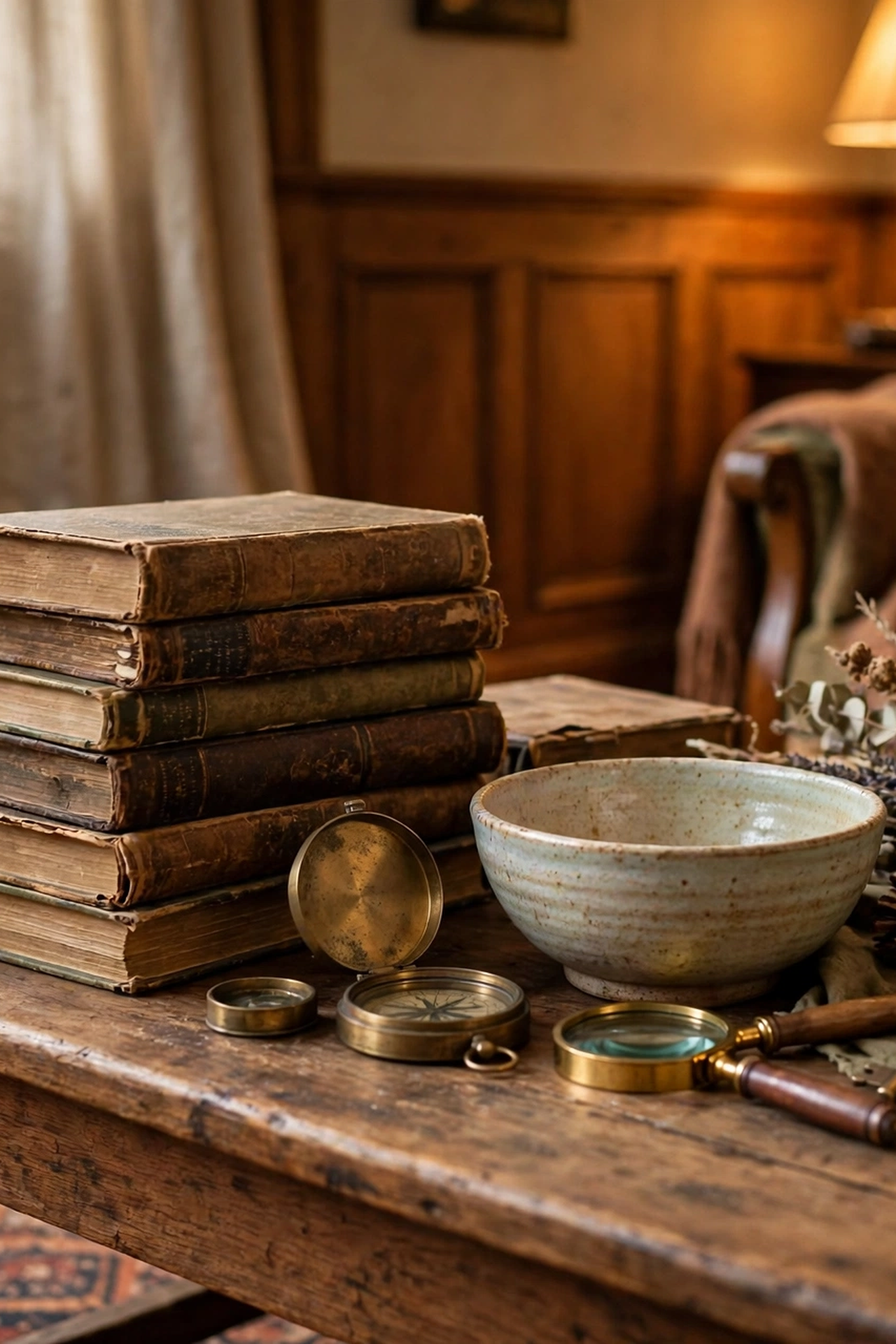
Books make a traditional room feel lived in instead of staged for a photograph. Stack large books on a coffee table, keep novels on a shelf, or use old books as risers for small objects. Then add pieces with some history, like a ceramic bowl, an inherited frame, or a travel souvenir.
You do not need real antiques to get this collected feeling in your home. Real books with visible wear usually make shelves feel more believable than decorative books bought to match a room. Choose objects you actually love, because a shelf full of things with meaning always beats a shelf full of props.
19. Mix Traditional Decor With Modern Pieces
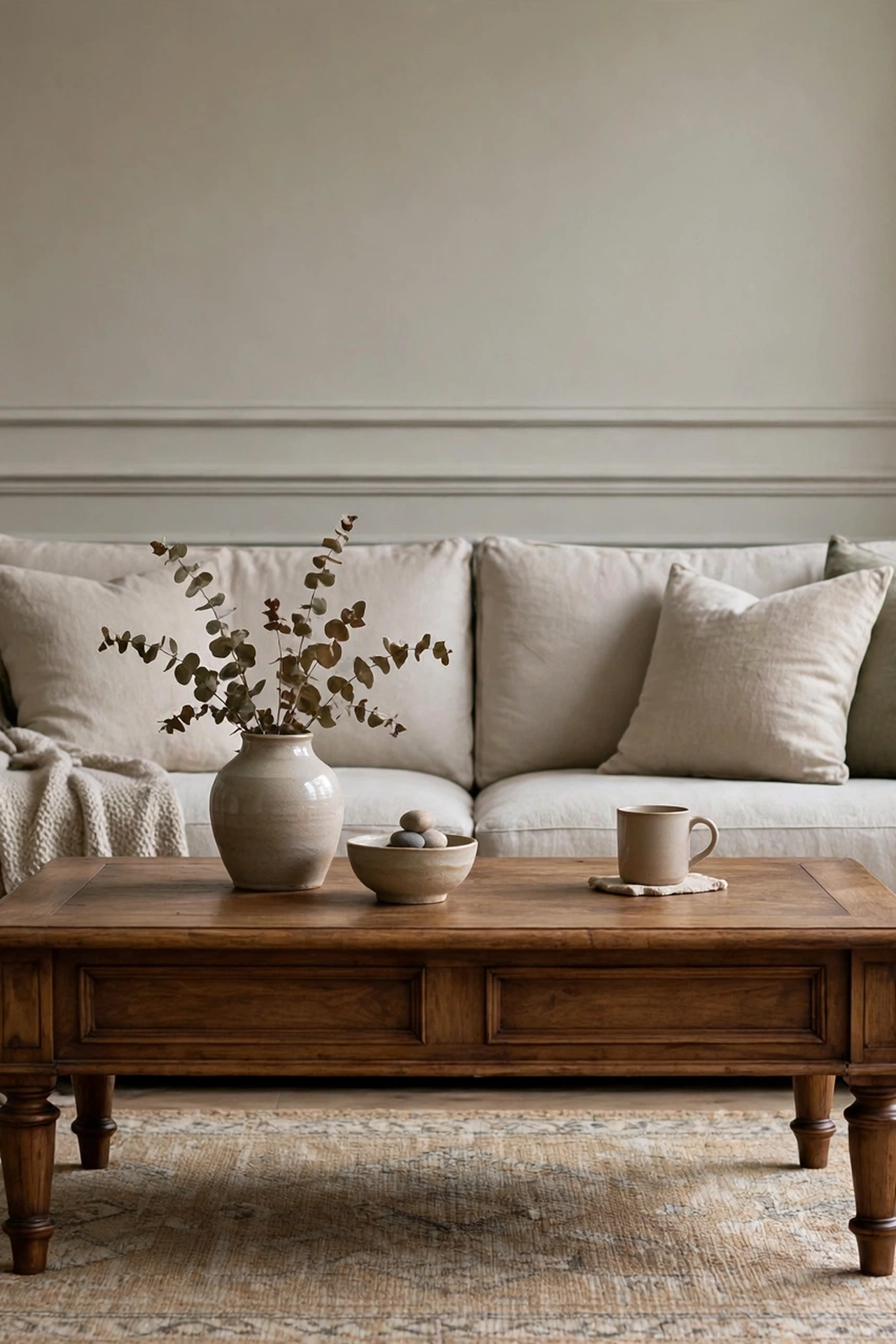
Mixing in modern pieces keeps a traditional room from feeling like a museum. A classic wood coffee table can sit beside a simple modern sofa with clean lines. A traditional rug can work under contemporary dining chairs, and a vintage mirror can hang above a plain vanity.
The contrast makes both styles more interesting than either one alone. If everything in the room is traditional, the result can feel heavy and dark. Our nancy meyers decor ideas guide shows the same warm, collected mix of old and new in a relaxed classic home.
20. Put Together a Traditional Color Palette
Color is what ties a traditional home together, so choose the palette before you buy anything. You do not need dark colors, because traditional rooms can be light, airy, and fresh. Cream with warm wood and muted blue is one of the easiest combinations to live with.
Pick one main neutral, one secondary color, and one or two accent colors for the room. Repeat those colors in the rug, the pillows, and the artwork, so the room feels planned. The classic color rules from Homes and Gardens still guide designers today, with dark floors, medium walls, and light ceilings.

Frequently Asked Questions
What is traditional decor?
Traditional decor is a classic home style inspired by 18th and 19th century European interiors. It uses warm wood, symmetry, classic patterns, framed art, and layered textiles to create a calm, collected feeling. The rooms feel elegant yet comfortable, and they never depend on passing trends.
How can I make my home look traditional on a budget?
Start with paint, pillows, curtains, and secondhand wood furniture, which all cost little and change a room fast. Thrift stores are wonderful for dark wood pieces, brass lamps, old frames, and books with real character. Add one idea at a time, so the look grows slowly and stays within your budget.
What colors work best in traditional decor?
These traditional decor ideas start with warm whites, soft beiges, and gentle creams as the calm base. Muted blue, sage green, burgundy, and dusty gold add quiet color through pillows, rugs, and artwork. Keep bold colors off large furniture, so the room stays soft and timeless for years.
Can traditional decor work in a small home?
Yes, traditional decor works well in small homes when you choose the scale with care. Pick one classic rug, one warm wood piece, and matching lamps instead of filling every corner. Light colors, mirrors, and a simple palette keep a small traditional room from feeling heavy.
How do I mix traditional decor with modern furniture?
Keep the room structure traditional, with symmetry, warm wood, and classic patterns as the base. Then add one or two modern pieces, like a clean-lined sofa, a simple lamp, or a plain side table. The modern pieces give the room breathing space, while the traditional pieces keep it warm and collected.
Final Thoughts
A traditional home is about warmth first and decoration second. Start with one warm wood piece, one classic rug, and warm light in the room you use most. Then add framed art and a few personal objects, one layer at a time.
Take your time and let the room grow slowly instead of buying everything in one weekend. The best traditional rooms look collected over years, not assembled in a single day. Your home will feel warmer, calmer, and more personal every time you walk through the door.