

23 Small Dining Room Ideas That Make a Tiny Space Feel Bigger
If your dining room feels tight, you are not alone, because small dining room ideas can change how the whole space works. A table that is too deep, chairs that cannot slide under it, or a cabinet that blocks the walkway can make a normal room feel cramped. The good news is that you do not need a big renovation to fix it, since smart choices about shape, light, and storage can make the same room feel open.
In this guide, you will find 23 simple ideas for small dining rooms, and each one comes with a photo to show you how it looks. The ideas cover tables, chairs, benches, mirrors, lighting, storage, and layout, so you can mix the ones that fit your room and your budget. If your living room is small too, our small living room decor ideas use the same space-saving tricks in a room made for relaxing.
1. Pick a Round Table to Improve the Flow
A round table is one of the easiest fixes for a dining room with awkward traffic, because it has no sharp corners sticking into the walkway. You can move around it more freely, and the room feels less cramped even when the furniture stays the same. For two to four people, a table around 36 to 42 inches wide usually works well, and a pedestal base keeps the floor clear under it.
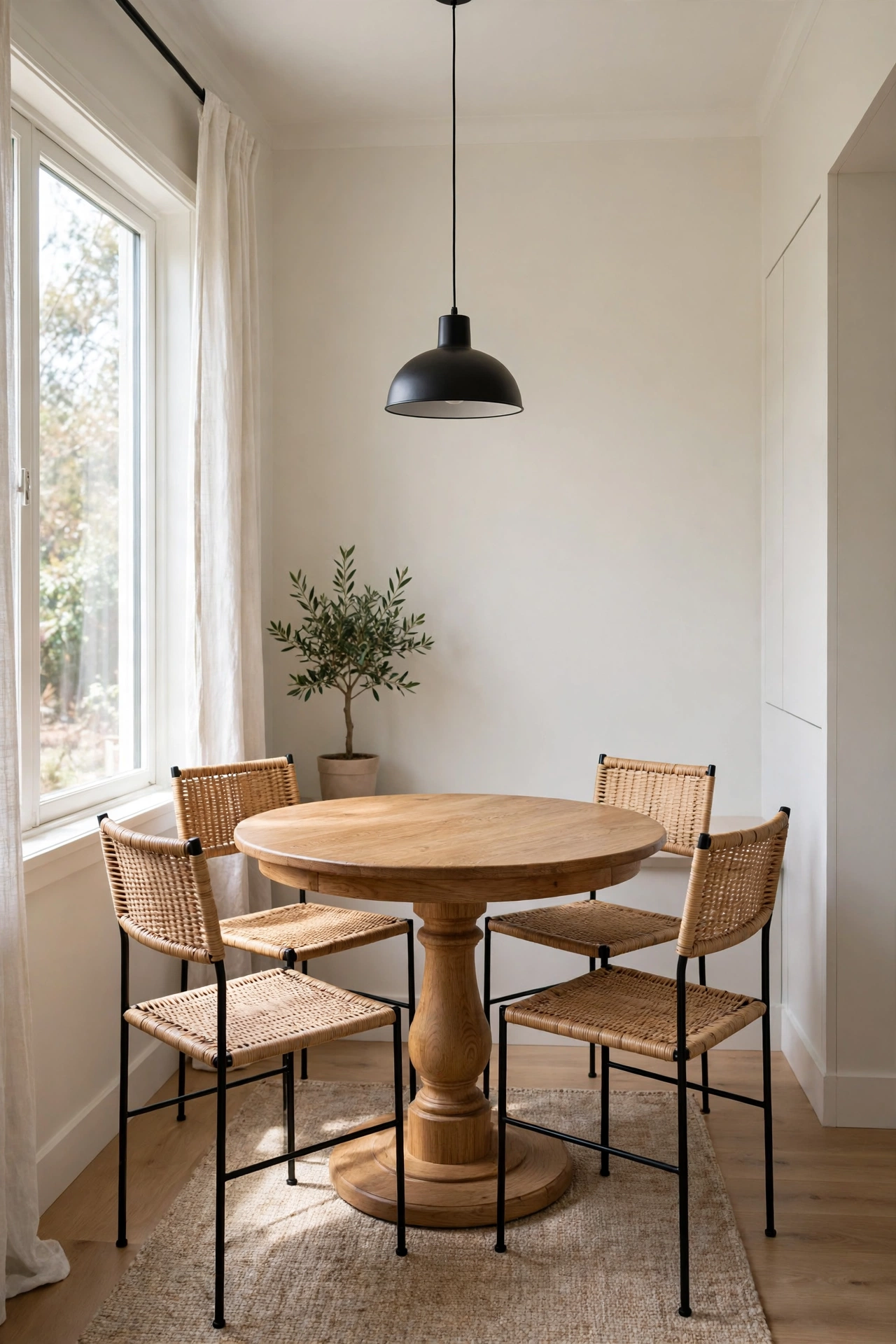
Round tables also suit square dining rooms, since the shape feels planned instead of squeezed in. Before you buy, tape the table size on the floor and walk around it with the chairs pulled out. Five minutes of testing can save you from returning a heavy table that never really fit.
2. Try a Drop-Leaf Table That Folds Away
If your dining room also works as a walkway or a homework spot, a full-size table can waste floor space all day long. A drop-leaf table stays narrow most of the time and opens up only when you sit down to eat. This setup works well in apartments, because you can fold one or both sides down to clear the path.

Look for a strong folding mechanism instead of choosing by looks alone, since a wobbly table gets annoying very fast. Measure the table folded and fully open, because the open size decides how many people can sit comfortably. A sturdy drop-leaf table can serve a small household for years without ever feeling like a compromise.
3. Slide a Bench Against the Wall
When every chair needs space behind it, a bench can give you that space back in a simple way. Among all small dining room ideas, swapping one side of chairs for a bench is one of the cheapest wins, because the bench slides under the table when dinner ends. A simple wooden or upholstered bench pushed against the wall also seats three people where two chairs would fit.
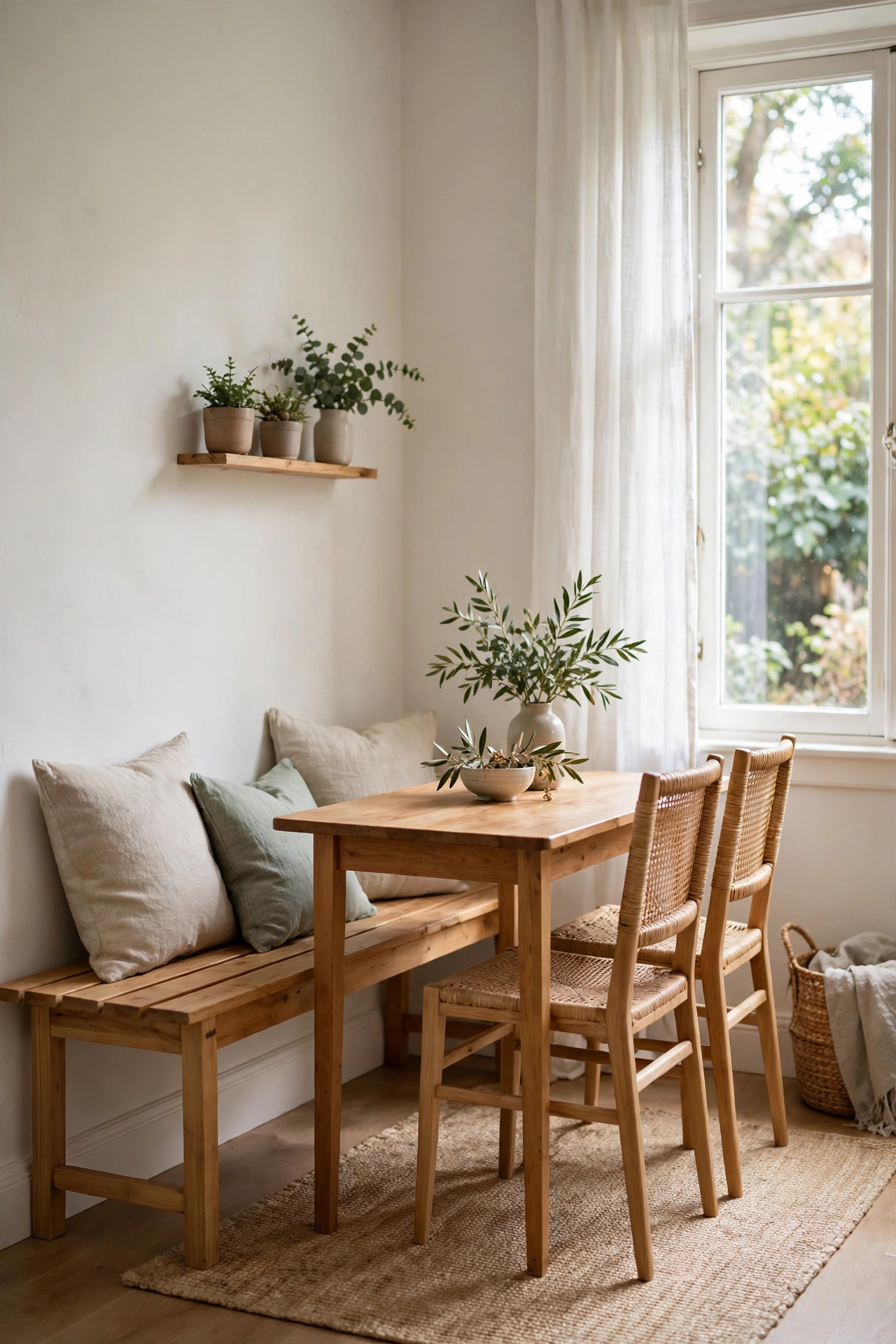
Keep the bench seat around 15 to 18 inches deep, since a deeper bench pushes the table too far into the room. Add a thin cushion for comfort, and choose a bench that matches the table height so nobody sits too low. The result is a cleaner path through the room and an extra seat whenever friends drop by.
4. Build a Banquette Into the Corner
A built-in banquette turns a bare wall into comfortable seating and frees the floor for walking. An L-shaped bench fits neatly into a corner and can define the dining area in an open kitchen. Add drawers or a lift-up seat if you can, because dining rooms always need more room for linens and serving dishes.

Do not make the seat too deep, since you should sit upright without pushing the table far away. Keep the cushion firm and the back low, so the bench looks neat instead of bulky. A banquette costs more than a bench, but it is a long-term fix that makes a tiny dining area feel made for the room.
5. Hang a Big Mirror to Open Up the Room
A mirror cannot add real floor space, but small dining room ideas often start here because a large mirror adds depth at once. Hang a big rectangular mirror or a group of smaller mirrors as one piece, and place it across from a window when you can. The reflected light makes the whole room feel brighter and wider than it really is.

Choose a simple frame in a small room, since too much detail on the wall can make the space feel busy. Check what the mirror will reflect before you hang it, because you want light, plants, or art in the glass, not clutter. A well-placed mirror is one of the cheapest ways to change how a small dining room feels.
6. Choose a Glass Table for a Lighter Look
A glass tabletop helps a crowded dining room because you can see through it to the floor below. The table almost disappears, and the room feels lighter even with the same number of chairs. Pair it with slim chairs to keep the whole setup looking open and calm.

Glass needs more wiping than wood, so it suits homes without small children better than busy family rooms. If real glass feels risky, a clear acrylic top or tempered glass gives the same light look with more strength. Choose a sturdy base as well, because a pretty table that wobbles will not stay pretty for long.
7. Pick Slim Chairs That Slide Away
Sometimes the table is fine and the chairs are the real problem in a small dining room. Big upholstered chairs eat more space than you expect, mostly because they need room to pull out. Slim chairs with narrow backs and no arms slide fully under the table when nobody is eating.

Measure the chair width before you order, since two chairs that look alike online can differ by several inches. Armless chairs are the easiest to tuck away, and light chairs are simple to move when guests arrive. The right chairs can free up more floor space than a whole new table.
8. Go for a Pedestal Base Table
A pedestal table has one central base instead of four legs at the corners, so chairs and feet never bump into wood. You can move chairs around the table freely, which matters most when the room is tight. This design works with round, oval, and some rectangular tops, so you are not stuck with one shape.

Check the base width at floor level, because some pedestals spread wide near the ground and waste the space they were meant to save. A compact pedestal base is one of the best buys for a very small dining room, and our dining table ideas show more shapes that work in tight rooms. Pair the table with slim chairs, and the whole corner will feel open and easy to use.
9. Turn an Empty Corner Into a Dining Nook
You do not need a separate dining room to have a real place to eat every day. An unused kitchen corner, a wide hallway, or a bright spot near a window can become a dining nook with a small table and a bench. A nook lets you use a tiny footprint well instead of copying a big dining room at a small scale.

Hang a pendant or a wall light over the nook, so the spot feels like a real dining area and not a table squeezed into a corner. If the nook sits beside the kitchen, our small kitchen remodel ideas can help the two spaces feel like one calm room. A small rug under the table can also mark the nook without taking up any extra floor.
10. Mount a Fold-Down Table on the Wall
For a very small apartment, a wall-mounted table can be the smartest answer of all. Some designs fold flat against the wall when you finish eating, while others open from a narrow console into a full dining surface. One or two people can eat well at home and still keep the floor free all day.

This is not the choice for big dinner parties, but it works well for daily meals in a studio or a tiny flat. Mount it on a strong wall with the right fixings, since a table that holds plates and cups needs solid support. When the table folds away, the room can turn back into a living space in seconds.
11. Choose an Extendable Table for Guests
An extendable table gives you two sizes in one piece of furniture, which is perfect for a small room. Keep it compact for daily meals, then add the leaf when friends or family come over. You gain extra seats without giving up floor space every single day.

Measure where the extra chairs will go before you buy, because a longer table only helps if people can sit around it without blocking the door. Bob Vila shares more small dining room ideas for rooms that need to host guests now and then. Store the leaf close by, so setting the table for guests stays a quick job instead of a chore.
12. Keep the Colors Light and Soft
You do not need to paint the whole room white to make it feel larger than it is. Soft warm neutrals, pale taupe, light gray, muted beige, and gentle greens all keep a small room open while still giving it character. Pick one main light color and add contrast through the table, the chairs, the art, or the lighting.

Dark colors can still work in a small dining room, but use them in small touches instead of on every wall. Test paint on the wall before you commit, since a creamy shade in the shop can look yellow or gray at home. Light walls and a light rug together can make a tiny room feel calm and bright.
13. Hang One Bold Pendant Light
A small dining room does not need boring light, and one good pendant can be the focal point of the whole room. Hang it over the center of the table rather than the center of the room when those two points are not the same. Choose a fixture with an interesting shape that still leaves the table feeling open.

A long linear fixture suits a rectangular table, while a single centered pendant or a small chandelier suits a round one. Apartment Therapy shares 30 small dining room ideas with real homes that use one bold light to define a tiny dining space. Keep the fixture in scale with the table, so it draws the eye without crowding the space above the chairs.
14. Add a Slim Sideboard for Storage
Storage can either fix a small dining room or make it much worse, so the depth of the piece matters. A shallow sideboard holds linens, serving dishes, candles, and party supplies without eating the walkway. Closed doors hide the clutter, while open shelves can quickly turn into a pile of random objects.
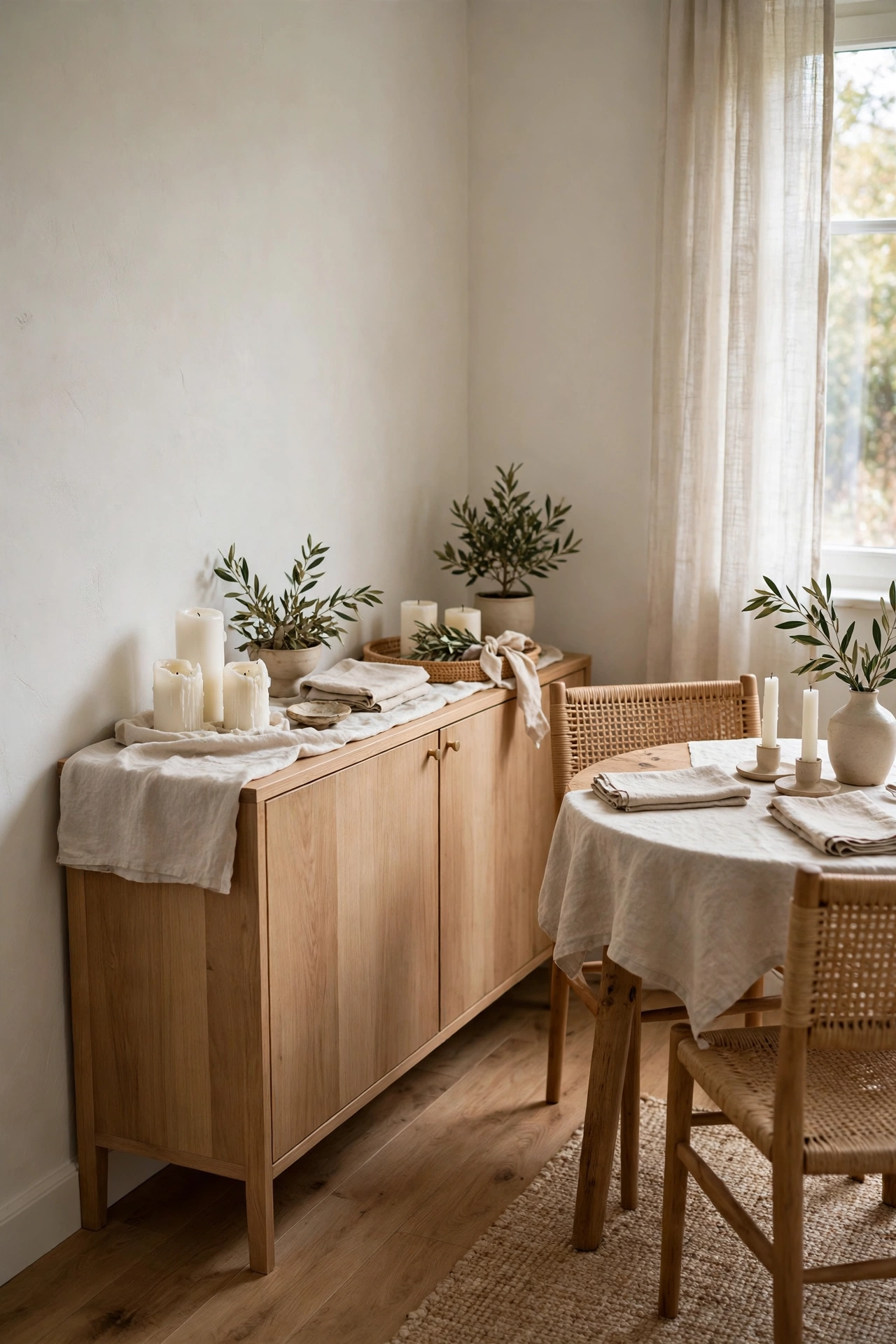
Measure the walking space before you buy, since a slightly smaller sideboard with a clear path beats a big cabinet that forces everyone to squeeze past. Keep the top simple with a candle or a small plant, and store the rest behind the doors. A narrow sideboard can hold a surprising amount without ever looking heavy.
15. Use the Walls for Vertical Storage
When the floor is full, the walls are the next place to look for storage in a small dining room. A narrow wall cabinet, a set of floating shelves, or a tall slim unit can hold dishes and glasses without widening the furniture footprint. This helps most in apartments with no pantry and small kitchen cabinets.

Do not fill every inch of wall, since a few styled shelves look better than a wall packed with dishes. Keep daily plates at eye level and save the highest shelves for pieces you use only now and then. For more ways to use tight spaces well, see our staircase storage ideas for smart storage in small homes.
16. Lay a Rug That Fits the Chairs
A rug can finish a small dining room, but the wrong size can make the room look even smaller. The chairs must stay on the rug when you pull them out, or the legs will catch on the edge every single day. A simple pattern or a solid texture works best when the room already has plenty going on.

Mark the rug size on the floor with painter’s tape before you buy, so you can see the real scale in the room. Choose a low pile that is easy to clean, since dining rooms see spills more than most rooms. In a very small space, no rug at all can look cleaner than one that is clearly too small.
17. Try an Oval Table in a Narrow Room
An oval table is a smart middle ground when a round table seats too few people and a rectangle is too wide. You get a longer seating surface without the sharp corners that block the walkway. This shape works well in narrow rooms where people need to pass one end of the table.

Compare the widest point of the table with the narrowest point of the room, and count doors, radiators, and cabinets in the measure. An oval top also softens the look of a long room, so the dining area feels less like a hallway. Add slim chairs and the whole setup will feel easy to move around.
18. Match the Table to the Room Shape
A small dining room looks calmer when the biggest pieces fit the shape of the room itself. If the table sits against one wall, a bench that follows the wall line feels more natural than a freestanding chair. If the dining area opens to the kitchen, matching the table wood to the cabinets can join the two spaces.

You do not need matching wood finishes to make this work, since similar tones matter more than an identical stain. A table that echoes the wall color or the floor can make the layout look planned instead of random. This idea costs little, yet it can change how intentional the whole room feels.
19. Keep Folding Chairs Ready for Guests
If you need six seats only now and then, do not give all six a permanent home around the table. Keep two everyday chairs in place and store folding or stackable chairs elsewhere until guests arrive. This works well in apartments and multipurpose rooms that change use through the day.

Test the chairs before you buy several, since folding chairs have improved a lot but some still feel hard after a long dinner. Choose light chairs that stack flat, and keep them in a closet or behind a door where they stay easy to reach. Extra seats that hide away give you a full table without a crowded room.
20. Hang One Large Piece of Art
A common mistake in small dining rooms is filling the walls with lots of tiny pieces because the room itself is small. One large piece of art on the main wall gives your eyes a place to land and makes the room feel more organized. A big print, a vintage poster, a framed textile, or a simple handmade piece can all work well.

Hang the art at seated eye level, since dining rooms are seen from a lower height than living rooms. Place it on the wall first and sit down to check the height before you fix it in place. One bold piece will do more for the room than seven small frames ever could.
21. Layer the Lighting for a Cozy Feel
One ceiling light is rarely enough to make a small dining room feel cozy at night. Combine the overhead light with a softer second source, like a wall sconce, a floor lamp, or candles on the table. The goal is not a brighter room, but different levels of light that help the space feel relaxed.

Put the main dining light on a dimmer when you can, since lowering the brightness is a cheap upgrade you will notice every evening. Warm bulbs suit dining rooms better than cold white light, and candles add a soft glow for special meals. Layered light can turn a plain corner into the warmest spot in the house.
22. Let the Table Double as a Workspace
In a small apartment, the dining table does not need to serve only meals from morning to night. The same table can be a work desk by day and a dinner table by night, as long as work supplies stay under control. A slim drawer unit or a storage basket nearby can hold chargers, notebooks, and papers when dinner starts.
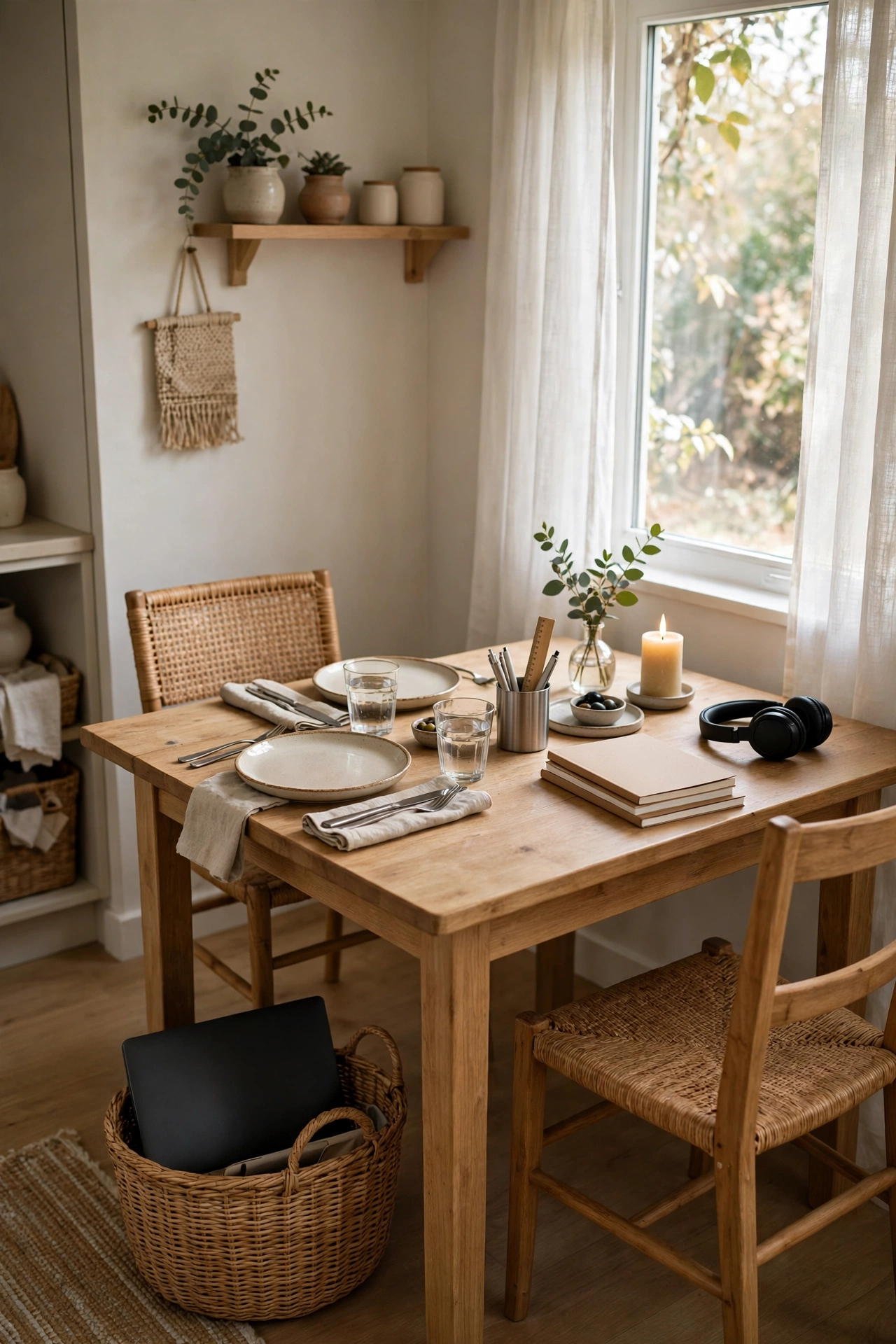
Keep a reset basket close to the table, and at the end of the workday put everything that is not for dinner into the basket. The room can change from office to dining room in a couple of minutes with this one habit. A table that works twice as hard means you do not need a second room for work.
23. Keep the Room Simple and Calm
The best advice for a small dining room is also the simplest one, so do not try to fill every empty spot. A giant buffet, six big chairs, three shelves of decor, a bar cart, and a row of plants may all fit, but the room will still feel crowded. Leave enough empty space for the room to breathe, and the pieces you keep will look better.

Start with a table you can walk around and chairs you can pull out without hitting a wall. Add personality with art, a rug, curtains, a centerpiece, or one beautiful light, and stop there. When you finish decorating, take one thing away and live with the room for a week before you decide if you miss it.
FAQs
What size table fits a small dining room?
For two to four people, a round table around 36 to 42 inches wide usually fits well and leaves room to walk. Measure the room first, then leave at least 24 inches behind each chair so people can sit down and stand up with ease. Tape the size on the floor before you buy, since a table that looks right online can feel huge in a small room.
How can I make a small dining room look bigger?
Hang a large mirror across from a window, keep the colors light, and choose a glass or pedestal table that shows more floor. Slim chairs and one large piece of art also help, because they keep the room calm instead of busy. Clear the walkways and remove one extra piece, and the room will feel larger at once.
What is the best table shape for a small dining room?
A round table suits a square room best, while an oval table suits a narrow room that needs more seats. Among all small dining room ideas, the shape rule is simple, so match the table to the room and leave clear paths around it. A rectangular table works only when the room is long enough for chairs on both sides plus a walkway.
How much does a small dining room makeover cost?
A light refresh with paint, lighting, art, and textiles can cost around $100 to $300 when you reuse the main furniture. A furniture-focused makeover often runs from $500 to $1,500 or more, based on the table, chairs, storage, and lights you choose. A built-in banquette or custom cabinetry costs much more, since you pay for materials and skilled labor as well.
What mistakes should I avoid in a small dining room?
Do not buy furniture by how it looks in a showroom, since it must work in your real room and fit through your door. Do not forget chair space, because you need room to pull a chair back, sit down, and walk behind someone who is seated. Do not buy a rug that is too small, and do not fill the walls just because they are empty.
Final Thoughts
If you start a small dining room from scratch, begin with the table and not with the decor. Measure the room, map the walking paths, and pick a shape that fits the space, like a round pedestal table for a square room or an oval table for a narrow one. Then add slim chairs or a bench, good lighting, and storage only if you truly need it.
The best small dining room ideas are not about squeezing more things into a tiny room, because they are about making every piece earn its place. When the size is right, the paths are clear, and the decor stays simple, even a very small dining area can feel comfortable and useful. Start with one change this week, and your next dinner may feel like it happens in a bigger room.


