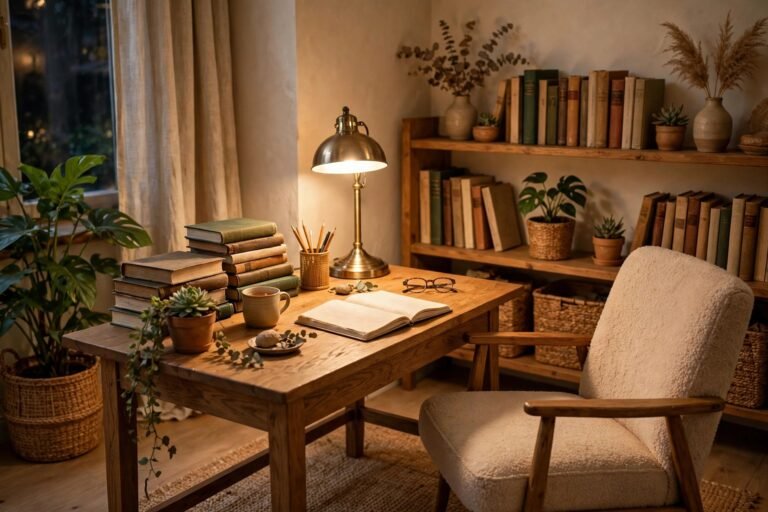

21 Home Office Mistakes That Make Your Workspace Harder
These home office mistakes can make even a pretty workspace hard to use every single day. A desk can look perfect in a photo, yet still annoy you when the screen glares, the chair hurts your back, or the cables tangle under your feet. The good news is that most of these problems are easy to fix once you know what to look for.
In this guide, you will find 21 home office mistakes that make a workspace harder, from a desk that is too small to lighting that strains your eyes. Each idea comes with a photo and a simple fix, so you can spot the problems in your own room and change them one by one. If you want the room to feel warm as well as useful, our cozy work office ideas show how to add comfort without losing function.
1. Picking a Desk That Is Too Small for Your Work
A tiny desk can look clean and simple until you actually have to work on it. Add a laptop, a notebook, a water bottle, headphones, and a second screen, and the surface suddenly feels like a crowded kitchen counter. You end up stacking things on top of each other instead of having room to think.

Measure everything that will live on the desk before you buy it, including the monitor, keyboard, and lamp. Leave enough depth for your screen and your arms, plus a small clear area for writing or a tablet. For a small room, a simple desk with drawers or a narrow desk with vertical storage works better than a tiny tabletop.
2. Placing Your Desk in Bad Light
Natural light can make a home office feel much better, but too much direct sun can turn your monitor into a mirror. The prettiest window spot is not always the most useful one, because glare makes you squint for hours. If the sun hits your screen during your normal work hours, you will spend more time fighting the light than enjoying the view.

Try placing the desk at a right angle to the window when you can, so you still get daylight without the brightest part of the room sitting behind or in front of your screen. Add a desk lamp for cloudy days and late work, instead of relying on one harsh ceiling light. A sheer curtain can also soften strong sun without blocking the light completely.
3. Choosing a Chair for Looks Instead of Comfort
One of the most painful home office mistakes is buying a chair for how it looks instead of how it feels. A beautiful chair is no bargain if you cannot sit in it comfortably for two hours, and a sore back will ruin even the prettiest room. Check the seat height, the lower back support, the seat depth, and the armrests before you buy.

You do not need the most expensive ergonomic chair to work in comfort, because what matters is whether the chair fits your body. Sit in it the way you would during a real workday, with your feet flat on the floor and your arms relaxed. If your budget is tight, spend more on the chair than on decorative extras.
4. Setting Your Monitor at the Wrong Height
A monitor that sits too low makes you tilt your head down all day, and that small tilt adds up to a sore neck by the evening. Many people never notice the cause, because the screen feels normal for the first hour. The fix is often cheap, since a monitor stand, a sturdy riser, or a small shelf can lift the screen to a better height.

Aim for the top of the screen to sit near eye level, so you look straight ahead instead of down. If a laptop is your main computer, raise it on a stand and add a separate keyboard and mouse for long sessions. Do not push the screen as high as it can go, because comfort matters more than a perfect rule.
5. Letting Cables Take Over Your Desk
Tangled cables are one of those home office mistakes that make a tidy desk look messy in a single day. Six black cords hanging behind a desk can ruin the whole look, and they get in the way every time you need to unplug something. Decide where each cable should go before you start decorating, so the mess never builds up.

Cable clips, a tray under the desk, and a small charging station can handle most of the mess without an expensive system. Keep the cables you touch often within easy reach, and route the rest out of sight along the back of the desk. For more clever ways to reuse everyday items for office storage, see these clever home office ideas from HGTV.
6. Covering Every Wall With Shelves
Vertical storage makes sense in a small office, but that does not mean every inch of wall needs a shelf. Walls packed with books, baskets, art, and small objects make the room feel noisy before you even sit down. Your eyes need some empty space to rest, or the whole room starts to feel crowded.

Mix closed storage with open shelves, so the things you use often stay within reach and the less pretty supplies hide behind doors or baskets. Keep the shelves you see most often the calmest, with only a few items on each one. Leave at least one stretch of bare wall, and the room will feel larger at once.
7. Buying Storage Before You Declutter
Buying another organizer will not help if your drawers already hold notebooks you never use, dried out markers, old receipts, and pens that do not work. New storage just gives the clutter a nicer home, while the real problem stays exactly the same. Declutter first, then buy storage that fits what is actually left.

Sort everything into three groups, which are things you use often, things you need sometimes, and things you do not need at all. Let the last group leave the room instead of moving it into a new box. Buy storage only after the sort, and size it for what remains instead of what you used to own.
8. Filling Your Desk With Too Much Decor
A pretty workspace is a joy, but decor can turn into one more distraction when it covers the desk. Candles, plants, frames, trays, and small objects leave less room for the laptop, notebook, and coffee you actually need. A desk that looks like a shop display is hard to work on for a full day.

Pick a few pieces you truly love instead of decorating every surface in the room. One plant, a lamp you enjoy, and one piece of art can be enough to make the space feel personal. Your office should help you work, not compete with your work for space.
9. Working in a Busy Walkway
A desk in a hallway corner may fit the space, but it fails when everyone in the house walks past it ten times a day. Constant interruptions make it hard to focus, and the problem grows worse when you take calls from home. A spot that looks fine on paper can still be the wrong place to work.
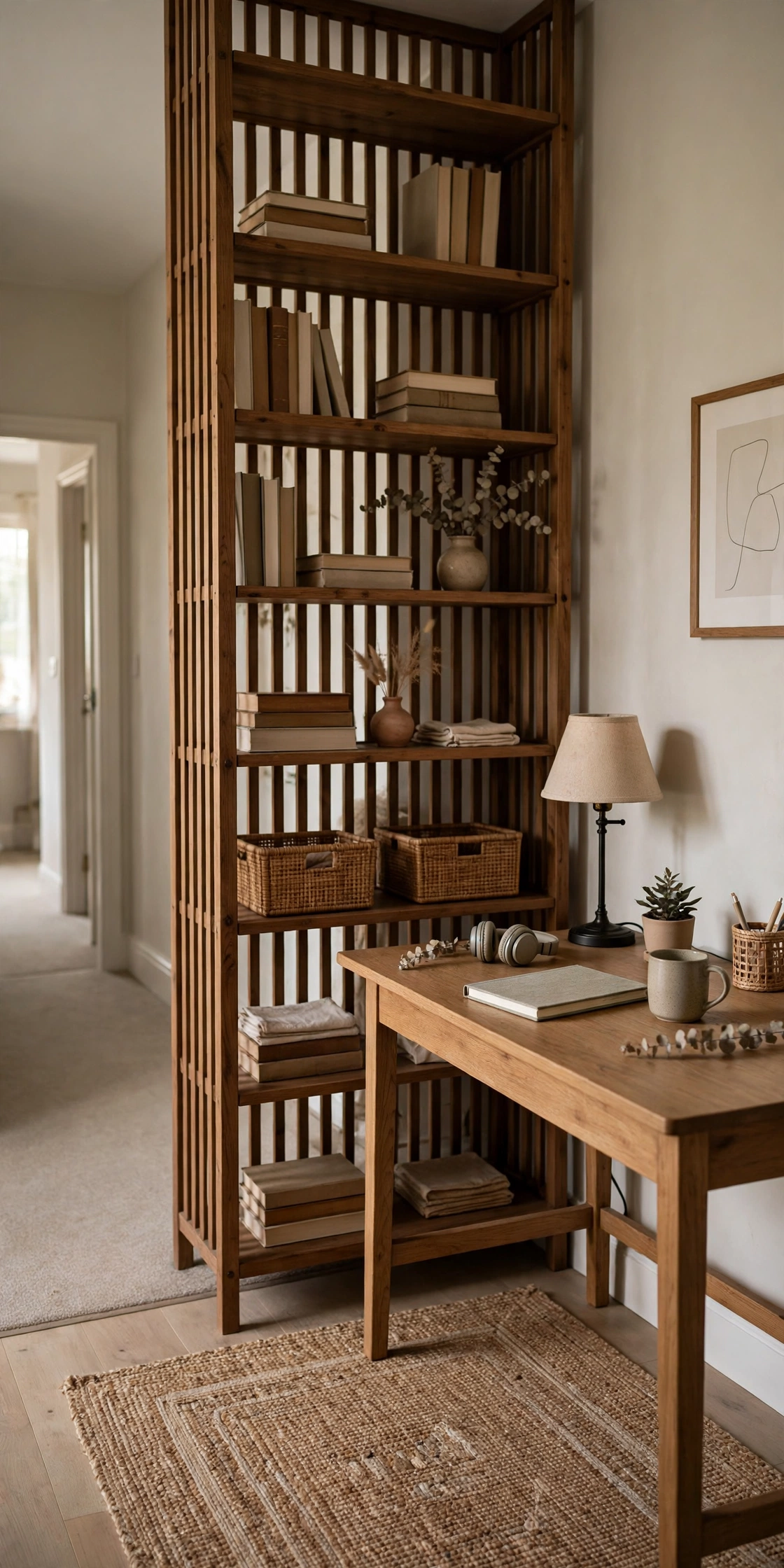
If you have no separate room, build a clear boundary with a bookcase, a curtain, a room divider, or even a rug placed with care. The goal is not total privacy, but a clear signal that this corner is your workspace. A simple visual edge helps your family know when you are working.
10. Forgetting What Shows Behind You on Video Calls
Your desk may face a blank wall, but your camera could be showing a pile of laundry, an open closet, or half the kitchen. Many people never check the background until a colleague mentions it on a call. The view behind you has become part of your work, whether you planned it or not.

Before you settle the layout, sit where you take calls and look through your webcam to see what it shows. A clean wall, a bookcase, a plant, or a simple piece of art can make a calm background without looking staged. Move anything messy out of the frame, and your calls will feel more professional at once.
11. Putting Style Before How You Work
A home office can be beautiful, but function has to win when the two disagree. A desk with no drawers may look perfect in a photo, yet it leaves your papers, chargers, and notebooks piled on the floor. Style that ignores storage always costs you comfort in the end.

Before you buy, ask where everything you use each day will actually live in the room. If the honest answer is that you will figure it out later, that is a warning sign worth listening to. Designer Tiffany Brooks makes the same point in her 5 mistakes to avoid when designing your home office, where function comes before looks.
12. Picking a Rug That Is Too Small for the Room
A tiny rug floating under the middle of the desk can make the whole room look disconnected. The desk and chair need a rug large enough to anchor them together, or the floor feels unfinished. This is a common mistake because rugs are easy to buy in the wrong size.
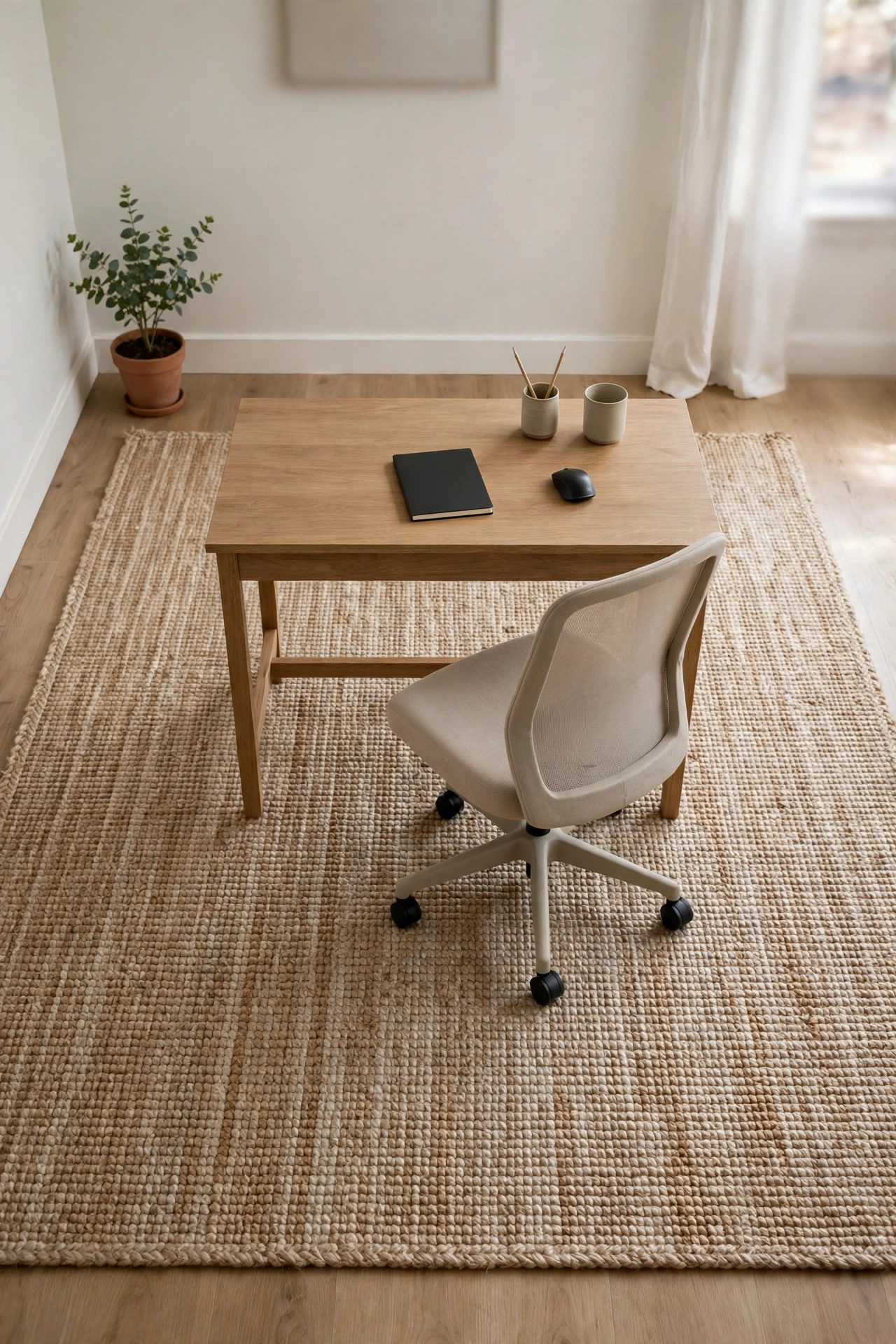
Measure the floor first, and choose a rug that fits under the desk and the chair with room to roll. In a very small office, skipping the rug can look cleaner than using one that is clearly too small. Check that your chair wheels roll smoothly on the rug you pick.
13. Leaving Your Printer Without a Home
Printers are not pretty, but pretending you do not own one will not make it disappear. A printer left on the desk eats the space you need for work, while one on the floor collects dust and trips you up. If you print often, the machine needs a real home in the room.
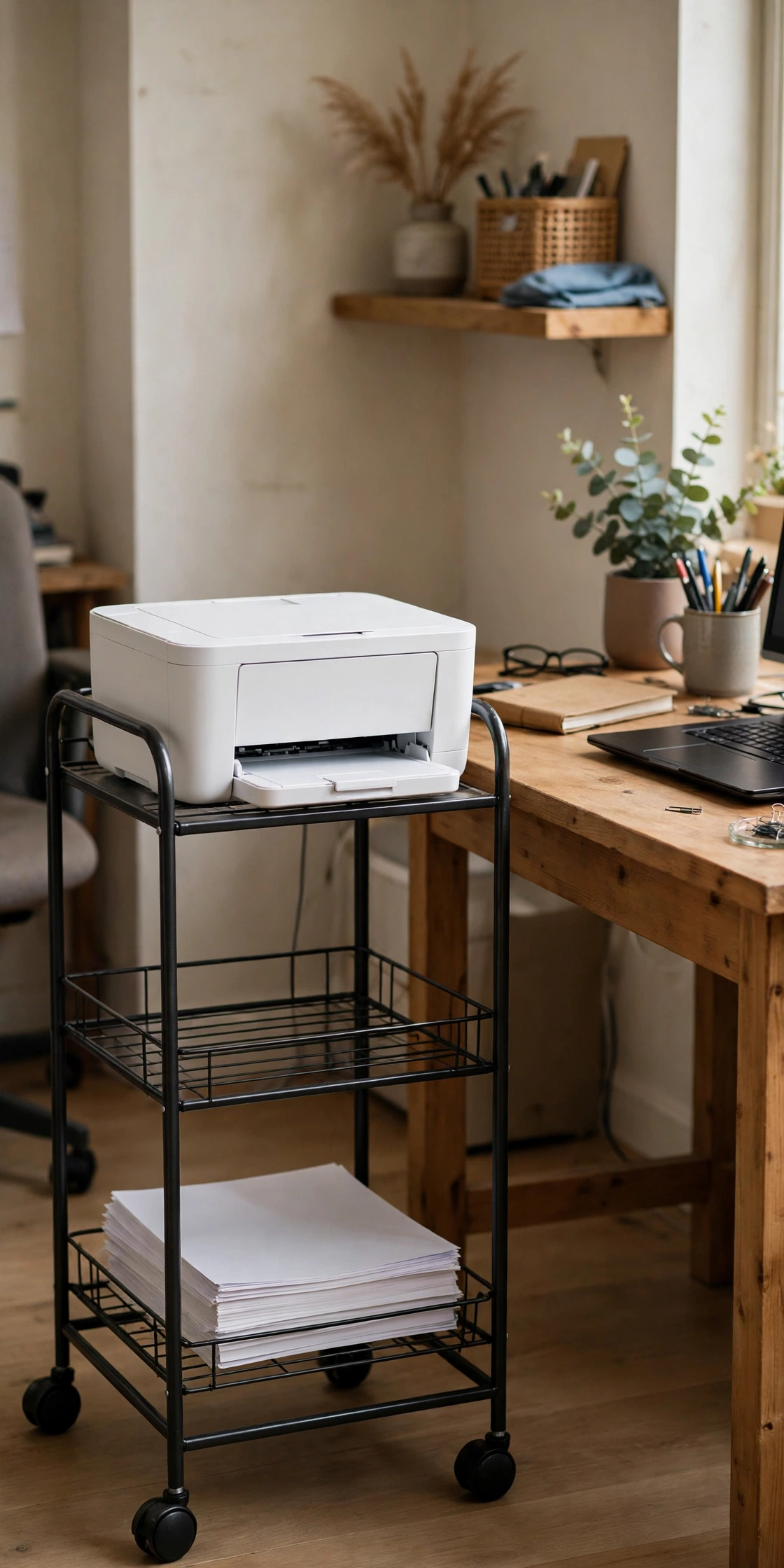
A small cabinet, a rolling cart, or a low shelf can keep the printer close without letting it rule the desk. Keep paper and spare ink in the same spot, so printing stays a quick task. If you print only once in a while, consider keeping the printer in another room entirely.
14. Forgetting to Plan for Power Outlets
A layout can look great on paper and still fail when the nearest outlet sits across the room. Extension cords stretched over the floor look messy, and they are annoying to step over every day. Check the outlets before you move the desk, not after the room is finished.
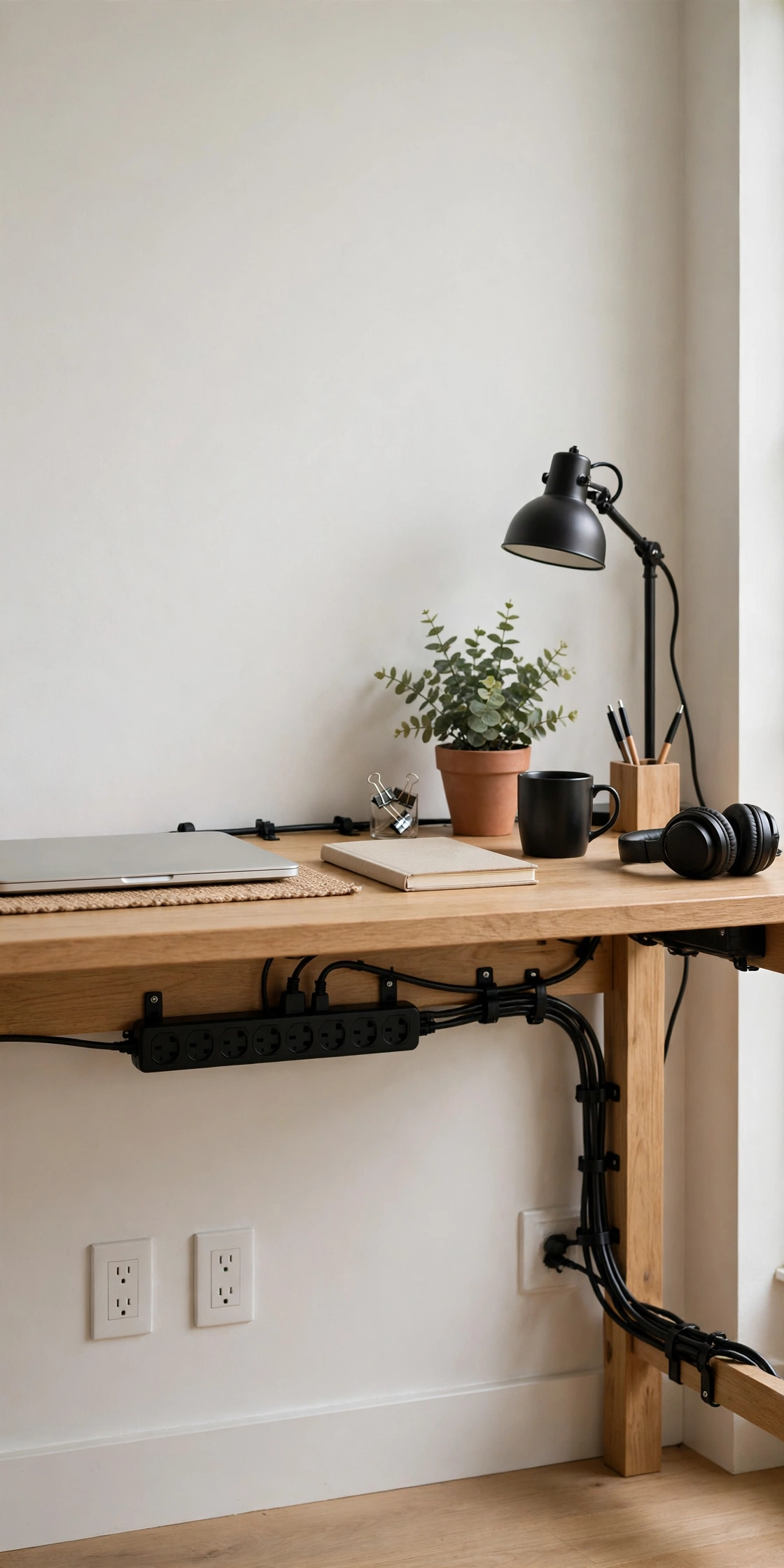
Map out where the computer, monitor, lamp, phone charger, and printer will plug in before you place any furniture. A power strip mounted under the desk can gather the plugs in one tidy spot. Planning the layout costs nothing, but it saves you from buying extra gear later.
15. Charging Your Devices All Over the Room
When your phone, headphones, tablet, watch, and laptop all charge in different places, the desk turns into cable central very fast. You waste the start of every morning hunting for a charger that has wandered off. One small habit can fix the whole mess for good.

Pick one charging spot and use it every day, such as a small tray with a multi device charger or a cable box tucked under the desk. Keep the same devices in the same place, so you always know where to find them. A steady routine beats a bigger charger every time.
16. Using Open Storage for Everything You Own
Open shelves look lovely in photos, but they need constant care to stay that way. Every basket, paper stack, and office supply becomes part of the view, so a busy week can make the whole room look cluttered. Open storage shows the mess as fast as it shows the pretty things.
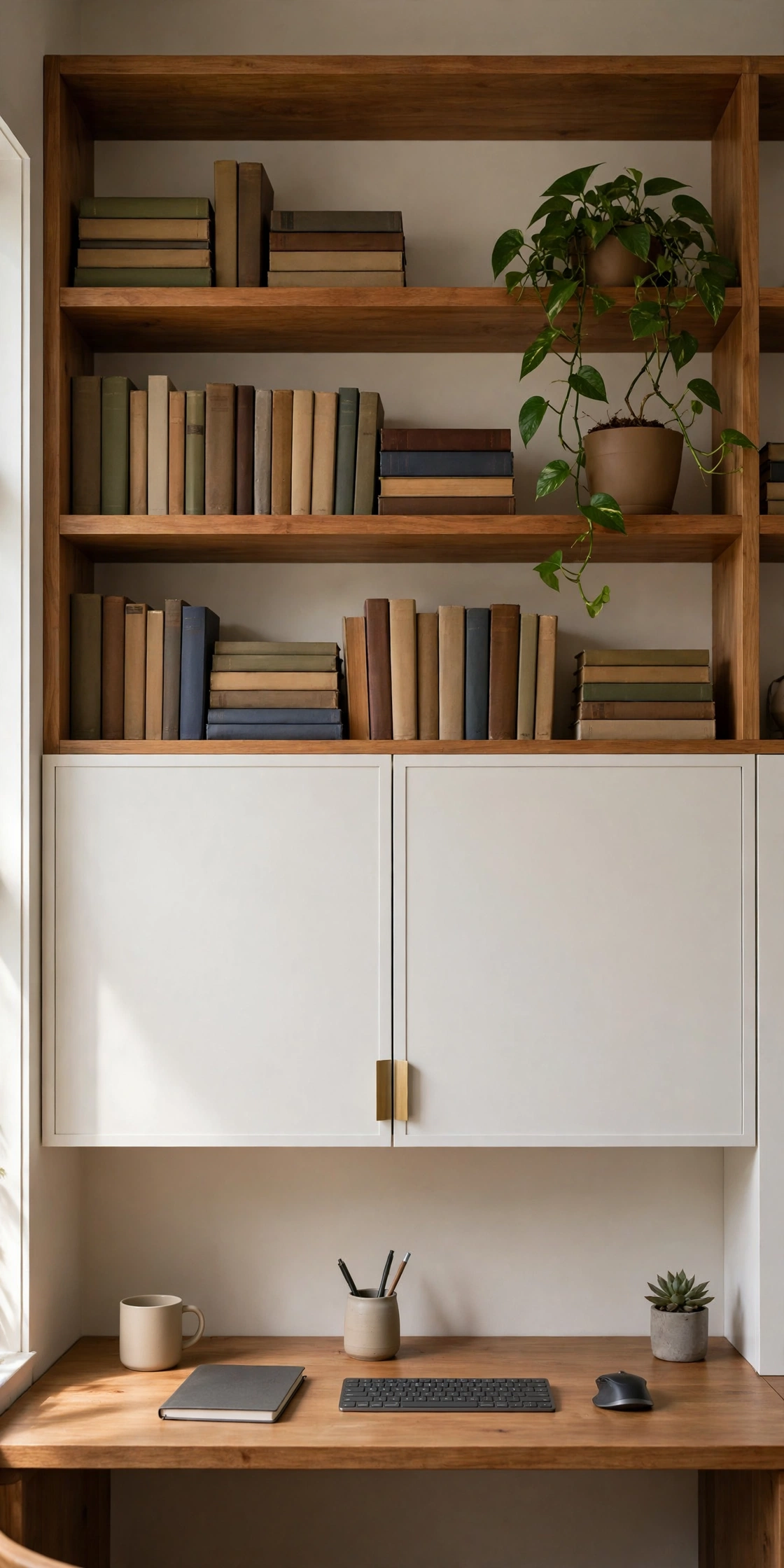
Use open shelves for items that look good or that you reach for often, and closed storage for everything else. Drawers and cabinets hide the dull supplies while keeping them close at hand. For ideas on mixing open and closed storage in a small space, see our staircase storage ideas for clever hidden storage.
17. Letting Your Workspace Stay Too Dark
A desk lamp is not just decoration, because poor light makes the whole workday harder. A room with little daylight needs a good task light, or your eyes will tire long before the work ends. One bright ceiling light alone creates harsh shadows and makes the room feel cold.
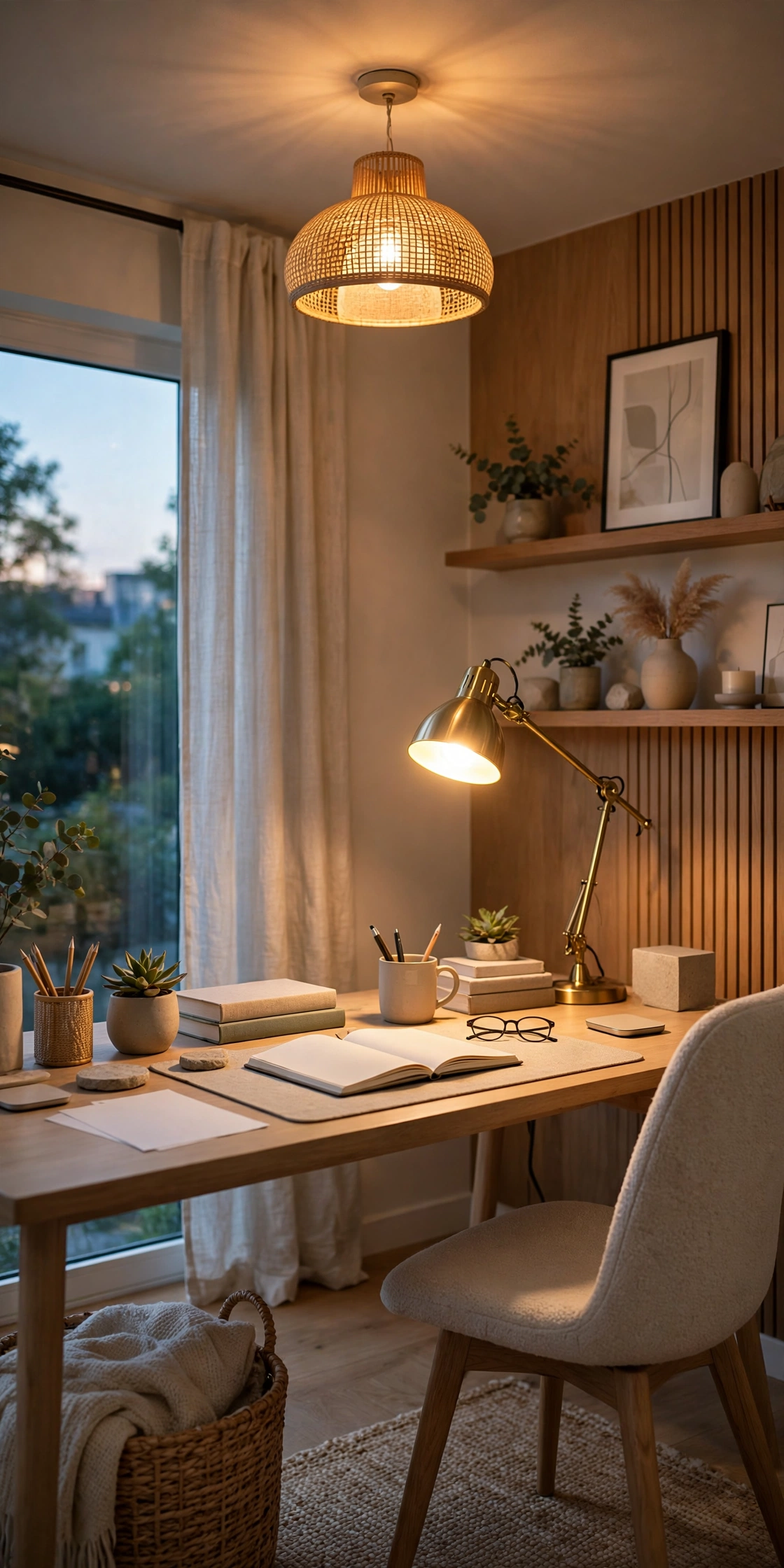
Layer your lighting with soft ambient light, a focused task lamp, and a small decorative light if you like. Choose an adjustable lamp so you can aim the light at the page or keyboard you are using. Good lighting makes the room feel warm, and it helps you work longer without strain.
18. Squeezing a Giant Desk Into a Small Room
Bigger is not always better, because a huge desk can make a small bedroom or spare room feel cramped. You need space to pull the chair out and walk around without bumping into furniture or blocking a door. A desk that fills the room leaves no air for the rest of the space.

Measure the room first, and leave clear paths on every side of the desk before you order it. Desks with built in drawers or shelves give you storage without needing another cabinet in the room. If your office shares a small room, our small living room decor ideas show how to keep a tight space feeling open.
19. Mixing Work Time With Personal Time
This is not strictly a decorating mistake, but your layout can make it much worse. When the same desk holds your work, your meals, your television, and your phone scrolling, it gets harder to switch into work mode. The room stops feeling like an office and starts feeling like everything at once.

Build a small end of day routine around the desk, even if you have no separate room. Clear the surface, close the laptop, switch off the task light, and step away from the area when you finish. That tiny ritual tells your mind that work is done for the day.
20. Copying a Pinterest Office Exactly as Shown
A beautiful office photo can be a great starting point, but it does not know how you work. The photo office may have a huge desk because the owner has a full room, or six open shelves because they love styling them each weekend. Your room, your habits, and your budget are all different from theirs.

Use inspiration for the mood, the colors, and the general layout, but never as an exact plan to copy. Test the layout for a full week before you buy anything big for the room. Your office should fit your real life, not the life in the picture.
21. Spending Your Whole Budget on Decor
Starting a new office is exciting, but spending everything on the fun pieces leaves nothing for the things that matter. Your chair, desk, lighting, and screen should come before baskets and art, because comfort affects every hour you work. A gorgeous room full of things that do not help you work is still a bad office.

Divide the budget by priority, and buy the essentials first before you shop for decor. A simple desk, a comfortable chair, and good lighting will serve you better than a room full of pretty extras. If you are planning a bigger small space project too, our small kitchen remodel ideas show how to plan a small space step by step.
FAQs
What is the biggest home office mistake to avoid?
The biggest mistake is buying pretty furniture before you plan how you actually work each day. A desk that is too small, a chair that hurts, and a screen at the wrong height will annoy you long after the new room smell fades. Plan the desk, chair, lighting, and outlets first, and let the decor come last.
How much does a home office setup cost?
A home office can cost very little if you already own a laptop and a monitor, since you may only need a desk, a chair, and good lighting. Starting from scratch costs much more, because the screen, chair, and desk become the biggest part of the budget. Set the budget in this order, which is technology first, comfort second, storage third, and decor last.
What should I fix first in a bad home office?
Start by sitting at your desk for a normal work session and writing down every annoyance you notice. The biggest home office mistakes usually show up fast, like a screen that is too low, cables everywhere, or a chair that hurts your back. Fix the largest comfort problem first, then tackle storage and lighting, and save decor for the very end.
How can I make a small home office work better?
Choose a desk that fits the room instead of filling it, and pick a chair that supports your back for long days. Use vertical storage, keep cables tidy, and place the desk where the light helps instead of glaring on the screen. Leave some empty wall and floor space, so the small room feels calm instead of crowded.
Should I copy a Pinterest home office exactly?
No, because a photo cannot tell you how you work, how much light your room gets, or how much storage you truly need. Borrow the colors, the mood, and the general layout, then adjust every piece to fit your room and your budget. Test the setup for a week before you spend money on big furniture.
Final Thoughts
The biggest lesson is that you should design your office for an ordinary Tuesday, not for a photograph. That is when the real problems appear, like the chair that is not comfortable, the cable that will not reach, and the afternoon sun on your screen. A room that works on a plain weekday will look good on its own.
Start by measuring the room, then choose the desk and chair around the way you actually work. Plan the outlets and the lighting next, and live with the basic setup before you buy much decor. Once those pieces feel right, making the office beautiful becomes the easy part.