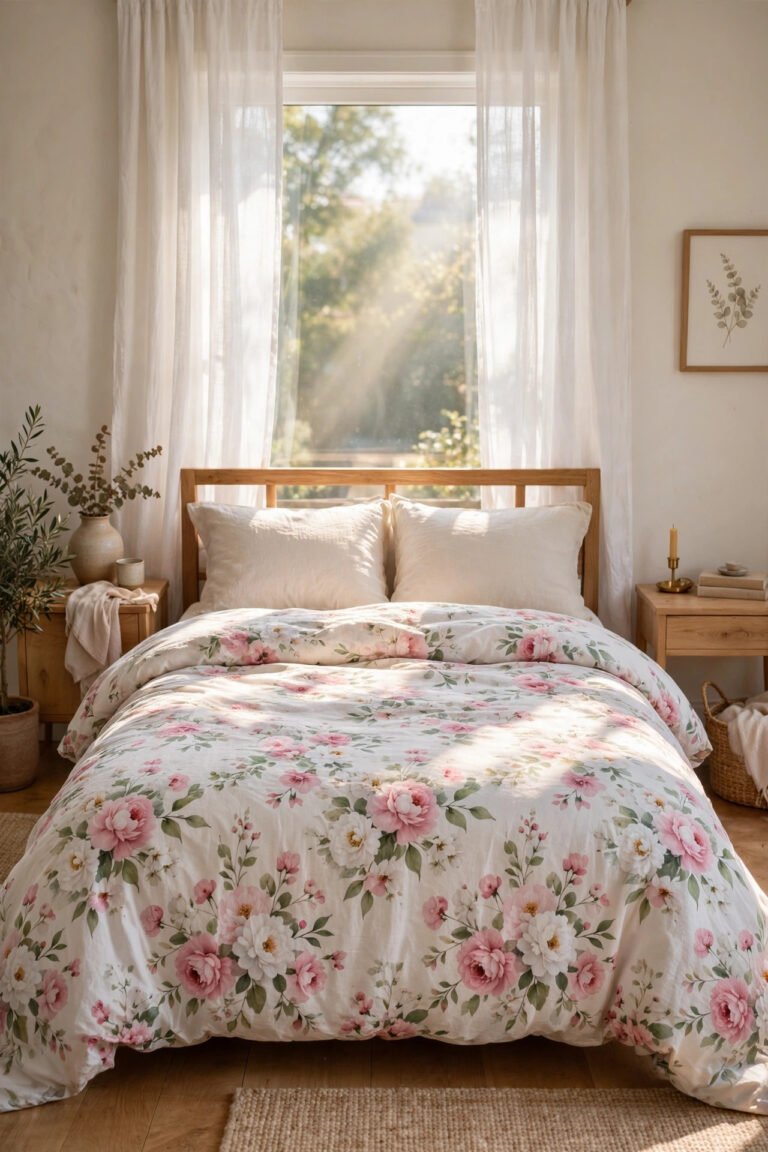
Neutral vs Bold Colors in Home Decor: 20 Things to Know Before You Decide

If you have ever stood in a paint aisle wondering about neutral vs bold colors in home decor, you know how hard the choice can feel. Neutrals feel safe and calm, while bold colors feel alive and full of personality, and both sides make a good case. The good news is that you do not have to pick just one side, because the prettiest rooms use both.
This guide shares 20 simple ways to mix calm neutrals with bold color, one idea at a time, so you can find the balance that fits your home. Each idea works in a real room, from the living room sofa to the hallway ceiling, with tips you can try this weekend. By the end, you will know exactly how much bold is enough, and how to add color without a single regret.
1. Start With a Neutral Base and Add Bold Pillows

The safest way into bold color is to start with a neutral base and let pillows do the brave work. Keep your sofa, rug, and walls in soft cream, warm beige, or light grey, so the room feels calm and grounded. Then add two or three bold pillows in jewel tones, terracotta, or mustard, and the whole room wakes up.
Pillows are cheap to swap, easy to wash, and simple to move from room to room when your mood changes. Buy one or two first, live with them for a week, and add more only if the room still feels like it needs color. Our guide to minimalist vs maximalist decor style shows how one bold pop can balance a calm neutral base beautifully.
2. Go Bold on Just One Wall and Keep the Rest Neutral

Painting a whole room bold can feel scary, so paint just one wall and leave the rest neutral. That single bold wall becomes the focal point of the room, while the neutral walls around it keep things calm. Deep terracotta, forest green, or navy all work well, because one strong wall is enough to carry the drama.
Pick the wall your eyes land on first, usually the one behind the sofa or the bed, for the biggest impact. Keep your furniture neutral so the bold wall gets all the attention, and add a large mirror or art piece to break it up. If you ever get tired of the color, repainting one wall takes an afternoon, not a whole weekend.
3. Hang Bold Art on Soft Neutral Walls

When you weigh neutral vs bold colors in home decor, bold art on neutral walls is one of the easiest wins. Soft white, warm beige, or pale greige walls act like a gallery backdrop, so bright art pops even more. Go big with one oversized canvas in bright orange or deep blue, or build a small gallery wall of colorful prints.
Simple black or natural wood frames work best, because fancy frames compete with the art itself. Thrift large frames and paint them yourself to save money, since the art matters more than the frame. See the WeDezine Studio guide to balancing bold and neutral elements for a clear look at how bold art lifts a calm neutral room.
4. Pick a Bold Statement Sofa and Keep Everything Else Calm

One bold sofa can do all the decorating work for a whole room, so choose it with confidence. A jewel-toned velvet sofa in deep emerald, sapphire blue, or rich plum looks stunning against cream walls and a beige rug. Keep everything else neutral, from the coffee table to the curtains, and the sofa becomes the star of the room.
This 90 percent neutral and 10 percent bold mix works because the eye has one clear place to land. Sit on the sofa before you buy it, since a bold color is only worth it if the seat is comfortable too. Add one small cushion in the same bold color on a nearby chair, and the room will feel finished, not random.
5. Try Bold Color in Small Doses With Decor Only
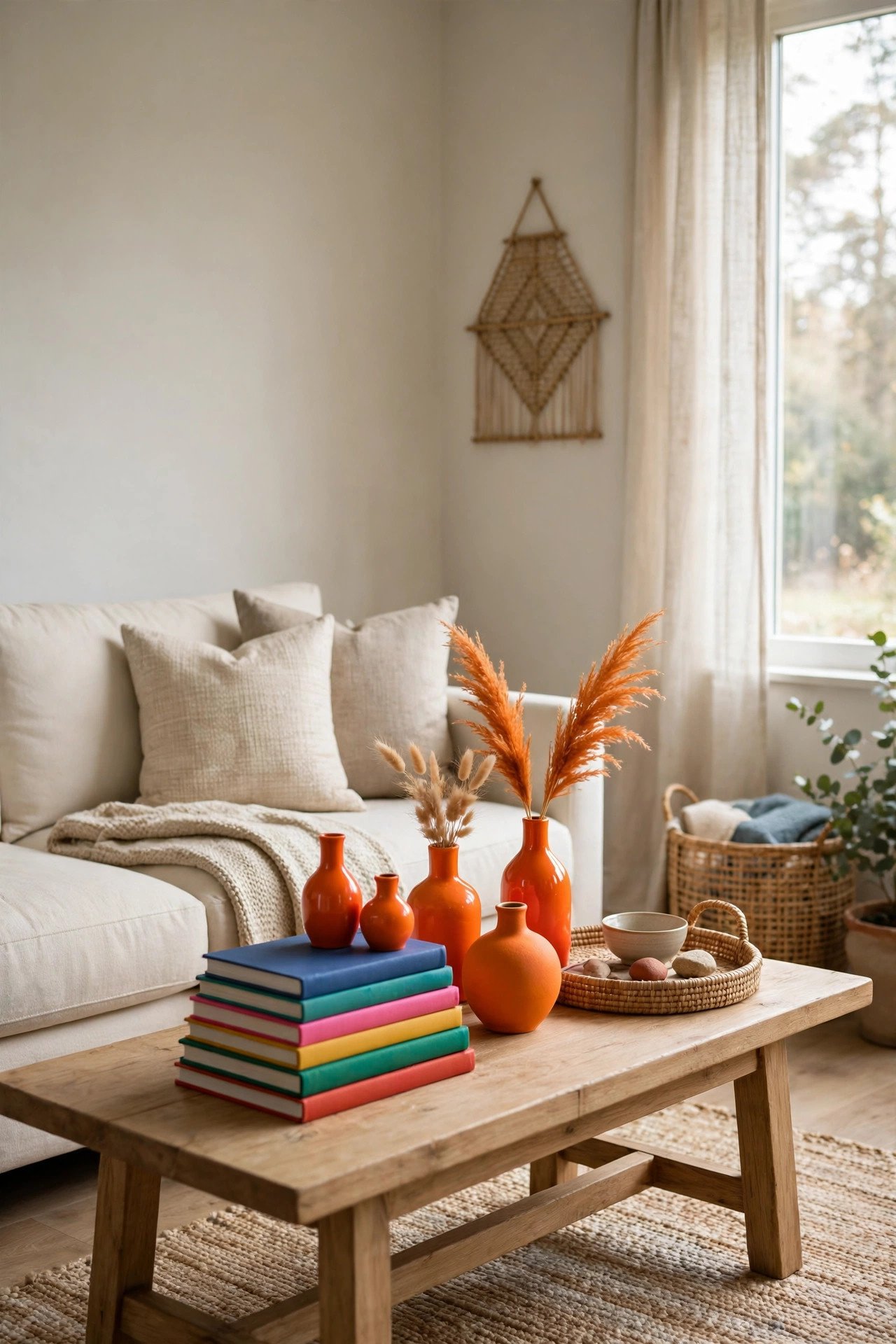
If bold color still scares you, the neutral vs bold colors in home decor answer is to start with small decor only. Bold vases, colorful books, bright candle holders, and a patterned tray add personality without any big commitment. You can switch these small pieces out in ten minutes, so nothing ever feels permanent or risky.
This approach suits people who change their minds often, because a bright pink vase can move to another room tomorrow. Group two or three bold pieces together on one shelf, since a small cluster looks intentional and a single piece can look lost. When a color stops sparking joy, give it away or swap it out, and your neutral room is ready for the next idea.
6. Build a Bold Gallery Wall on a Neutral Background

A gallery wall on a neutral wall lets you collect the art you love without worrying about whether it all matches. The soft white or pale beige background keeps the wall from feeling overwhelming, while the bold art tells your story. Mix paintings, prints, small sculptures, and even colorful plates, because the neutral wall holds them all together.
Plan the layout on the floor before you hammer any nails, so you can move pieces around without extra holes. Use seven to fifteen pieces in different sizes and frames, and leave a little breathing room between each one. Start with the biggest piece in the center, then build outward, and the wall will feel collected, not messy.
7. Go Bold With the Rug and Keep Furniture Neutral
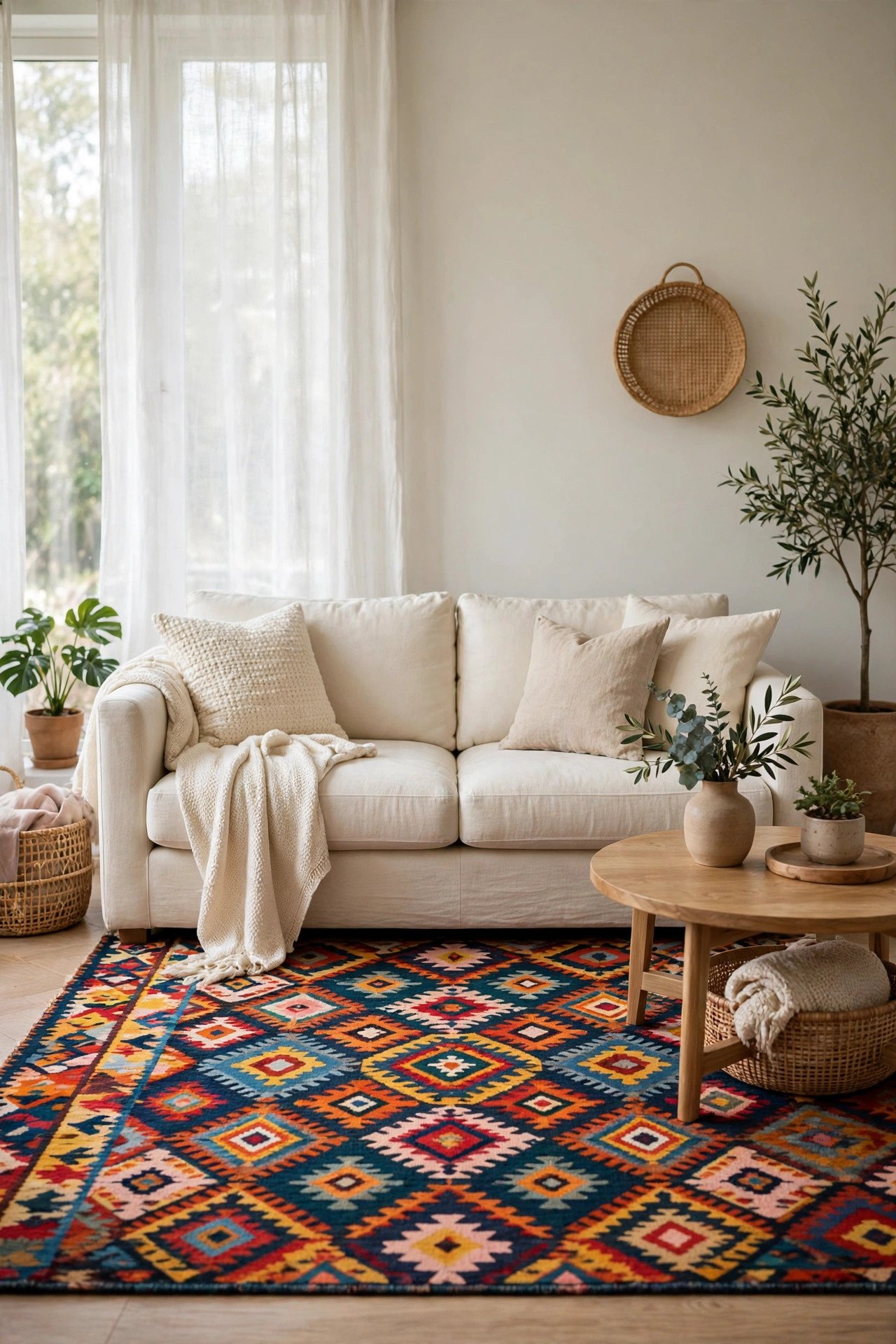
The rug is the easiest place to be bold, because it sits on the floor and never demands attention like wall color does. A bold patterned rug in reds, blues, and oranges adds energy under a neutral sofa and chairs, and the room feels alive. When you get tired of the rug, you swap it out and the whole room feels new, with no paint and no heavy lifting.
Pick a rug that pulls in several bold colors, so it ties together pillows, art, and throws across the room. A faded Persian-style rug works with almost any neutral furniture, from cream linen to warm grey wool. Our guide to living room color guide ideas has more ways to pair a bold rug with calm, neutral furniture.
8. Hang Bold Curtains Against Neutral Walls

Curtains are the most underrated way to add bold color, because most people default to white or beige without thinking. Deep velvet in emerald or rust, bold patterned linen in orange and cream, or dramatic navy drapes can frame a window beautifully. The neutral walls let the curtains do the talking, and the fabric softens the whole room at the same time.
Mount the rod high and wide, so the curtains look tall and dramatic instead of short and cramped. Let the fabric puddle slightly on the floor for a relaxed look, or hem it just above the floor for a cleaner feel. Wash or steam the curtains twice a year, because bold fabric shows dust faster than pale fabric does.
9. Paint Your Trim or Doors a Bold Color

Painting your trim or doors bold is a genius move, because it feels unexpected and costs far less than painting a whole room. A bright yellow door in a cream room, deep navy window trim against soft beige walls, or emerald baseboards all make people smile. The bold trim pops against neutral walls, so you get big personality from a small amount of paint.
Use a semi-gloss or high-gloss finish, because the shine makes the bold color look richer and wipes clean easily. Paint just one door first to test the idea, and live with it for a week before you paint the rest of the trim. Keep the wall color the same throughout the room, so the bold trim feels playful instead of chaotic.
10. Stay Neutral Everywhere and Let Plants Bring the Bold
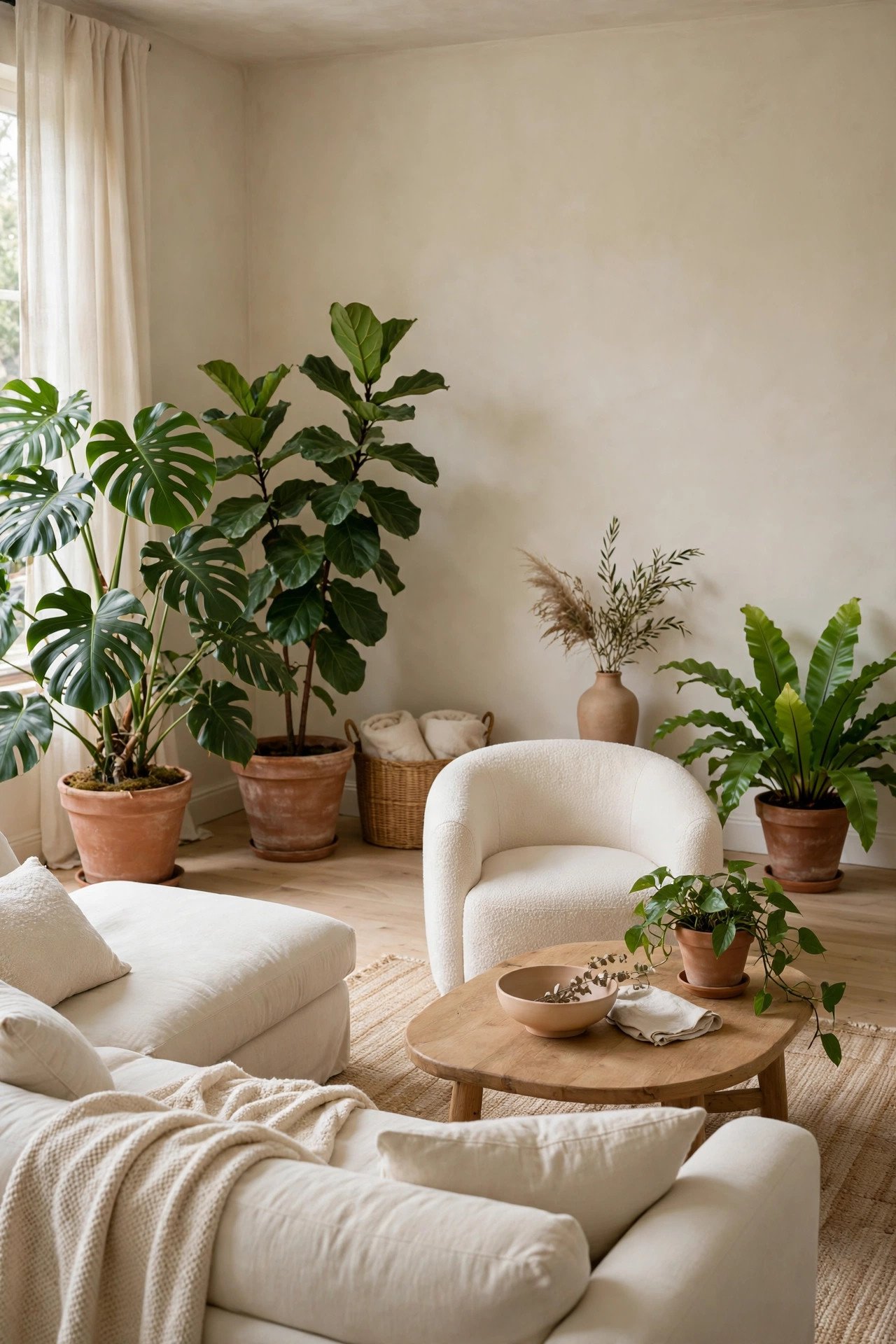
Plants are the happiest way to add bold color, because green counts as bold when everything else is soft and muted. Keep your furniture, walls, and rugs in beige, cream, and warm wood, then fill the room with large leafy greens. A monstera, a fiddle leaf fig, or trailing pothos becomes the bold accent, and the room feels alive without any paint.
Start with a snake plant or a ZZ plant if you are new to plants, because both are genuinely hard to kill. Put large plants in terracotta or ceramic pots, and group them in corners where they can grow tall and full. Water on a schedule and wipe the leaves once a month, so your green bold moments stay healthy and bright.
11. Paint the Ceiling Bold and Keep the Walls Neutral

A bold painted ceiling is having a real moment, because it adds drama where nobody expects it. Keep your walls soft and neutral, then paint the ceiling a saturated color like soft pink, pale blue, or deep terracotta. A cream living room with a pale blue ceiling feels like open sky, while a warm white bedroom with a terracotta ceiling feels like a hug.
This trick works best in rooms with tall ceilings or pretty molding, but it looks just as good in a standard apartment. Paint the crown molding to match the wall or the ceiling, so the transition between the two feels clean and intentional. Our guide to modern neutral bedroom ideas shows how a calm focal point can anchor a room, even when the ceiling does the talking.
12. Make Only One Furniture Category Bold

Here is a simple framework that never fails: pick one furniture category to be bold, and keep everything else neutral. The category could be seating, storage, tables, or lighting, but only one of them gets the bold treatment. A bold blue armchair with a neutral sofa, or a bold yellow sideboard with neutral everything else, becomes the conversation starter.
Let that one bold piece float a little away from the walls, so it gets full attention instead of blending into a corner. Repeat its color once in a small item, like a cushion or a vase, so the bold choice feels planned and not random. If you add a second bold category later, the room can start to feel busy, so stop at one and enjoy the calm.
13. Create a Bold Reading Nook Inside a Neutral Room

A bold reading nook is a cozy idea that works especially well in apartments, where one room has to do many jobs. Keep your main living area calm and neutral, then carve out one small corner and paint it a deep, happy color. A window seat in deep navy, a bright orange armchair, or a corner with a bold pink rug becomes your favorite spot in the house.
Pick a nook that gets good natural light, because sunshine makes bold colors glow instead of feeling heavy. Add a small side table and a soft throw blanket, so the nook invites you to sit down with a book and stay a while. Keep the rest of the room quiet, because the contrast between the calm room and the bold corner is the whole magic.
14. Keep Big Things Neutral and Small Things Bold

Big things stay neutral and small things go bold, and this one rule works in every single room of your house. Big things are the sofa, the rug, the walls, the dining table, and the bed frame, while small things are pillows, throws, vases, and books. The big neutral pieces create calm and cohesion, and the small bold pieces add the personality and energy.
Aim for five to seven small bold moments per room, so the color feels generous without taking over. When you get tired of a bold color, you swap the small things for fifty dollars instead of buying a whole new sofa. See the Sanders Painting guide to balancing bold and neutral shades for the classic 60-30-10 rule, which backs up this big-and-small split.
15. Try a Bold Color Drench in a Small Room Only
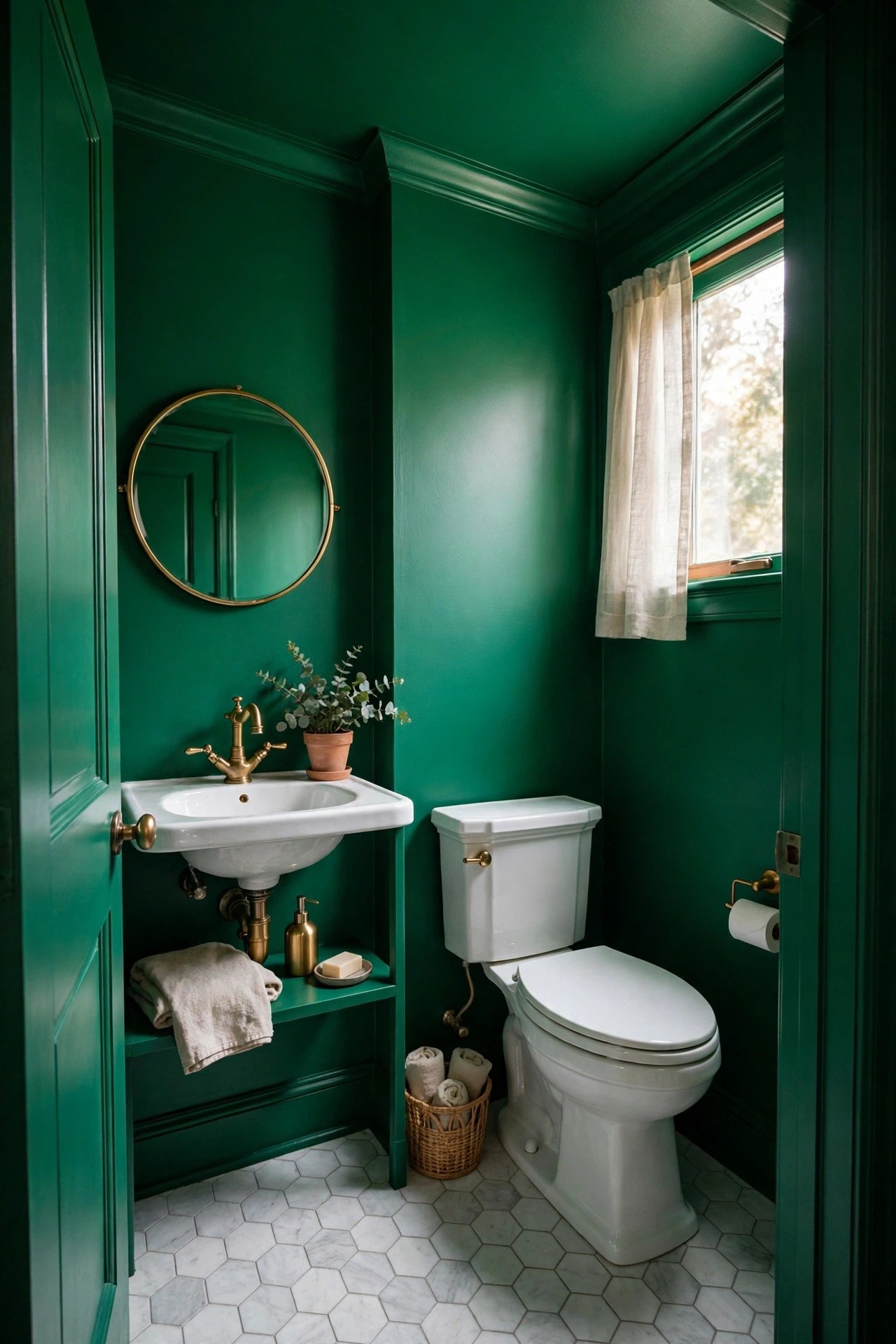
Color drenching is the exception to the bold-is-scary rule, and it works best when you keep it small. Pick your smallest room, like a powder room, a tiny entryway, or a walk-in closet, and paint the walls, ceiling, trim, and door one deep color. In a small room, bold color does not feel overwhelming, because it feels like a jewel box instead of a cave.
A deep emerald powder room or a moody navy closet feels intentional and luxurious, and guests will remember it. Use a satin or eggshell finish, since small rooms need paint that wipes clean and holds up to daily use. Because the room is small, the whole project costs little and finishes in a weekend, which makes it a perfect first bold step.
16. Layer Neutral Textures and Add Just One Bold Color
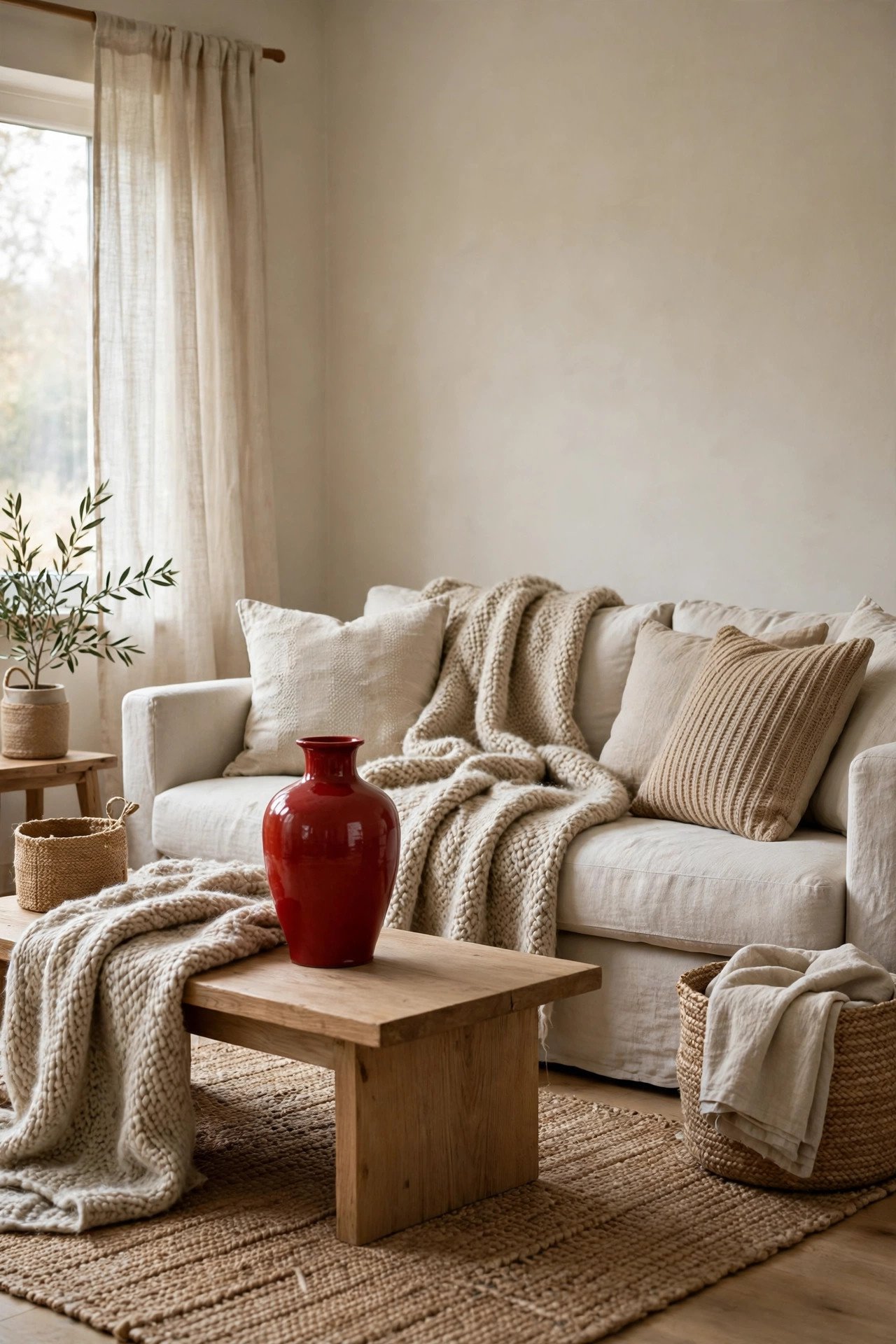
Layering neutral textures is the most sophisticated way to build a room, because texture adds warmth even without color. Start with linen, wool, cotton, jute, leather, wood, and stone in soft neutral tones, and let the textures do the talking. Then add just one bold color in a single element, like a red vase, a blue chair, or a yellow lamp, and it lands with real impact.
This is the approach for people who find all-neutral rooms boring but all-bold rooms chaotic, because it sits right in the middle. Repeat that one bold color in two or three small places, and use no other bold colors in the room at all. Our guide to how to choose the right color palette for your home explains how to pick the one bold color that suits your neutrals best.
17. Repeat One Bold Accent Color Through the Room

Repeating one bold accent color is a smart trick for anyone who loves color but worries about getting tired of it. Pick one color, like terracotta, and use it in the pillows, the vase, the art print, and the candle holder. Because the color repeats, it reads as intentional rather than random, and the neutral background keeps it calm.
When you eventually get tired of terracotta, you swap the accent color to mustard yellow, sage green, or navy blue. The neutral background makes the swap seamless, since you only change the small items and nothing else. Keep a small box of spare accent pieces in each color, so switching your accent takes an afternoon, not a shopping trip.
18. Put Bold Color on Functional Items Only

Bold color feels more useful when it lives on things that already do a job, so try it on functional items first. Think bold storage baskets, a bright blue trash can, a yellow dish rack, a red step stool, or orange drawer pulls. These items are in your house anyway, so making them bold adds personality without adding a single piece of clutter.
This approach suits small apartments best, because every bold choice earns its place by being useful. It also helps if you feel guilty about buying decorative items, since a bold laundry hamper is something you truly need. Start with the item you touch most often, and let the bold color greet you every time you use it.
19. Save Your Boldest Color for Transitional Spaces

Hallways, landings, and entryways are the perfect place to go bold while your main rooms stay neutral. These transitional spaces are seen briefly as you move through them, so bold color feels exciting rather than exhausting. Paint a hallway a dramatic color, wallpaper a small landing, or put a bright yellow console table in the entryway.
Keep the rooms on either side neutral, because the contrast makes the bold hallway feel like a special passage. Pick a hallway with good natural light if you can, since sunlight moving through a bold hallway is beautiful to watch. One bold moment in a hallway can change how the whole house feels, without touching a single living room wall.
20. Trust Your Gut More Than Any Color Rule

The rules are only suggestions, and the trends come and go, so the last thing to learn is to trust your own gut. If a neutral room makes you feel calm and peaceful, choose neutral, and if a bold room makes you feel energized, choose bold. If you want a mix because you are a complex person who contains multitudes, then choose the mix and love it.
Nobody else lives in your rooms, so nobody else gets to decide what feels right when you walk through the door. Buy one small thing in a color that sparks joy, live with it for a week, and let your own reaction guide the next step. You can change your mind whenever you want, because paint, pillows, and plants are all easy to swap.
Frequently Asked Questions
Should I choose neutral or bold colors for my living room?
Choose neutral colors for your living room if you want a calm space that works for relaxing and entertaining. Add bold color through pillows, art, or one statement sofa, so the room still has personality. A neutral base with bold accents suits most living rooms, because it is easy to update when trends change.
What is the 60-30-10 rule for mixing neutral and bold colors?
The 60-30-10 rule says 60 percent of a room should be a dominant color, usually a neutral, on walls or large furniture. Thirty percent should be a secondary color on upholstery, curtains, or rugs, and 10 percent should be a bold accent on pillows, art, or vases. This simple split keeps bold color from taking over, while still giving the room energy and personality.
How do I mix neutral vs bold colors in home decor without it looking messy?
When you mix neutral vs bold colors in home decor, start with a neutral base and limit bold color to one or two elements. Repeat the same bold color in a few small places, so the room looks planned instead of random. Keep the rest of the room calm and uncluttered, because empty space helps bold color shine without chaos.
Can bold colors work in a small room?
Yes, bold colors can work in a small room, especially when you use them on one wall, one piece of furniture, or the ceiling. A small room painted in one deep color can feel like a jewel box, because the bold color wraps the space in warmth. Keep the rest of the room simple and well lit, so the bold color feels intentional instead of overwhelming.
What is the easiest way to add bold color to a neutral room?
The easiest way to add bold color is through pillows and throws, because they cost little and swap out in minutes. Add two or three bold pillows to a neutral sofa, then step back and see if the room needs anything more. If you want a bigger change, try a bold rug or a large piece of art next, and keep the rest of the room neutral.
Final Thoughts
When you stop treating neutral and bold as enemies, your whole home gets easier to decorate, because both sides have a job to do. Neutrals give you calm, space, and flexibility, while bold colors give you joy, energy, and personality, and the best rooms hold both. Stop overthinking and start loving your space, so pick one small bold thing today, try it in your calmest room, and see how it makes you feel.