20 DIY Pillow Covers Ideas for a Cozy, Handmade Home
These diy pillow covers ideas will help you turn plain pillows into handmade pieces you will love. A simple cover can change the color, texture, and mood of a whole room in one afternoon. You do not need fancy tools or years of sewing skill to make covers that look lovely.
The list below has 20 ideas for living rooms, bedrooms, kids rooms, and cozy corners. Some ideas need no sewing at all, while others use paint, dye, or a few simple stitches. Pick a favorite or two and start with the pillow you see most each day.
1. No-Sew Envelope Pillow Covers for Easy Updates
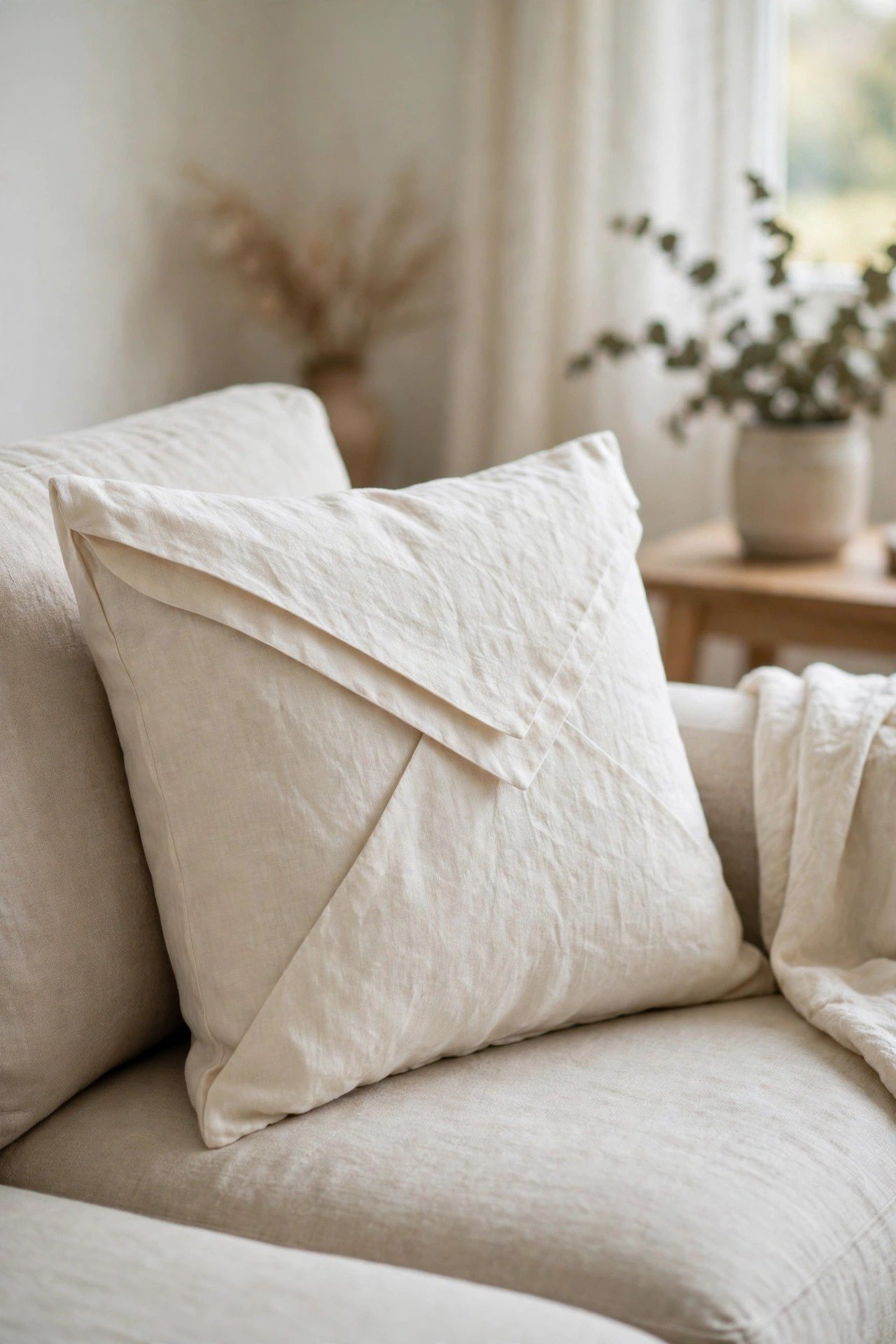
A no-sew envelope cover is the easiest way to make a pillow cover at home. You only need fabric, scissors, and iron-on hem tape to get started. The back flaps overlap like an envelope, so the pillow slips in and out with ease.
Measure your pillow and cut the fabric a little larger on each side. Hem the edges with iron-on tape, fold the back flaps over, and press them flat. See Hometalk’s no-sew pillow cover tutorial for step-by-step photos that show the whole process.
2. Painted Fabric Designs for Custom Pillow Covers

Fabric paint turns a plain pillow cover into a piece of art. You can paint stripes, dots, leaves, or simple shapes with a brush and a steady hand. The paint stays soft on cotton and linen, so the pillow still feels cozy.
Wash and iron the fabric first so the paint sticks well to the surface. Tape off clean lines with painter’s tape and let each color dry before you add the next. Start with one small design so you can learn how the paint flows on fabric.
3. Tie-Dye Pillow Covers for a Splash of Color

Tie-dye gives a plain white pillow cover a burst of bright color. These diy pillow covers ideas are perfect for summer rooms, kids rooms, and playful spaces. Each cover comes out a little different, so no two pillows ever look the same.
Twist the fabric into a spiral, fold it into stripes, or scrunch it into a soft cloud shape. Tie the folds tight with rubber bands and add dye in two or three colors. Rinse the cover in cold water and let it dry flat before you put it on the pillow.
4. Stencil Pattern Covers for Crisp, Clean Designs
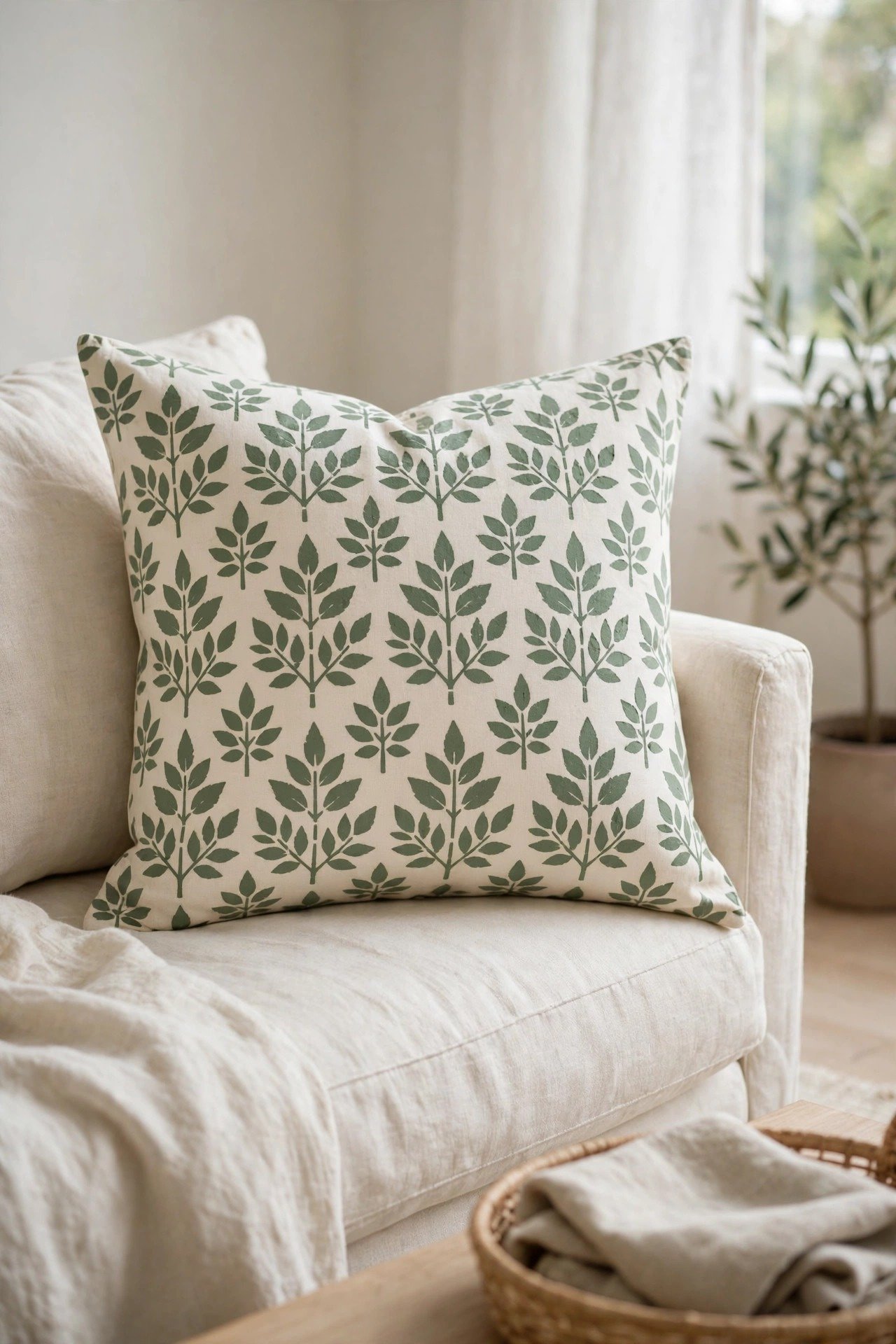
A stencil gives you a neat pattern without any freehand drawing. You can stencil stars, leaves, simple flowers, or a clean geometric shape on any cover. The pattern repeats evenly, so the whole pillow looks neat and planned.
Tape the stencil flat on the fabric so it cannot slip while you paint. Dab the paint on with a sponge and use a light hand for the cleanest edges. Lift the stencil straight up and let the paint dry before you move the cover.
5. Old Shirt Pillow Covers for a Thrifty Makeover

An old shirt makes a soft and thrifty pillow cover with almost no work. Old shirts make some of the best diy pillow covers ideas because the fabric is already soft and broken in. A plaid shirt, a soft flannel, or a worn denim shirt all work well for this project.
Button the shirt up and lay it flat with the pillow on top as a guide. Cut around the pillow, stitch or glue the open edges, and trim the extra fabric. The shirt buttons become a cute detail down the front of the finished pillow.
6. Patchwork Pillow Covers from Fabric Scraps
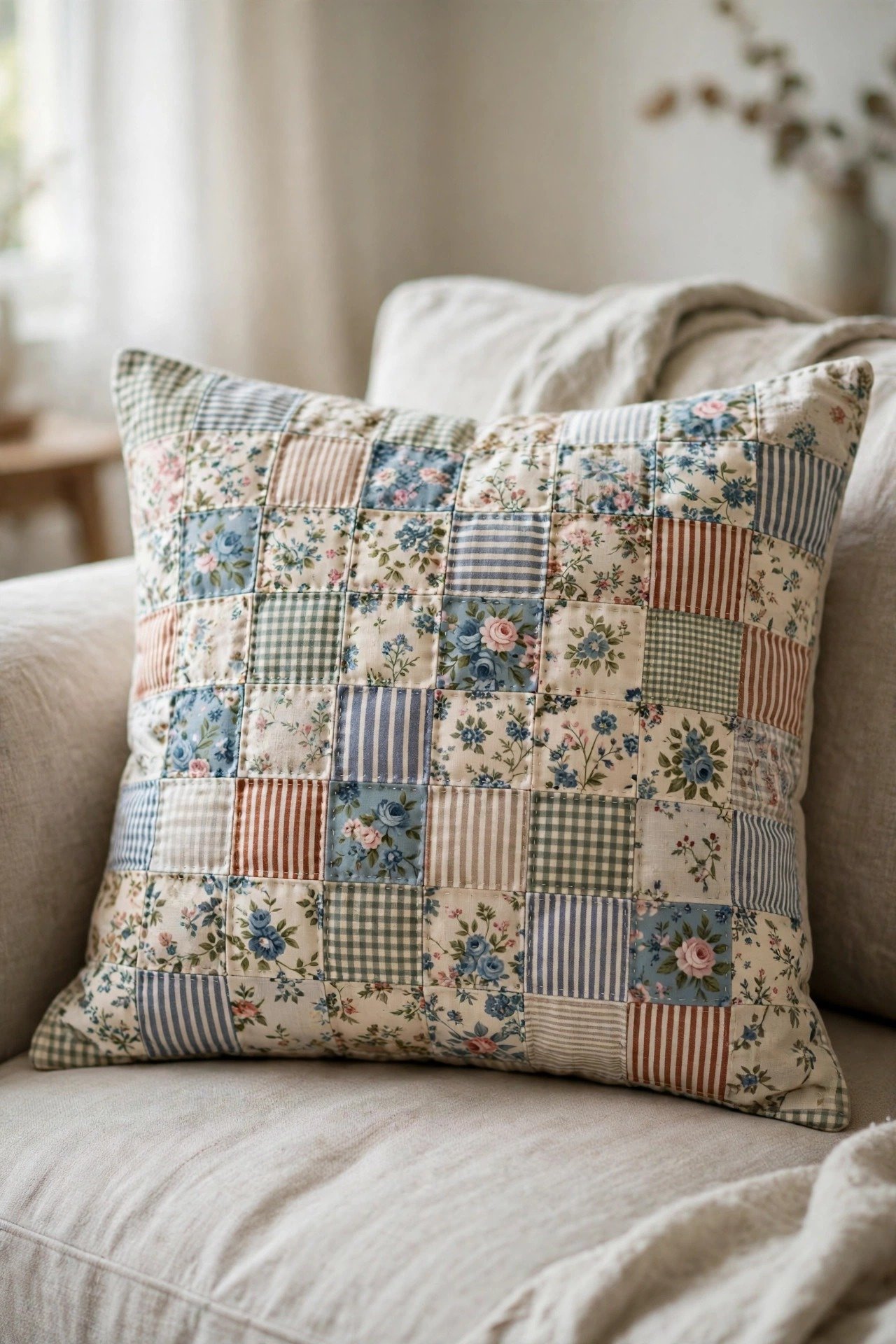
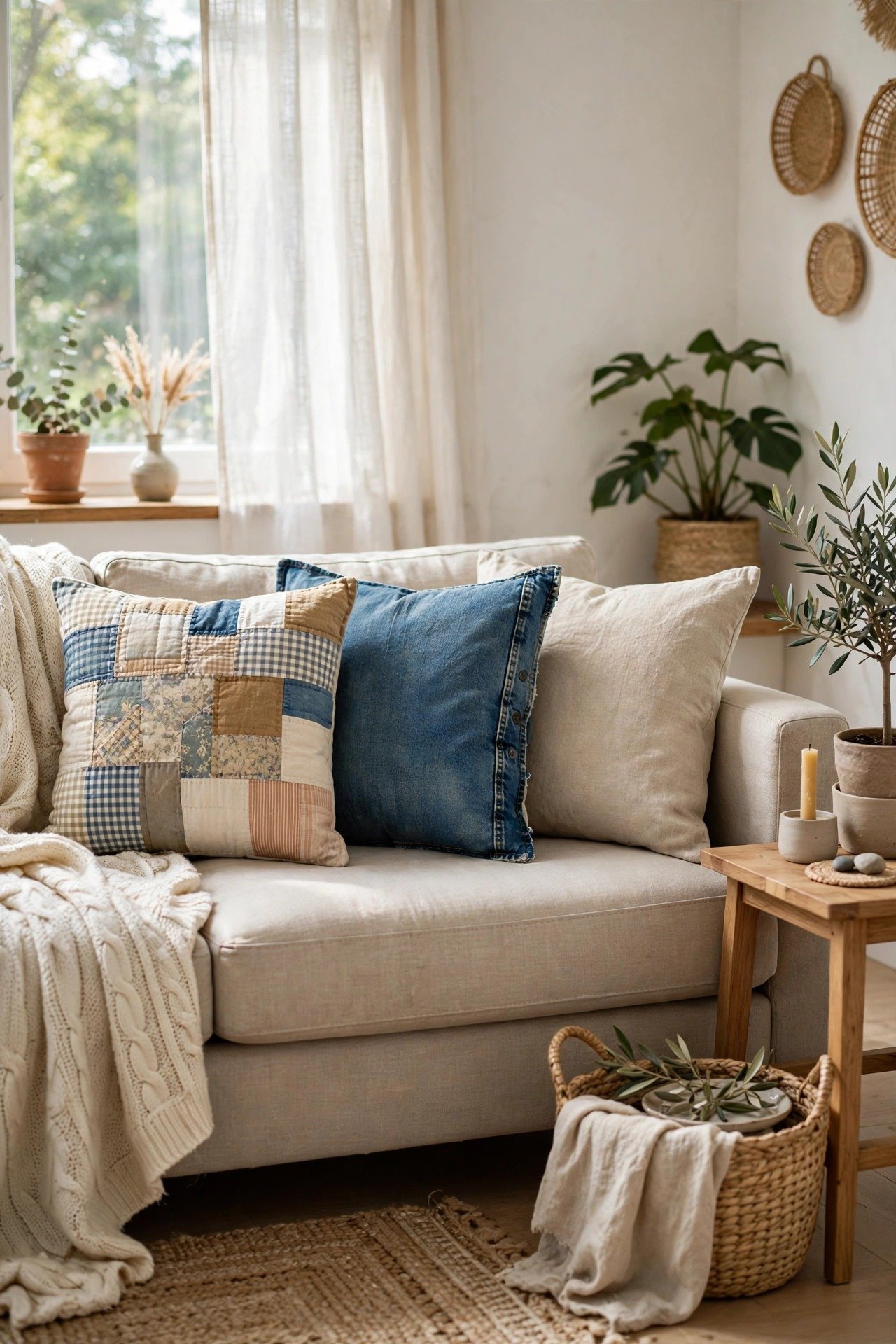
Patchwork turns small fabric scraps into a pillow cover full of charm. You can mix checks, stripes, florals, and solids in one cover for a cozy handmade look. The mix of prints feels warm and collected, like a quilt for your sofa.
Cut your scraps into even squares and lay them out in rows before you join them. Sew or glue the squares into one panel, then turn it into a simple envelope cover. See our small living room decor ideas for more ways to use handmade pillows in a small space.
7. Tassel Corner Covers for a Playful Finish
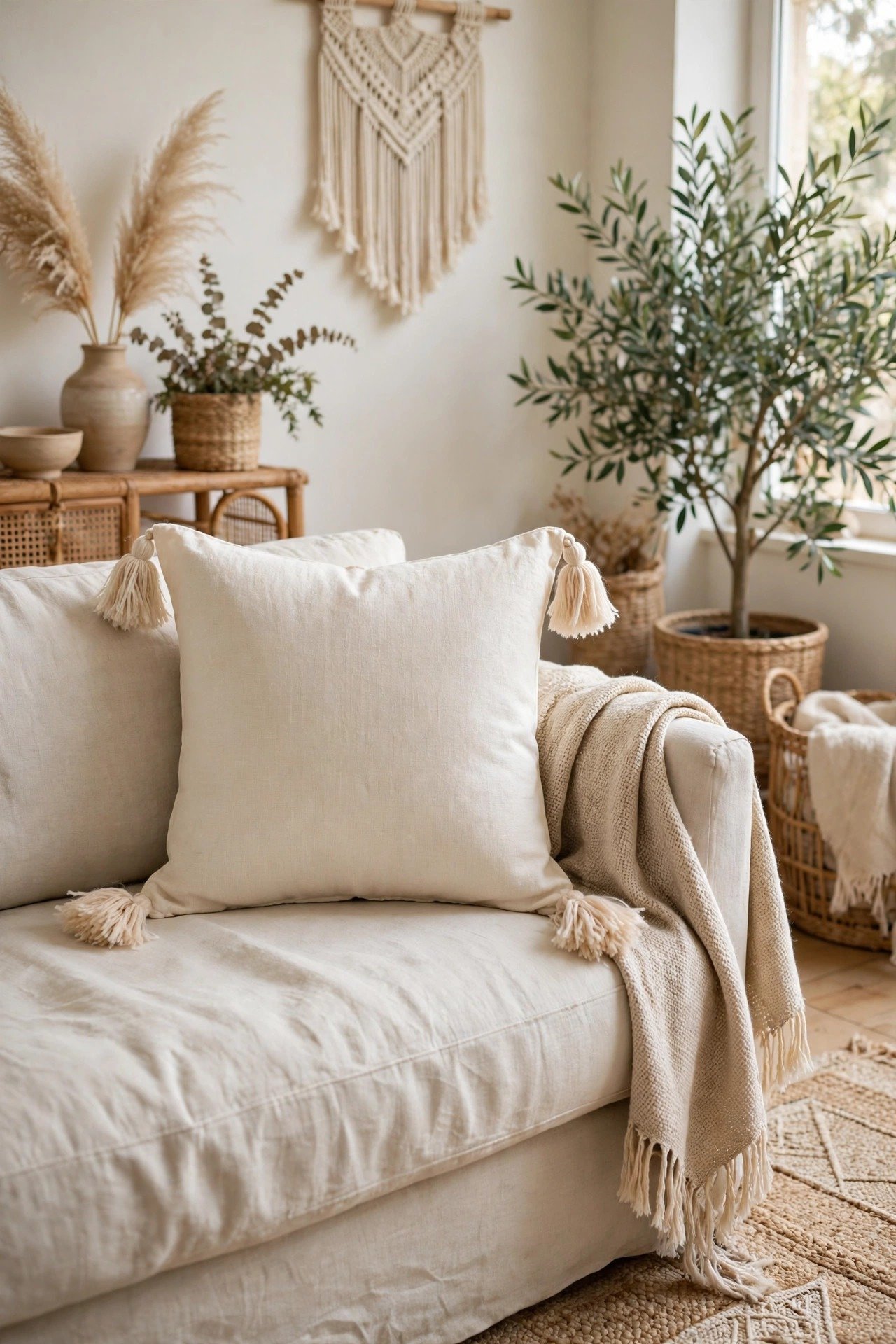
Tassels on the corners give a plain pillow cover a playful and boho feel. You can buy ready-made tassels or make your own from yarn and a small piece of card. The soft fringe moves gently when you sit down, which makes the sofa feel relaxed.
Sew or glue one tassel to each corner of the finished cover for a balanced look. Pick tassel colors that match your room, such as cream, rust, or soft sage. See our boho living room ideas for more relaxed looks that pair well with tassel pillows.
8. Fringe Edge Pillow Covers for Soft Movement
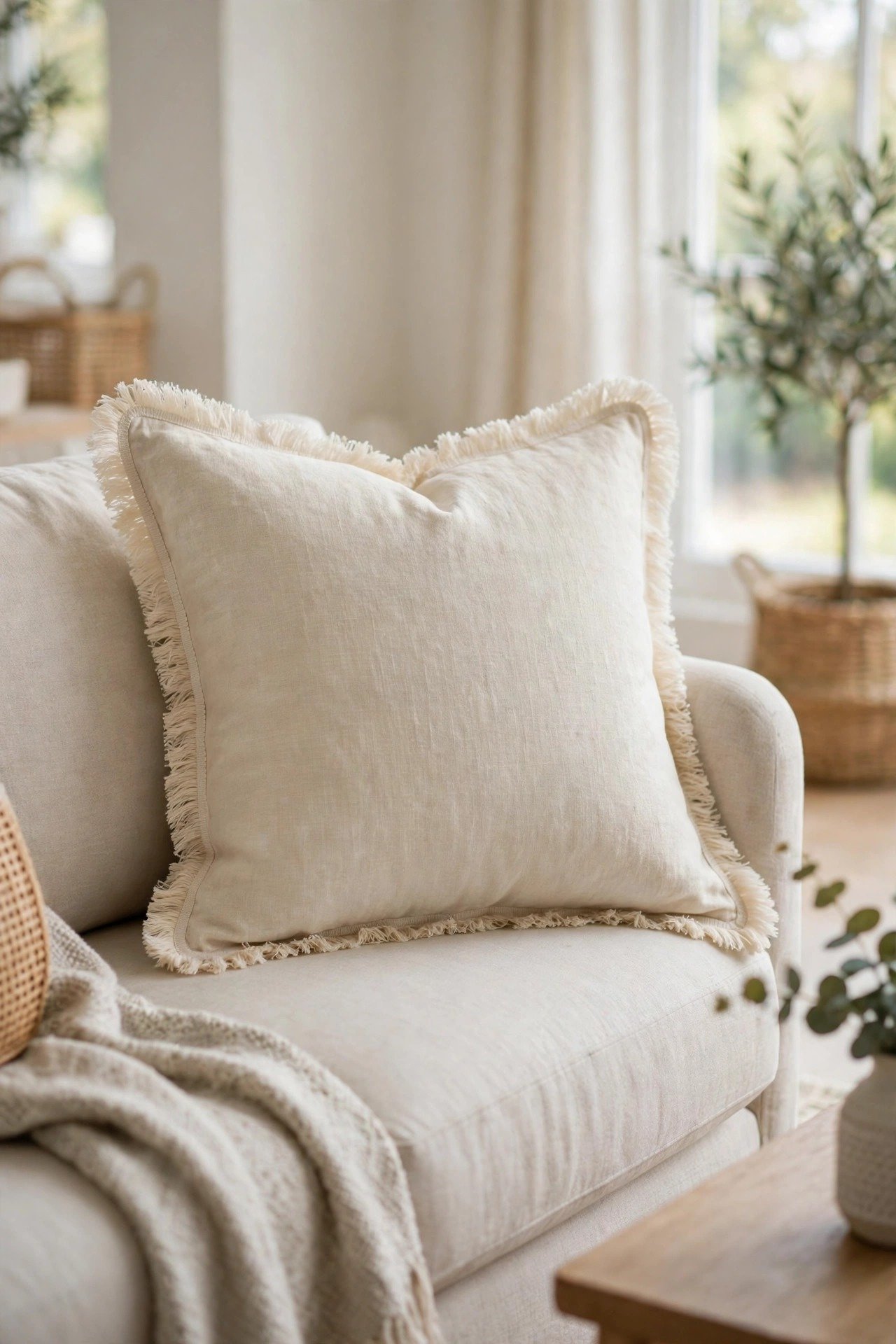
A fringe edge adds soft movement to the sides of a pillow cover. You can cut the fringe from the same fabric or add a ready-made fringe trim from a craft shop. The loose threads catch the light and make a plain pillow look full of texture.
Pin the fringe trim inside the seam before you close the cover. Keep the fringe short on a sofa pillow so it does not tangle when you lean back. A long fringe suits a bed pillow or a floor cushion much better than a sofa pillow.
9. Embroidered Designs for a Handmade Touch

A little embroidery turns a plain cover into a pillow that feels truly handmade. You can stitch a small flower, a leafy vine, or a simple heart on the front panel. The raised thread adds texture that you can see and feel every time you touch the pillow.
Draw your design on the fabric with a washable marker before you start to stitch. Use a basic backstitch or a chain stitch so the lines stay neat and even. Keep the design small and near the center so the pillow still looks calm and clean.
10. Fabric Applique Covers for Pretty Layered Shapes

Applique means stitching a fabric shape onto the front of a pillow cover. You can cut out leaves, stars, hearts, or simple flowers from a scrap of fabric. The layered shapes add color and depth without any paint or dye.
Iron the shape onto the cover with fusible web, then stitch around the edges by hand. Pick a shape in a bright color so it stands out against a plain cover. One large shape looks bold, while a row of small shapes looks sweet and neat.
11. Lace Overlay Covers for a Soft Romantic Look

A lace overlay gives a plain pillow cover a soft and romantic feel. You can sew a panel of lace over a solid cover or stitch lace trim along the edges. The lace lets the color below show through, which gives the pillow a gentle glow.
Pick a sturdy cotton lace so the cover can be washed without tearing. White lace suits a cream cover, while soft gray lace suits a pale blue cover. Use lace pillows in the bedroom where their soft look can shine the most.
12. Button Embellished Covers for Charming Detail

Buttons add a charming handmade detail to the front of a pillow cover. You can stitch a row of buttons down the center or scatter them in a simple pattern. Old buttons from a jar or a craft box work just as well as new ones.
Mix sizes and colors for a playful look, or keep one color for a neat and tidy feel. Sew each button on tight so it stays put when the cover is washed. A button row down the back also works as a pretty way to close the cover.
13. Zipper Closure Covers for Easy Washing
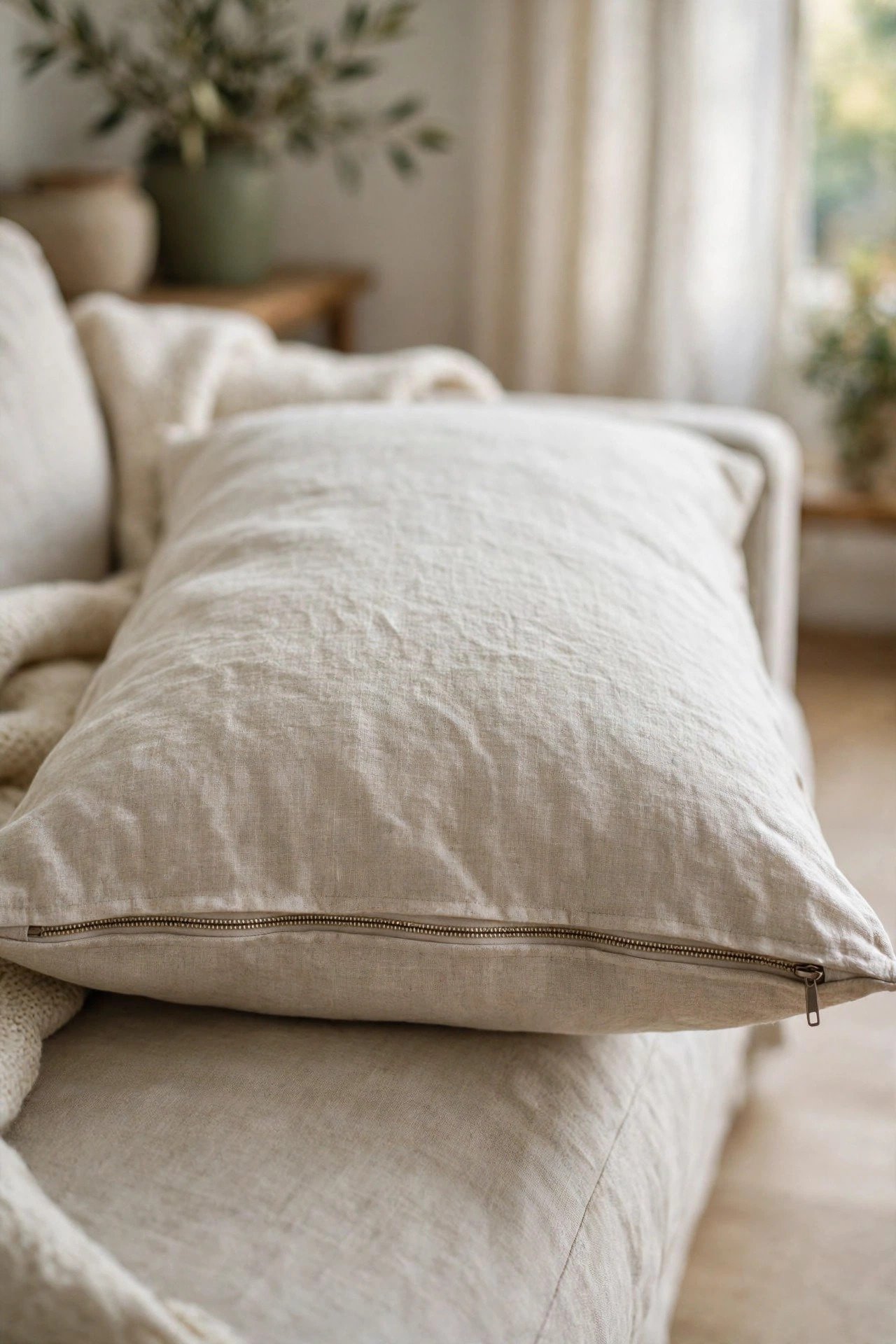
A zipper closure makes it easy to take a pillow cover off and wash it. You can slip the cover off in seconds when it needs a wash or a seasonal change. A hidden zipper along the bottom edge keeps the look clean and tidy.
Pin the zipper in place before you sew so the teeth stay straight and even. A simple straight stitch along each side of the zipper is all you need. See Domino’s guide to DIY pillowcase tutorials for more ways to finish a pillow cover with a neat closure.
14. Pom-Pom Trim Covers for a Fun, Cheerful Edge

Pom-pom trim adds a fun and cheerful edge to any pillow cover. The little balls of yarn sit along the seam and give the pillow a soft handmade look. Pom-poms suit kids rooms, nurseries, and bright family living rooms best.
Pin the pom-pom trim inside the seam with the balls facing in before you sew. Turn the cover right side out and the pom-poms will pop out along the edge. Pick pom-poms in one color for a calm look or a bright mix for a playful feel.
15. Denim Pillow Covers for a Casual, Sturdy Look

Denim makes a pillow cover that is casual, sturdy, and easy to live with. Old jeans give you strong fabric with a soft worn feel that only gets better with time. The blue tones suit farmhouse rooms, coastal rooms, and relaxed family spaces.
Cut the legs of old jeans into panels and join them into a simple cover shape. Keep a back pocket on the front of the pillow for a fun and useful detail. See our blue dorm room ideas for more casual denim looks that suit older kids and teens.
16. Quilted Pillow Covers for Warmth and Texture
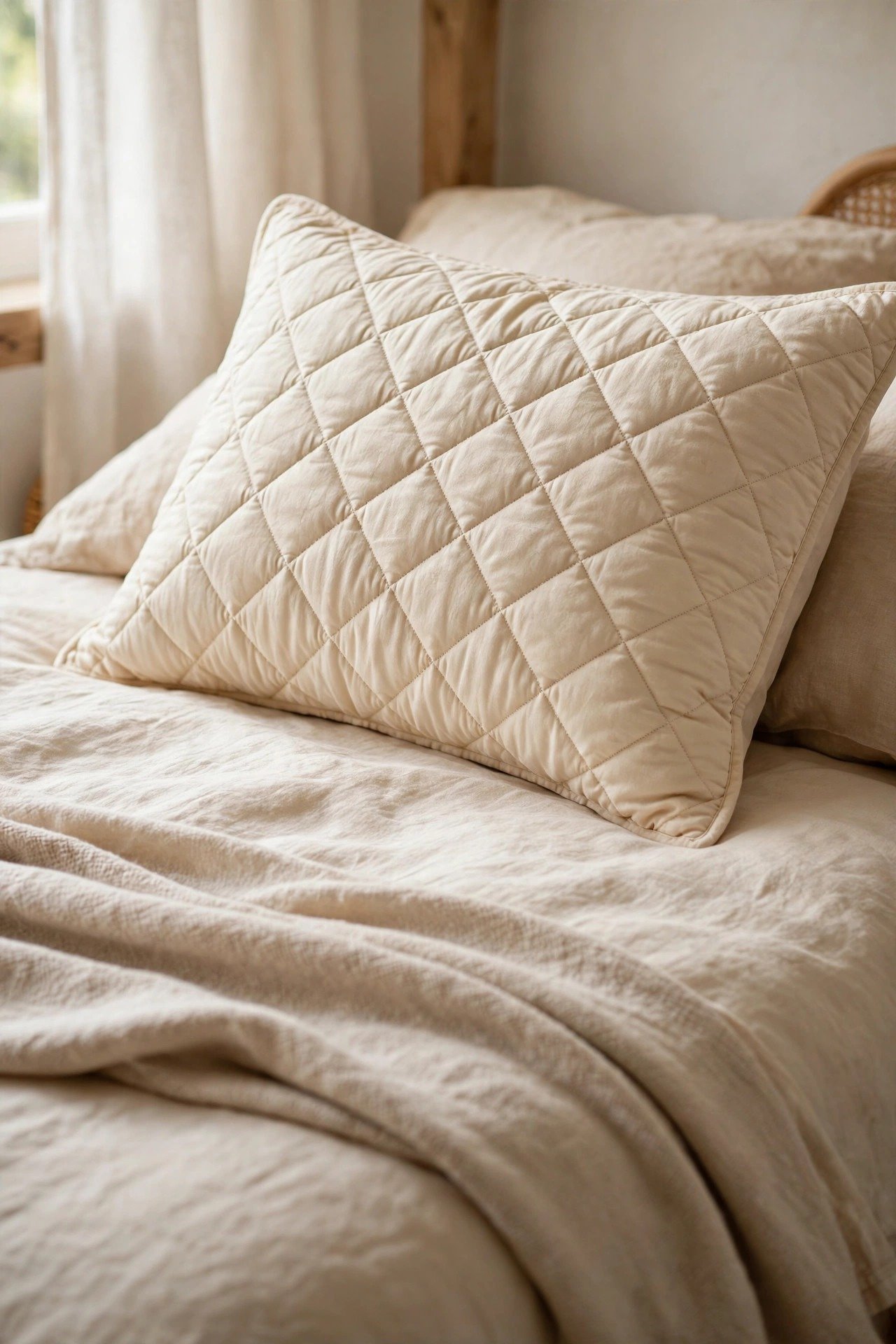
A quilted cover adds warmth and texture that makes a sofa feel cozy. The stitched lines hold a soft batting layer inside, so the pillow feels plump and warm. Quilted covers suit fall and winter rooms where comfort matters most.
Sew straight lines or a simple diamond pattern through the fabric and batting layers. Pick a soft cotton print so the quilting lines show up in a pretty way. See our fall bedroom ideas for more ways to style a cozy bed for the cold months.
17. Painted Quote Covers for Words You Love

A painted quote cover puts words you love right on your favorite pillow. You can paint a short word like home, love, or cozy on the front panel. The words make the pillow feel personal and full of warmth.
Print the word in a large font and trace it onto the fabric with a pencil. Fill the letters in with fabric paint and a small flat brush for clean edges. Keep the quote short so the letters stay big and easy to read across the room.
18. Faux Fur Covers for a Cozy, Luxurious Feel

A faux fur cover makes any chair or sofa feel soft and luxurious. The thick pile feels warm in winter and looks rich next to plain linen or cotton. Cream, soft gray, and warm brown are the easiest faux fur colors to style.
Sew faux fur with a longer stitch and trim the pile from the seams so they lie flat. Shake the finished cover outside to clear any loose fibers before you use it. One faux fur pillow per sofa is enough to add warmth without too much bulk.
19. Reversible Pillow Covers for Two Looks in One

A reversible cover gives you two pillow looks for the work of one. You can flip the cover over when you want a fresh color or a new season. One side can be a bold print while the other side stays calm and plain.
Sew two cover panels back to back with an envelope or zipper opening on one side. Pick fabrics that work with the same room so both sides feel at home there. This trick is perfect for small homes where storage space is tight.
20. Braided Fabric Covers for a Woven, Textured Finish

A braided cover wraps the pillow in soft woven strips of fabric. You can braid long strips of cotton or jersey and stitch them onto a plain cover. The woven texture catches the light and makes the pillow look rich and handmade.
Cut strips of fabric in two or three colors and braid them into long even ropes. Coil the braids across the front panel and stitch them down in neat rows. Keep the braids loose enough to stay soft, so the pillow is still comfy to lean on.
Frequently Asked Questions
Do I need a sewing machine to make pillow covers?
No, you do not need a sewing machine to make a pillow cover. No-sew envelope covers, fabric glue, and iron-on hem tape all work well for beginners. If you do own a machine, it will speed up the work, but it is never required.
What fabric works best for DIY pillow covers?
Cotton and linen are the best fabrics for DIY pillow covers because they are easy to cut and sew. Denim and canvas suit busy family rooms, while velvet and faux fur suit cozy winter rooms. Pick a washable fabric so you can clean the cover without worry.
What are the best diy pillow covers ideas for beginners?
The best diy pillow covers ideas for beginners are no-sew envelope covers, painted fabric designs, and old shirt covers. All three need only basic supplies and take less than an hour to finish. Pick the one that fits your fabric, your tools, and your free afternoon.
How do I wash handmade pillow covers?
Take the cover off the pillow insert and wash it on a gentle cycle with mild soap. Wash painted or dyed covers in cold water so the colors stay bright and fresh. Let the cover air dry flat so it keeps its shape and does not shrink.
How much fabric do I need for one pillow cover?
Measure your pillow insert and add one inch on each side for seams and ease. A standard 18 inch pillow needs about half a yard of fabric for a simple envelope cover. Buy a little extra if your fabric has a large print that needs matching.
Final Thoughts
DIY pillow covers are the easiest way to make a house feel like your home. They hold color, texture, and your own handiwork in one small project you can finish in an afternoon. Pick the idea that fits your pillow and start with just one cover.
Your sofa does not need a full makeover to feel fresh and personal. Try a no-sew envelope, a painted design, or a soft denim cover this weekend and see how the room changes. Soon that little pile of handmade pillows may become your favorite spot in the house.