
Minimalist vs Maximalist Decor Style: 19 Ideas to Find Your Perfect Balance

If you have ever searched for minimalist vs maximalist decor style before decorating your home, you have probably felt torn between calm and color. Minimalism promises a quiet room with clean lines and very little clutter. Maximalism promises a joyful room full of color, pattern, and pieces that tell your story.
This guide walks through 19 ideas, from a calm neutral base to color-drenched walls and ceilings used as a fifth wall. Each idea shows one side of the debate, so you can borrow what you love from both styles. By the end, you will know how to find the balance that feels right for your home.
1. A Calm Neutral Base With One Bold Pop of Color

Start with a calm neutral base, because pale walls and a beige sofa give your eyes a quiet place to rest. Then add one bold pop of color, like a coral cushion or a red throw, so the room still feels alive. That single bright note does more work than ten small colorful objects scattered around the room.
Keep the rest of the room simple, so the pop of color stays the star of the show. Our guide to modern vs traditional interior design shows how one strong accent can change a whole room without a full makeover. Try the pop in a cushion first, because it is easy to swap if the color feels too loud.
2. A Gallery Wall That Follows Real Rules
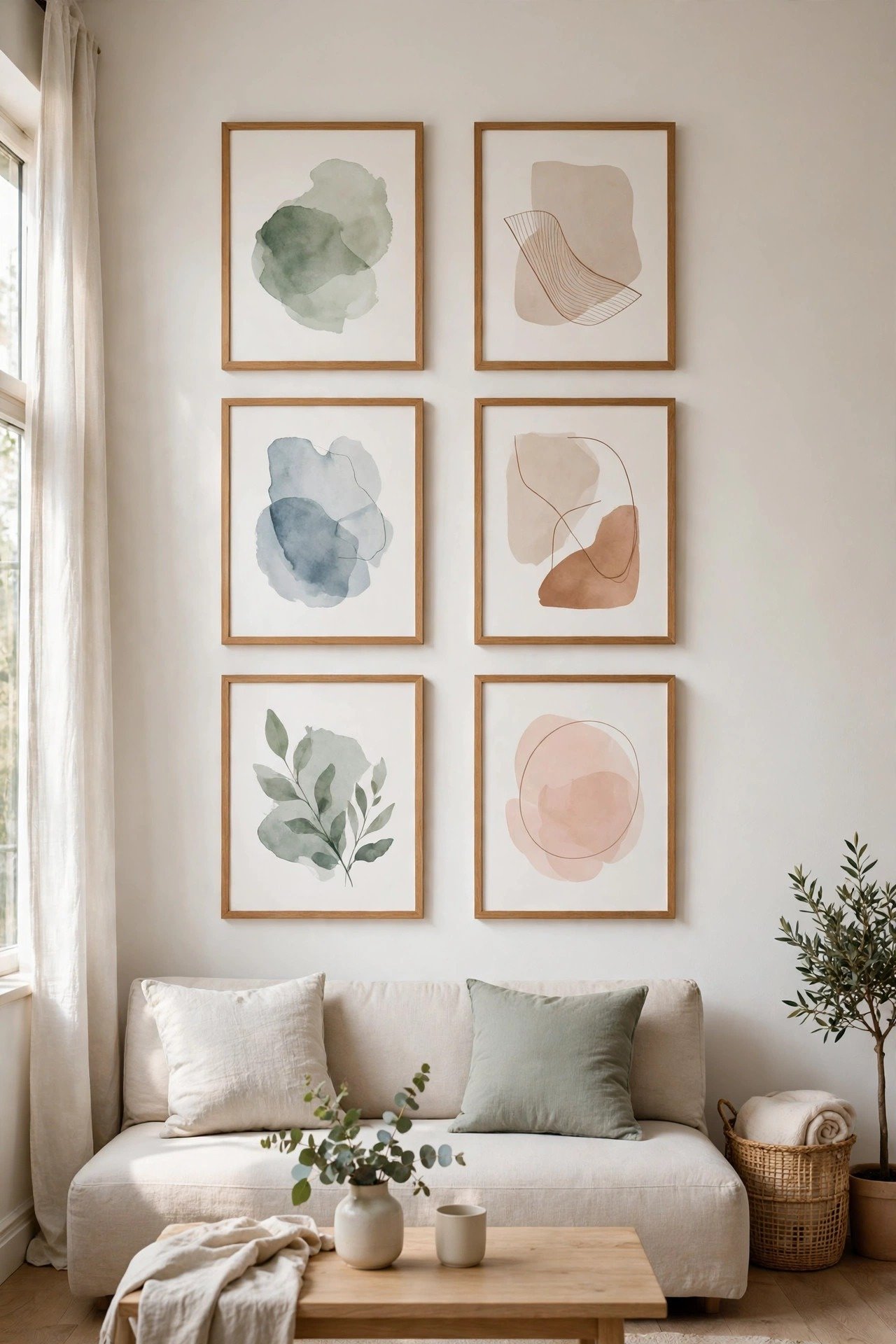
A gallery wall can look like art or like a mess, and the difference comes down to a few simple rules. Keep the frames in one even grid, with the same gap between every frame, so the wall reads as one picture. Match the frame color or the frame style, so different prints still feel like they belong together.
Hang the center of the grid at eye level, because a wall hung too high feels awkward from the sofa. Leave a little empty wall around the grid, so the collection can breathe instead of crowding the room. Step back and squint at the wall, because the shapes should form one calm rectangle even when the prints differ.
3. Clutter-Core Shelving Done With Care

When you compare minimalist vs maximalist decor style up close, shelving shows the biggest gap between the two. Clutter-core shelving fills every shelf with books, vases, plants, and small treasures, yet it still needs a plan. Group objects in threes, repeat one color across the shelves, and leave one small gap so the eye can rest.
Mix tall objects with short ones, so the shelf line rises and falls like a small skyline. Keep the heaviest pieces low and the lightest pieces high, because a shelf should feel stable and safe. Edit one item off each shelf once a month, so the display stays joyful instead of turning into a junk pile.
4. Everything Has a Home: The Minimalist Storage Rule

Minimalism is not about owning nothing, because it is about giving everything you own a proper home. Closed cabinets, baskets, and drawers hide the everyday mess, so the surfaces stay calm and clear. When every item has a place, tidying takes five minutes instead of a whole weekend.
Start with one room and empty a single drawer, because small wins build the habit faster than a big purge. Our guide to what is minimalist interior design explains how intention, not emptiness, is the real heart of a minimal home. If an item has no home after a week, it probably does not belong in your home at all.
5. A Color-Drenched Room That Still Feels Cozy

Here is where minimalist vs maximalist decor style splits most clearly, because a color-drenched room paints everything in one bold shade. Deep teal walls, a rust sofa, and mustard cushions can wrap a room in warmth instead of shouting at you. The trick is to use one color family across the walls, the sofa, and the curtains, so the boldness feels calm.
Add pale wood or cream in small doses, because a light floor or a cream lamp breaks the color without breaking the mood. Keep the lighting warm and low in the evening, so the rich colors glow instead of glaring. Test the color on one wall first, because a full room of bold paint is a big promise to keep.
6. The Three-Texture Rule for Calm Rooms

A calm room in pale colors can feel flat and cold without texture, like a waiting room instead of a home. Linen, wool, and light wood add warmth without adding color, so the room stays quiet and still feels alive. Layer at least three textures in one seating area, all in the same calm color family, for instant depth.
A linen cushion, a wool throw, and a rough wood bowl can wake up a plain sofa in one afternoon. Our guide to minimalist luxury living spaces shows how soft textures turn a simple room into a calm and elegant retreat. Touch each texture before you buy it, because a room should feel as good as it looks.
7. Walls Full of Art and Personality

Maximalist walls treat every inch as a chance to show personality, with art, mirrors, and plates hung from floor to ceiling. The salon style looks busy at first, yet it feels warm and personal once you live with it for a week. Start at the center and build outward, so the wall grows in a natural and balanced way.
Mix frame sizes and art styles, but repeat one color through the whole wall to tie it together. Hang the lowest frame at eye level when you sit down, because a wall should be enjoyed from the sofa. Add one mirror among the frames, because it bounces light around and keeps the busy wall from feeling dark.
8. Empty Space Is Not Wasted Space

An empty wall or an empty stretch of floor is not a failure, because it gives your eyes a place to rest. Minimalist rooms use that rest on purpose, so the one sofa and the one lamp in the room matter more. Resist the urge to fill every corner, because a room with breathing space feels larger and calmer.
Leave at least one wall mostly bare in every room, and notice how the whole room relaxes. Walk through the room slowly, because the empty spots should feel peaceful, not forgotten. If a corner still nags at you after a week, add one plant and stop there.
9. Collections on Display, Not Hidden Away

A maximalist home puts its collections on display, because ceramics, travel finds, and old books tell the story of a life. Open shelves turn those objects into decor, so the room feels personal instead of decorated by a stranger. Group the collection by color or by shape, because a tidy group reads as a collection and a scattered group reads as clutter.
Rotate the display every season, so a few favorite pieces get their turn in the spotlight. Keep the shelf dusted and the pieces spaced apart, because each object deserves a little room to shine. If a piece no longer makes you smile, move it to a box and let a loved piece take its place.
10. One In, One Out: The Simple Editing Rule

The one in, one out rule keeps a home in balance, because every new item means one old item leaves. Buy a new cushion, and an old one goes to a friend, a charity shop, or the bin. The rule sounds strict, yet it stops the slow pile-up that turns a calm room into a crowded one.
Keep a small donation box by the door, so the outgoing item leaves the house the same week. Try the rule for one month, because you will be surprised how little you miss the things that leave. A home that follows this rule stays easy to clean, easy to love, and easy to change.
11. Pattern Mixing Without the Chaos

Pattern mixing is the maximalist superpower, because floral, stripe, and geometric prints can live happily in one room. The secret is a shared color family, not perfect matching, so different patterns feel related even when they clash. Start with three patterns in one palette, and keep the largest pattern on the rug or the curtains.
Add the smallest pattern last, because a tiny print on a cushion can tie the whole room together. See the Homes and Gardens guide to mixing minimalist and maximalist styles for expert ideas on balancing bold pattern with calm space. If the room starts to feel noisy, remove one pattern and live with the rest for a week.
12. One Beautiful Object Is Enough

A single beautiful object can carry a whole room, because one sculptural vase or one carved bowl draws every eye. Place it where the light hits it, and keep the table around it clear, so nothing competes with it. The object should be something you love to look at every day, not something you bought to fill a gap.
Rotate your single object with the seasons, because a new star piece refreshes the room for free. Spend a little more on that one piece, because quality shows when an object stands alone. Step back and smile when the room feels finished with less, because that is minimalism at its best.
13. Books as Decor, Not Just Storage

Books make wonderful decor, because their colors, shapes, and stories warm up a room in a way plain objects cannot. Stack them on a coffee table, lean them on a shelf, and let a few favorite covers face outward like art. Group books by color for a calm look, or by topic for a room that invites real conversation.
Leave one stack slightly messy, because a perfectly neat pile looks like a shop display instead of a home. Keep the books you actually read within reach, because decor should never get in the way of living. A room full of books feels smart and cozy at the same time, and that is a hard feeling to beat.
14. A Gallery Wall With Room to Breathe

A minimalist gallery wall uses only a few frames, because wide empty space around each print makes the art feel important. Three large prints with generous gaps beat twelve small frames crowded together, every single time. Match the frame style and keep the colors calm, so the wall feels like a gallery instead of a noticeboard.
Hang the prints in a straight line at eye level, because a calm line suits a calm room. See the Homoraa guide to maximalism vs minimalism for a clear look at which style fits your home and your daily routines. Live with the empty wall space for a week, because you may find you love the quiet more than the art.
15. Everyday Objects Turned Into Art

Everyday objects make the most personal art, because a woven basket or a straw hat carries a memory no shop print can match. Hang them in a loose group on a plain wall, and the wall suddenly tells your story. Choose objects with strong shapes and warm colors, because flat or pale objects disappear against a white wall.
Mix baskets, hats, and a wooden tray in one group, but keep the colors in one warm family. Hang the group low enough to touch, because everyday art should feel lived in, not locked away. Swap one object when the seasons change, so the wall grows with your life instead of staying frozen.
16. Monochrome Rooms With Rich Texture

A monochrome room uses one color in many shades, because grey on grey can feel rich when the textures differ. Boucle, velvet, and light wood in the same grey family give the eye plenty to explore without a single bright color. Layer the shades from pale to dark across the sofa, the rug, and the cushions, so the room gains depth.
Add one dark frame or one black lamp, because a small dark note stops a pale room from looking washed out. Our guide on how to choose the right home decor style can help you decide whether a calm monochrome palette truly suits your life. Sit in the room at dusk, because texture and shade show their best side in soft evening light.
17. The Ceiling as Your Fifth Wall

Most people forget the ceiling, yet maximalists treat it as a fifth wall full of possibility. A bold painted ceiling in deep green or warm terracotta can make a plain room feel designed from top to bottom. Keep the walls pale when the ceiling goes bold, because one strong surface is enough to carry the drama.
Add a simple pendant light that hangs low, because it connects the bold ceiling to the room below. Paint a small test patch first, because a ceiling color looks darker once it covers the whole room. If paint feels too bold, try a patterned wallpaper on the ceiling for the same joyful surprise.
18. Function First, Decor Second

A room must work before it can look good, because a beautiful chair you cannot sit in is just a sculpture. Choose the sofa for comfort, the lamp for light, and the storage for real life, and let decor come second. Minimalists love this rule, because it keeps every purchase honest and every surface useful.
Test the sofa by sitting in it for ten minutes, because a showroom sit never tells the whole truth. Place the lamp where you actually read, not where it looks best in a photo. Once the room works well, add one or two decorative pieces, and stop before the function gets buried.
19. More Is More, and That Is the Whole Point

Maximalism ends the debate with a joyful shrug, because more color, more pattern, and more story is the whole point. A velvet sofa, layered rugs, bold art, and plants can share one room if one color repeats through them all. The room should feel like you on your best day, not like a page from a catalog.
Edit with love, not with fear, because maximalism is curated abundance, not random clutter. Keep one color repeating through the cushions, the rug, and the art, because repetition is what keeps abundance from turning into chaos. Keep the pieces you love, let go of the rest, and enjoy a room that is proudly and happily yours.
Frequently Asked Questions
What is the difference between minimalist and maximalist decor style?
Minimalist decor style keeps a room calm with few pieces, neutral colors, and plenty of empty space. Maximalist decor style fills a room with bold color, layered pattern, and collections that tell a personal story. Neither style is better, because the right choice depends on how you live and what makes you feel at home.
Can minimalist and maximalist decor work together in one room?
Yes, the two styles can work together, and most real homes already mix them without knowing it. Keep one style as the base, usually around seventy percent, and add the other style through smaller pieces. A calm neutral sofa with one bold cushion and a busy gallery wall is a safe place to start.
How do I choose between minimalist vs maximalist decor style?
When you weigh minimalist vs maximalist decor style, start with your daily habits instead of a photo. If you love tidy surfaces and quiet mornings, lean minimalist, and if you love color and collections, lean maximalist. Try one room in each style for a month, because living with a style teaches you more than any quiz.
Is maximalist decor the same as clutter?
No, maximalist decor is not the same as clutter, because good maximalism is curated with care and intention. Every object should earn its place by being useful, beautiful, or full of meaning for you. Clutter is what happens when objects pile up without a plan, while maximalism groups them with color and rhythm.
How do I start a minimalist room without it feeling cold?
Start with warm neutrals like cream, beige, and soft grey, because cool white alone can feel stark and empty. Add texture through linen, wool, and light wood, so the room feels soft even when the palette stays calm. Finish with one plant and warm lighting, because living things and soft light stop any minimal room from feeling cold.
Final Thoughts
The minimalist versus maximalist debate is a false choice, because the best rooms borrow from both sides. Why not both, when minimalism gives you breathing room and maximalism gives you soul, so a little of each makes a home feel truly yours. Start with the piece you love most, add what makes you happy, and build a room that feels like you.


