
24 1960s Home Decor Ideas for a Groovy, Retro Home
These 1960s home decor ideas bring back the bold color, playful pattern, and relaxed confidence of a decade that loved to stand out, and they work just as well in a modern home today. The 1960s mixed space-age shapes with flower-power prints, warm teak wood with bright plastic, and serious design with a sense of humor. This guide shares 24 1960s home decor ideas that cover walls, furniture, lighting, textiles, and small accents, so you can borrow the spirit of the decade without turning your home into a museum.
Start with one bold piece rather than redecorating a whole room at once, because a single paisley wall, a lava lamp, or a bright orange pillow can set the whole mood. Look at the colors you already own, the wood tones in your furniture, and the amount of light your rooms receive, then choose ideas that build on those strengths. A clear plan keeps the look joyful instead of chaotic, and it helps you spend money only on pieces you will truly love.
Mix vintage finds with modern reproductions, because the best retro rooms feel collected over time rather than bought in one shopping trip. Balance bold patterns with calm neutrals, pair shiny chrome with warm wood, and leave some empty space so each statement piece can shine. If one idea feels too loud for your taste, use a smaller version of it first, since a little 1960s energy often leads to a bolder choice later.
1. Bold Paisley Wallpaper on One Accent Wall

A bold paisley wallpaper turns a plain wall into instant art, because the swirling teardrop pattern carries the free-spirited energy of the 1960s in a single glance. Choose a print in warm orange, deep purple, and rich red for a classic look, or pick muted earth tones if bright color feels risky in your home. One accent wall behind a bed or sofa gives you the full effect without overwhelming the room.
Peel-and-stick wallpaper makes this idea renter friendly, since you can enjoy the pattern for a season and remove it without damaging the wall. Keep the rest of the room simple with plain bedding, pale walls, and a few wooden accents, so the wallpaper stays the star of the space. Add one matching cushion in a color pulled from the print, and the whole room will feel planned rather than random.
2. Classic Lava Lamp for a Soft Retro Glow

A lava lamp is the most recognizable light of the 1960s, because its slow-moving blobs of colored wax turn an ordinary shelf into a tiny piece of living art. The original design dates back to 1963, yet modern versions look sleeker and fit easily into a grown-up room today. Place one on a desk, a bookshelf, or a bedside table, and let its gentle glow set a relaxed mood in the evening.
Pick a lamp color that matches your room, such as warm amber for a cozy bedroom or bright green for a playful office corner. For more era-perfect lighting ideas, explore our guide to mid century modern lighting ideas, which covers sculptural fixtures for every room. Keep the lamp away from direct sunlight and give it time to warm up, since the wax moves best once the lamp reaches its full temperature.
3. Plush Shag Rug in a Bold Color

A thick shag rug brings instant warmth and texture to a floor, because its long soft pile invites bare feet and softens hard modern surfaces. The 1960s loved shag in loud colors like burnt orange, lime green, and hot pink, and one bold rug can anchor a whole living room. Choose a size that sits under the front legs of your sofa and chairs, so the seating area feels like one cozy zone.
Shake the rug outside often and vacuum it gently, since long pile traps dust more quickly than a flat weave. Pair the rug with neutral furniture if the color is very bright, or repeat one rug color in a cushion or throw for a pulled-together look. A shag rug also works well in a bedroom, where stepping onto soft pile first thing in the morning feels like a small luxury.
4. Low-Profile Mid-Century Modern Sofa

A low-profile mid-century modern sofa gives a living room its calm backbone, because clean lines, gentle curves, and tapered wooden legs never fight with the rest of the decor. The low height keeps sight lines open, which makes even a small room feel larger and more relaxed. Look for a sturdy frame, firm cushions, and a fabric you can live with every day, such as warm neutral linen or soft sage green.
Style the sofa with one or two bold cushions in burnt orange or mustard, so the retro color story appears without taking over the room. For small-space layouts that suit a low sofa, our guide to small living room decor ideas shows how to arrange furniture for a bigger feel. Keep the coffee table low as well, since matching heights preserve the easy horizontal flow that defines this style.
5. Sculptural Egg Chair for a Reading Corner

An egg chair turns an empty corner into a destination, because its curved shell wraps around you like a cozy cocoon while still looking like sculpture. The design became famous in the 1960s as part of the space-age movement, and it still draws the eye the moment you enter a room. Place it near a window with a small side table and a reading lamp, and you have a nook that invites long quiet hours.
Affordable reproductions capture the same shape without the vintage price tag, so look for a sturdy swivel base and comfortable padding before you buy. A cream boucle version suits a calm bedroom, while a bright color version becomes a playful statement in a living room. Add a soft throw over one arm, and the chair will look lived in rather than staged.
6. Oversized Floral Bedspread With Flower Power

An oversized floral bedspread brings flower power straight into the bedroom, because big bold blooms in pink, orange, and gold change the mood of the whole room at once. The 1960s loved flowers at a larger-than-life scale, and bedding is the easiest place to try that joyful print. Let the bedspread lead the design, and keep walls, curtains, and other bedding plain so the flowers can shine.
Add velvet or linen cushions in one color pulled from the print, since a small echo of the pattern ties the bed together. Wash the bedspread on a gentle cycle and fold it neatly at the foot of the bed during the day, so the print stays crisp and inviting. This single change can refresh a tired bedroom in an afternoon, with no painting or new furniture required.
7. Brass Sputnik Chandelier as a Ceiling Starburst

A brass sputnik chandelier hangs like a burst of stars above a table, because its radiating arms and globe bulbs capture the space-age excitement of the 1960s perfectly. Named after the famous satellite, this fixture turns an ordinary dining room or entryway into a dramatic focal point. Choose a brass finish for an authentic vintage feel, or try black for a sharper modern contrast.
Measure your ceiling height before you buy, since a large sputnik needs room to breathe above heads and tables. For more ceiling fixtures from the same era, see our guide to mid century modern ceiling light ideas, which covers starburst and globe designs. Fit warm dimmable bulbs, so the many lights glow softly at dinner instead of glaring.
8. Bold Color-Clash Painted Wall

A bold color-clash wall proves that the 1960s loved fearless color, because hot pink with orange, lime with purple, or teal with red all appeared in homes that refused to play safe. Painting one wall in burnt orange or deep mustard gives a room instant personality, while color drenching the whole room in one shade feels cozy and intentional. Test a large swatch on the wall first, and live with it for a few days before you commit.
Balance a loud wall with neutral furniture and pale bedding, so the color feels exciting rather than exhausting. The HGTV guide to midcentury modern living rooms shows how designers use bold color against calm backdrops for a modern result. If full color feels too much, try color blocking two shades on one wall, since a painted stripe or arch adds retro energy with less risk.
9. Jewel-Tone Velvet Armchair

A jewel-tone velvet armchair adds instant luxury to a corner, because deep emerald, ruby, or sapphire velvet catches light and looks rich from every angle. Velvet was a favorite 1960s upholstery choice, and it still feels both glamorous and comfortable today. Place the chair where it can be admired, such as beside a window or at the end of a sofa arrangement.
Pair the chair with brass or gold accents, like a small side table or a picture frame, since warm metal makes velvet look even richer. Add a chunky knit throw for texture, and keep the surrounding colors calm so the chair remains the hero. Velvet also wears well with regular care, so brush it gently and keep it out of harsh direct sun.
10. Psychedelic Pop Art Gallery Wall

A psychedelic pop art gallery wall brings the playful rebellion of the 1960s indoors, because swirling shapes, peace signs, and bright clashing colors were the visual language of the decade. Pop art posters inspired by artists like Andy Warhol turned ordinary walls into conversation pieces, and affordable prints make the look easy today. Mix three or four prints in different sizes above a sofa, and let the collection feel joyful rather than perfectly matched.
Use simple frames in black, white, or natural wood, so the art itself provides all the color and movement. Search thrift shops and online print shops for vintage-style posters, since original-looking prints cost very little and still look striking. Leave a little space between frames, because breathing room keeps a busy gallery wall feeling curated instead of cluttered.
11. Natural Bamboo and Wicker Accent Piece

A bamboo or wicker accent piece softens a bold retro room, because natural woven texture balances bright colors and shiny synthetic materials beautifully. The 1960s bohemian style loved peacock chairs, woven mirrors, and rattan side tables, and these pieces still feel warm and relaxed today. A single peacock chair in a bedroom corner becomes sculpture, while a smaller wicker table adds texture without taking over.
Shop secondhand first, since vintage wicker appears often in thrift shops and online marketplaces at friendly prices. Pair woven pieces with bold cushions or a colorful throw, so the natural tone contrasts with the bright 1960s palette. Dust wicker gently with a soft brush, and keep it away from damp spots to protect the weave for years.
12. Retro Checkered Rug for a Diner Feel

A checkered rug brings retro diner energy to a kitchen or entryway, because the bold grid pattern recalls the black-and-white floors of 1960s cafes. Unlike repainting a floor, a rug gives you the same graphic punch with no renovation and no commitment. Classic black and white suits a chrome-filled kitchen, while pink and cream or orange and yellow feels more playful.
Place the rug under a dining table or in an entryway where guests see it first, since high-traffic spots show off the pattern best. Choose a washable rug for a kitchen, because spills happen often near food and drinks. Anchor the rug with a non-slip pad, so the graphic floor stays safe and flat underfoot.
13. Soft-Glow Mushroom Lamp for the Bedside

A mushroom lamp gives a bedside table the softest glow in the house, because its dome shade spreads warm light gently in every direction. These small dome lamps sat on fashionable nightstands throughout the 1960s, and their simple shape suits modern bedrooms just as well. A cream version feels calm and classic, while bright orange or green adds a fun pop of color.
Vintage mushroom lamps appear in thrift shops, but modern reproductions offer the same shape with safer wiring and better bulbs. Place one on a nightstand, a desk, or a bookshelf where its glow can be enjoyed in the evening. Use a warm bulb and a dimmer if possible, since soft light helps a bedroom feel restful at night.
14. Clustered Wall of Vintage Mirrors

A clustered wall of vintage mirrors fills a blank wall with light and personality, because mixed shapes and frames catch reflections from every angle. The 1960s loved mirrors with beaded, scalloped, and sunburst edges, and grouping them together makes a small room feel larger at once. Collect mirrors slowly from thrift shops, and mix round, oval, and arched shapes for an eclectic look.
Plan the arrangement on the floor first, then hang the largest mirror at eye level and build outward with smaller pieces. Mix brass, wood, and painted frames, since varied finishes look collected rather than matched. Hang the cluster where it reflects a window or a lamp, so the mirrors double the light in the room.
15. Sculptural Mod Geometric Table

A mod geometric table works as both furniture and art, because its sculptural base turns a simple coffee table into a conversation piece. The 1960s loved circles, abstract curves, and unusual bases, and a round top on an organic wooden base still feels fresh today. Place the table in the center of a seating area, where guests can admire its shape from all sides.
Keep the tabletop styling simple with one book and one small plant, since a busy surface hides the sculptural base. Look for sturdy construction and a stable base, because a beautiful table must also hold cups and books safely. A geometric table pairs well with a low sofa and a bold rug, tying the whole retro seating area together.
16. Sleek Chrome and Glass Accent Piece

A chrome and glass accent piece adds glamour to a retro room, because shiny metal and clear glass catch light and feel sleek against warm wood and velvet. The 1960s used chrome legs on glass coffee tables and chrome frames on bar carts, especially in more polished interiors. One well-chosen piece, such as a bar cart or a side table, brings that polished energy without overwhelming the room.
Style a chrome bar cart with retro glassware and one small plant, so the display feels both glamorous and lived in. Keep chrome clean with a soft cloth, since fingerprints show quickly on shiny metal. Use chrome sparingly alongside wood and fabric, because a little shine goes further than a room full of metal.
17. Playful Beaded Curtain Doorway Divider

A beaded curtain turns a plain doorway into a playful feature, because strands of wood, plastic, or shell beads add movement, sound, and color to a threshold. Hippie-inspired homes of the 1960s used beaded curtains to divide rooms softly, and they still suit studios and open-plan spaces today. The curtain gives gentle privacy while letting light and air pass through freely.
Choose wooden beads for a warm bohemian feel, or colorful plastic beads for a brighter retro look. Measure your doorway carefully before you buy, since a curtain that drags on the floor tangles easily. Hang the curtain straight and trim any uneven strands, so it swings cleanly every time you walk through.
18. Starburst Wall Clock That Doubles as Art

A starburst wall clock turns timekeeping into wall art, because radiating brass rays and a bold central face draw the eye like a sculpture. The 1960s loved clocks in sunburst, starburst, and abstract shapes, and a large clock can anchor a bare wall better than a painting. Hang it where it becomes a focal point, such as above a console table or in a kitchen.
Choose a clock with a quiet movement if it hangs near a bedroom, since ticking can disturb light sleepers. Pair the clock with simple furniture below it, so the dramatic shape stays the star of the wall. A gold or brass finish suits teak furniture, while a painted version adds a pop of color to a neutral room.
19. Cozy Conversation Pit Seating Area

A conversation pit creates the most social corner in a home, because sunken seating filled with cushions invites people to gather close and talk for hours. True sunken pits defined many 1960s living rooms, but a floor-level version works in any modern apartment today. Arrange oversized floor cushions around a low wooden table on a thick shag rug, and the area feels intimate at once.
Add a low coffee table for drinks and books, since guests need a surface within easy reach. Layer cushions in mixed 1960s colors like mustard, orange, and teal, and keep the pile deep enough for comfortable lounging. This setup suits small spaces especially well, because floor seating needs no bulky sofa and can be stored away when not in use.
20. Single Bold Orange Accessory That Pops

A single bold orange accessory can transform a neutral room, because orange was the signature color of the 1960s and one vivid piece changes the whole energy. Start with a velvet cushion, a ceramic vase, or a small lamp in bright orange, and watch how the room suddenly feels warmer and more joyful. Orange pairs beautifully with teal, mustard, pink, green, and plain beige alike.
Add more orange accents slowly if you love the effect, such as a throw, a candle, or a small rug in the same family of shades. Keep the rest of the room calm while you experiment, since one strong color needs quiet neighbors to shine. This low-risk idea suits renters perfectly, because a cushion or vase moves with you to the next home.
21. Vinyl Record Player Corner
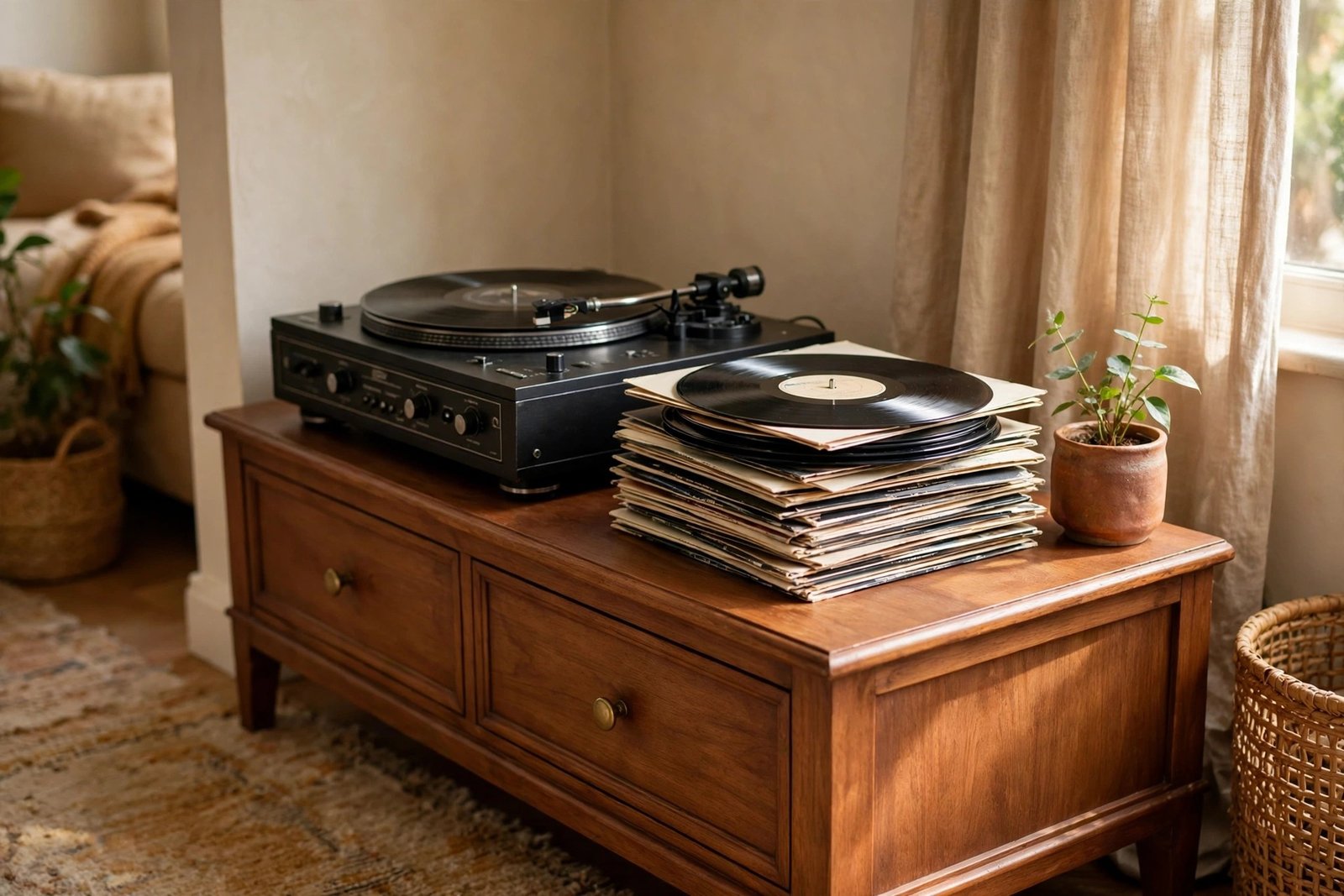
A vinyl record player corner brings the sound of the 1960s into your home, because warm analog music changes the atmosphere in a way streaming rarely matches. The decade was built on records, and a turntable styled with favorite albums becomes both furniture and a daily ritual. Set up a small console or sideboard with the player, a stack of records, and one plant for a complete corner.
Choose a player with a built-in speaker if space is tight, or add separate speakers for richer sound in a larger room. Store records upright in a crate or on a shelf, since flat stacking can warp vinyl over time. Dust the needle gently and handle records by their edges, so your collection stays in good shape for years of listening.
22. Embroidered Ethnic Textile Throw

An embroidered textile throw adds world-traveled warmth to a sofa or bed, because the 1960s hippie movement brought Indian embroidery, beading, and fringing into Western homes. A colorful throw with tassels or mirror work drapes beautifully over a plain sofa, and it instantly adds texture, color, and story. Look for hand embroidery and natural cotton or wool, since these details make the piece feel special.
Drape the throw over a sofa arm, across the foot of a bed, or hang it as wall art for a bolder statement. The Apartment Therapy colorful mid-century home tour shows how layered textiles and global finds warm up a modern retro interior. Wash the throw gently by hand when possible, since embroidery and fringe need kinder care than plain fabric.
23. Sculptural Curved Mirror Above a Console

A sculptural curved mirror turns a hallway wall into a gallery moment, because wavy, scalloped, and sunburst frames catch light and soften straight modern lines. The 1960s loved mirrors as decoration rather than simple tools, and a curved mirror works in an entryway, a living room, a bedroom, or a bathroom. Hang it above a console table, where it reflects both light and the styling below.
Let the mirror be the star by keeping the console styling simple, with one vase and one small stack of books. Choose a frame finish that echoes other metals in the room, such as brass with warm wood or black with chrome accents. A curved mirror also makes a narrow hallway feel wider, since reflection doubles the sense of space.
24. Teak Statement Sideboard for Storage and Display

A teak statement sideboard anchors a dining room or living room with warmth and purpose, because rich wood grain and clean lines made it the ultimate 1960s storage piece. Teak and rosewood sideboards held dinnerware, records, and barware, while their tops displayed lamps, art, and plants. Look for tapered legs, sliding doors, and a grain pattern you love, since the wood itself is the decoration.
Style the top with a lamp at one end and a small plant or vase at the other, leaving the middle open so the wood can breathe. Mix the sideboard with other wood tones freely, since natural finishes sit comfortably together even when they do not match exactly. A vintage sideboard often costs less than a new cabinet of similar quality, and it brings authentic history into your home.
Frequently Asked Questions
How do I add 1960s style without making my home look dated?
Start with one or two bold pieces, such as a lava lamp or a shag rug, and keep the rest of your room calm and modern. Balance retro patterns with neutral walls and simple furniture, so the vintage pieces read as intentional accents rather than a full time capsule. Add modern lighting and clean storage, since fresh details keep a retro room feeling current and livable.
What colors define 1960s home decor?
The defining 1960s palette mixes earthy avocado green, harvest gold, and burnt orange with brighter pops of hot pink, lime, and turquoise. Warm wood tones and creamy neutrals ground these bold colors, so the room feels warm rather than chaotic. Use bold shades as accents first, through cushions, rugs, and art, before committing to a painted wall or a large sofa.
Where can I find affordable 1960s furniture and decor?
Thrift shops, flea markets, and online marketplaces offer the best prices on vintage 1960s furniture, mirrors, and lamps. Modern reproductions from large home stores capture the same shapes at friendly prices, especially for egg chairs, sputnik lights, and mushroom lamps. Check the frame, joints, and wiring carefully on vintage buys, since sturdy construction matters more than a perfect finish.
Can 1960s decor work in a small apartment?
Yes, 1960s decor suits small apartments well, because low-profile furniture, mirrors, and bold accents add style without eating floor space. Choose one statement piece per room, use a checkered or shag rug to define a zone, and hang a curved mirror to bounce light around. Floor cushions and a beaded curtain divide space softly, so a studio can feel zoned without new walls.
How do I mix 1960s pieces with modern furniture?
Pick a shared thread, such as warm wood, brass metal, or one accent color, and repeat it across both vintage and modern pieces. Keep modern furniture simple and low, since clean lines blend easily with mid-century shapes and bold retro prints. Limit the room to one or two loud patterns, and let plain modern pieces give the eye a place to rest.
Final Thoughts
A groovy 1960s home is not about recreating a museum room, because the best retro spaces borrow the decade’s color, courage, and joy while staying comfortable for modern life. Pick the ideas that make you smile, whether that means a paisley wall, a lava lamp, or a teak sideboard full of records. Let each piece earn its place by adding warmth, personality, or a story worth telling.
Start this weekend with one small change, such as an orange cushion, a mushroom lamp, or a bold art print above your sofa. Live with that piece for a week, notice how it changes the room, and then add the next idea with confidence. Your home will soon carry a little 1960s magic, full of color, comfort, and a spirit that feels entirely your own.


